
IN THIS ARTICLE
5 Warning Signs Your NJ Concrete Driveway Needs Professional Slab Lifting
A concrete driveway rarely sinks all at once. In most cases, the movement begins gradually. One corner drops, a joint becomes uneven, or a puddle starts forming where the surface used to drain properly.
These changes can be easy to ignore at first. However, when a driveway slab loses support underneath, the uneven area may continue to settle. Cracks can spread, water can collect in low spots, and the height difference can pose a hazard to people and vehicles.
Concrete Chiropractor has more than 25 years of experience leveling sunken concrete throughout New Jersey and Eastern Pennsylvania. Here are five common signs that your driveway may need professional concrete driveway leveling and repair.
What Is Concrete Driveway Slab Lifting?
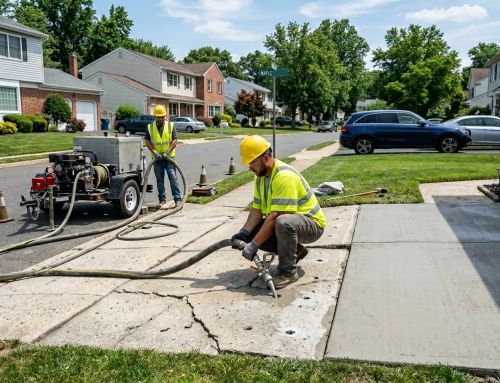
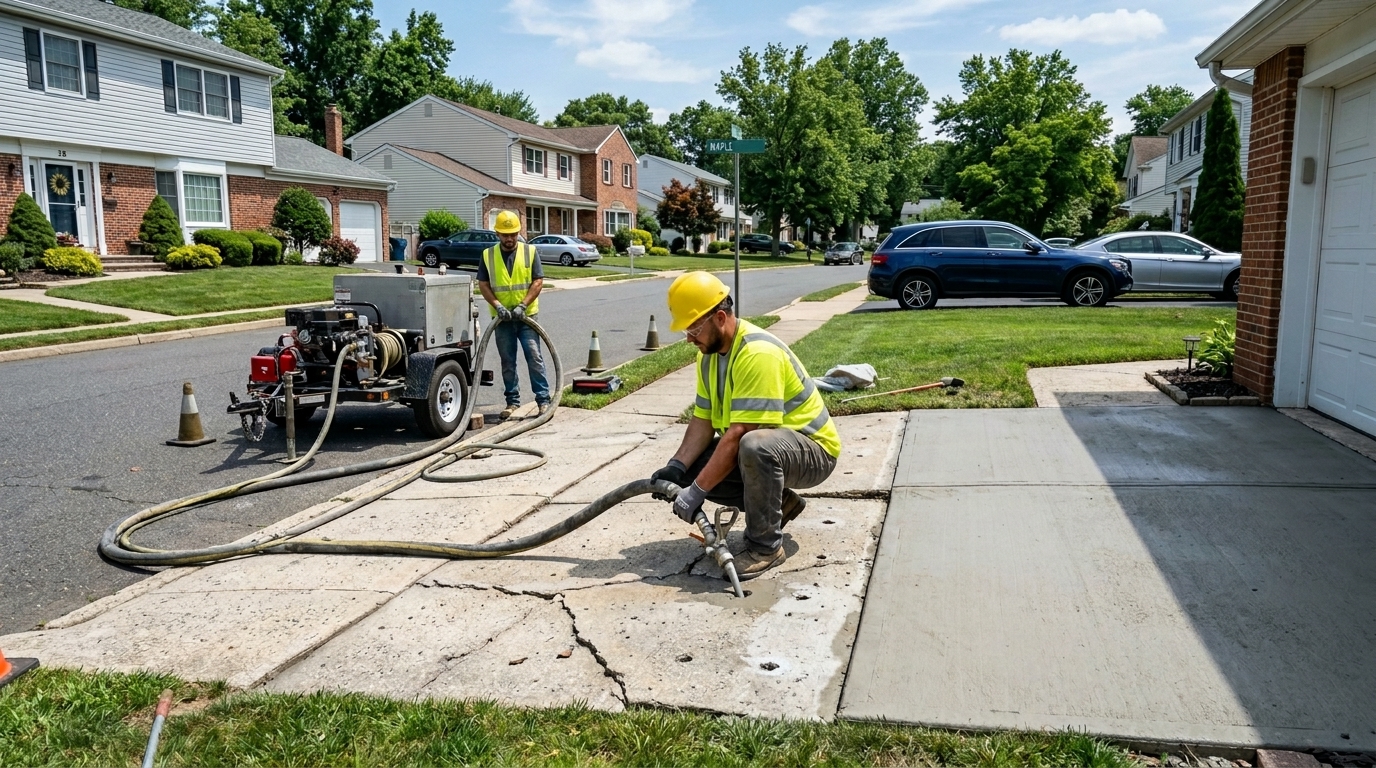
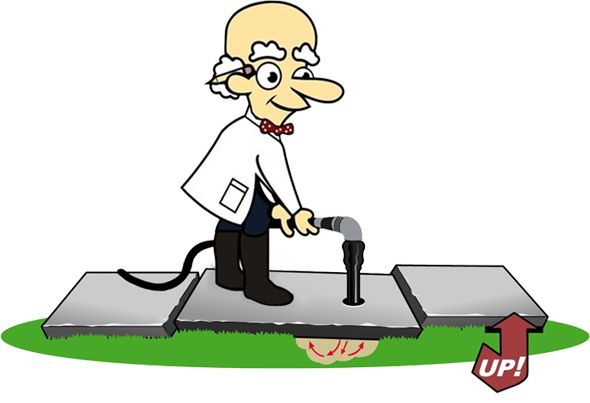
Concrete slab lifting is a repair method used to raise a sunken driveway slab closer to its original position. During the process, small holes are drilled through the affected concrete, and a cement-based grout is pumped beneath the slab.
The material fills empty spaces, restores support, and carefully lifts the concrete. The goal is to correct the settlement without removing and replacing an otherwise usable driveway slab.
Slab lifting may also be called concrete leveling, slabjacking, or mudjacking. Our guide explaining what mudjacking is and how the process works provides a more detailed look at how sunken slabs are raised.
Slab lifting is generally most suitable when the concrete is still structurally sound but has dropped because the soil or base beneath it shifted, settled, or washed away.
1. One Driveway Slab Is Lower Than the Others
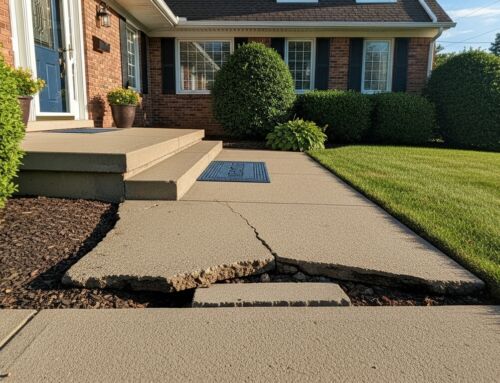
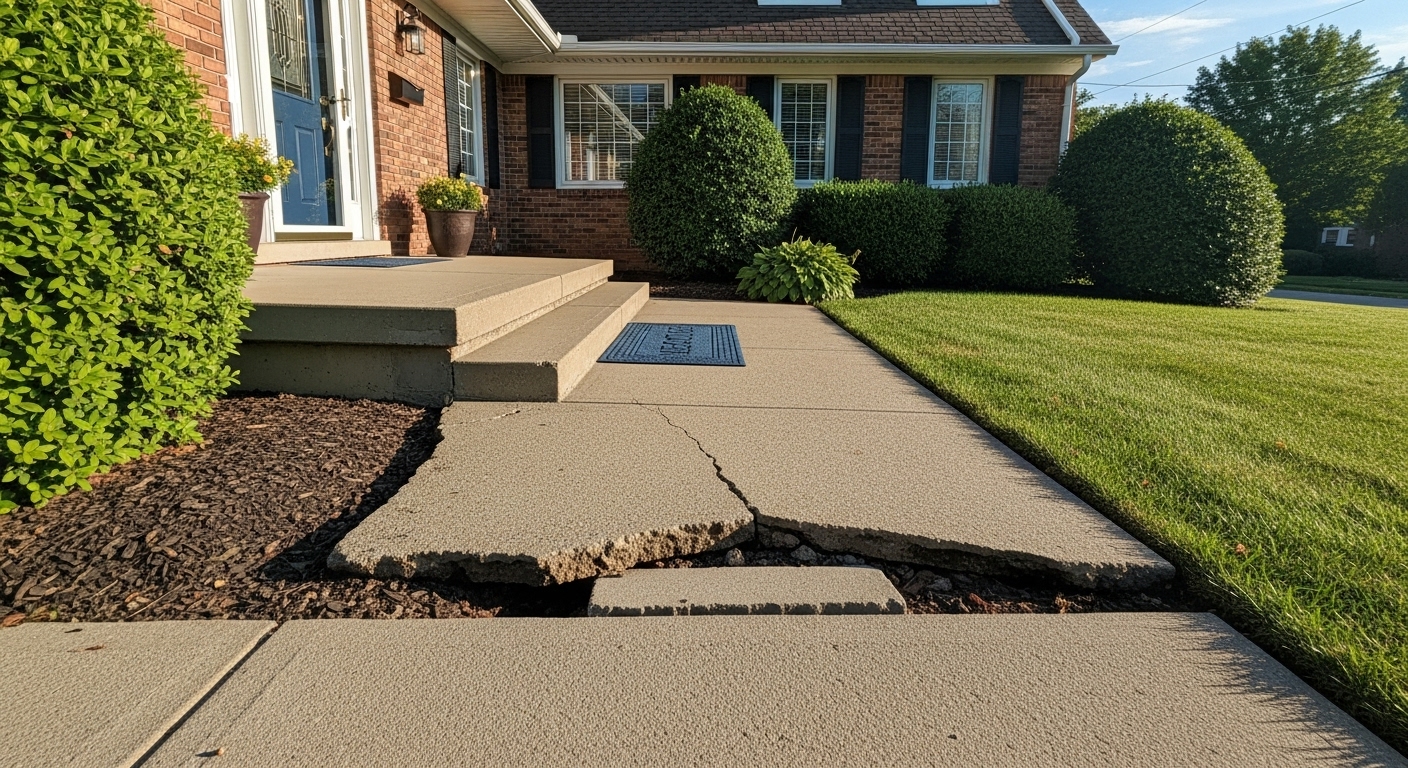
The clearest sign of settlement is a visible height difference between adjoining driveway slabs.
You may notice that one section sits lower than the next, one corner has dropped, or the entire slab tilts toward the lawn or garage. The change may be small at first, but even a modest difference can become noticeable when you walk, shovel snow, or drive over it.
Look for:
- A raised edge between two driveway sections
- A snow shovel catching on a joint
- A vehicle bumping when crossing the uneven area
- A slab that appears tilted instead of level
- One side of a control joint sitting lower than the other
This often happens after the supporting soil settles or erosion creates an empty space beneath part of the driveway. Once the slab no longer has even support, its weight can cause it to sink farther.
Lifting may restore the slab’s position while filling and stabilizing the unsupported area underneath.
2. Cracks Are Widening or One Side Has Dropped
Not every driveway crack means the concrete needs lifting. Hairline surface cracks can develop without significant settlement. The more important warning sign is movement around the crack.
A driveway should be inspected when:
- A crack becomes noticeably wider
- One side of the crack is higher than the other
- A crack extends from a visibly sunken corner
- New cracks appear around the same low area
- Crack filler repeatedly separates or fails
Filling the surface of a crack does not correct a slab that has lost support underneath. If settlement is causing the crack to open or shift vertically, the slab may need to be stabilized and lifted before the surface can remain properly aligned.
Homeowners can learn more about the difference between cosmetic damage and settlement-related cracking in our guide to concrete crack causes, types, and repair solutions.
An on-site assessment is still important. A professional can determine whether the problem is minor cracking, slab settlement, or deterioration severe enough to require replacement.
3. Water Pools on the Driveway or Runs Toward the Garage
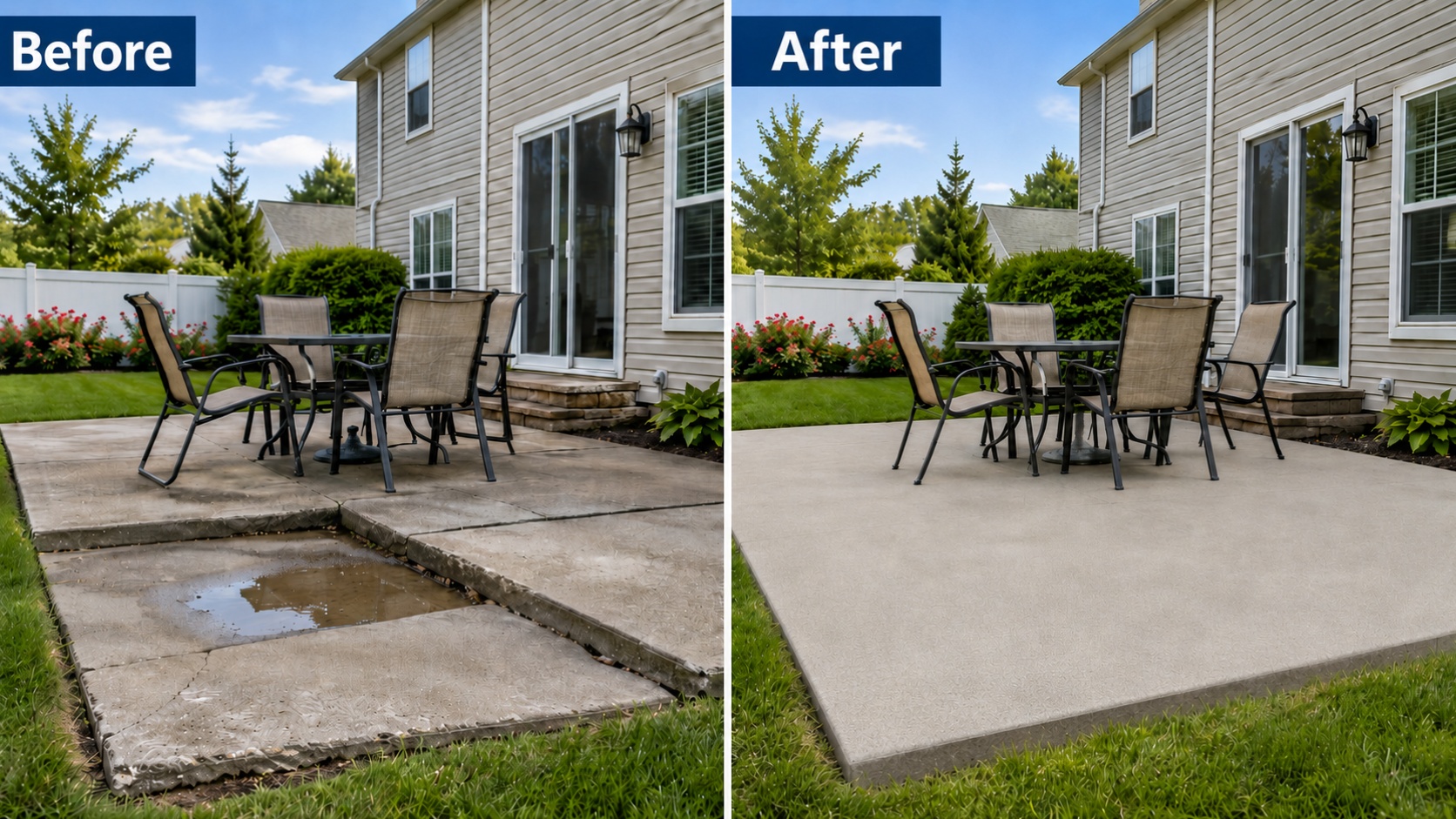
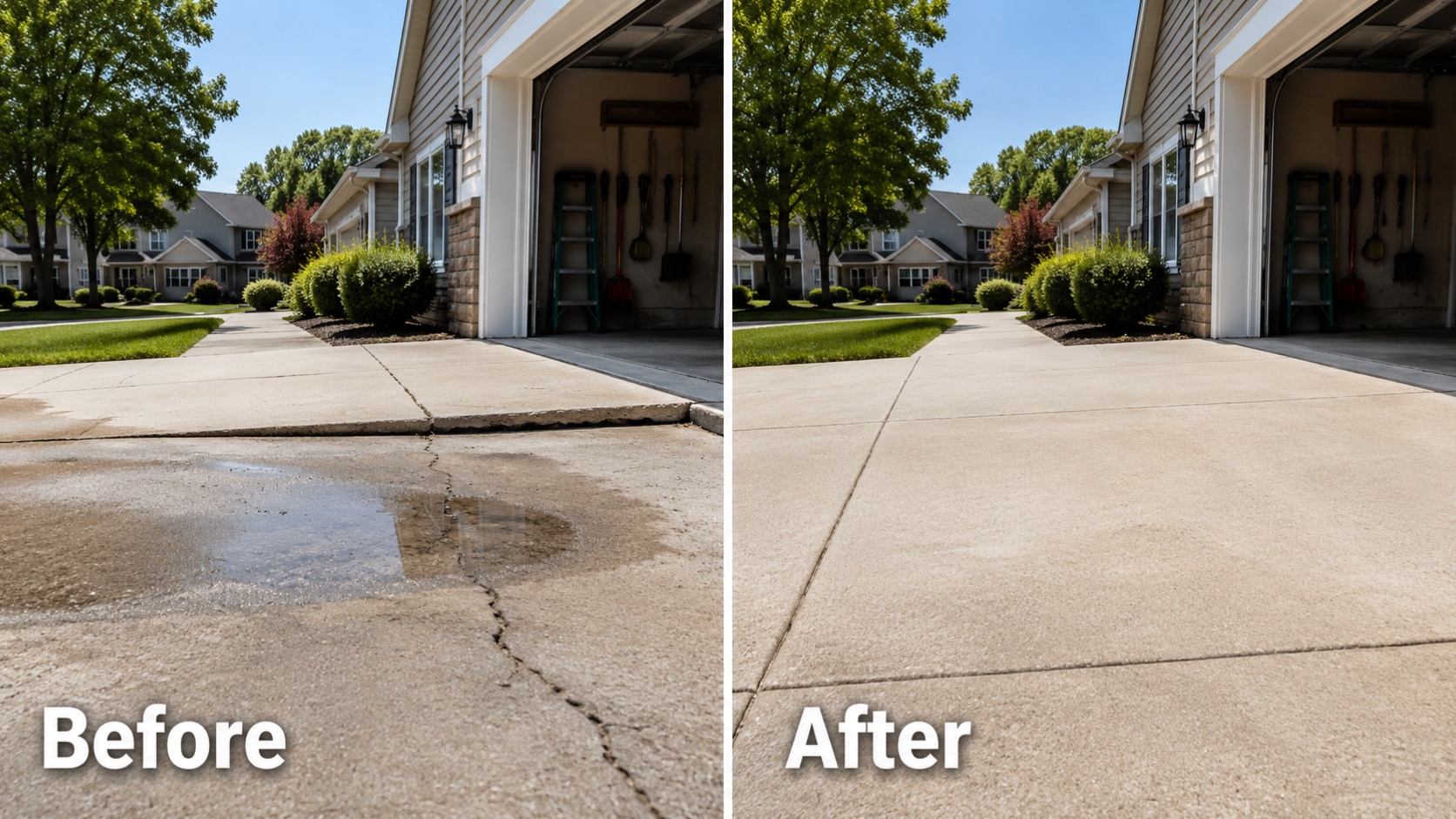
A properly sloped driveway should direct water away from the home and allow most rainwater to leave the surface. When a slab sinks, it can create a low spot that traps water or redirects runoff toward the garage.
Common signs include:
- A puddle that remains after the rest of the driveway dries
- Water collecting along an expansion joint
- Runoff moving toward the garage door
- Ice repeatedly forming in the same area during winter
- Soil washing away beside the slab
Standing water should not be dismissed as only a cosmetic problem. Water can enter cracks and joints, contribute to soil erosion, and worsen an existing void beneath the driveway. During New Jersey winters, trapped moisture may also freeze and thaw repeatedly, placing additional stress on damaged or poorly supported concrete.
The ground and moisture conditions found around Turkey Swamp Park demonstrate how drainage can vary throughout the Freehold area. The park’s name is associated with a high water table and boggy conditions in lower areas. This does not mean every property in Freehold has the same soil conditions, but it shows why drainage and site-specific ground conditions must be considered before repairing a sunken driveway.
Concrete Chiropractor provides concrete lifting and repair services in Freehold, NJ for driveways and other settled residential concrete surfaces.
When settlement has changed a driveway’s slope, lifting the affected slab may improve drainage. However, downspout discharge, grading, damaged joints, and other sources of excess water may also need attention.
Our guide to voids beneath concrete slabs explains how water, erosion, and soil settlement can leave concrete without proper support.
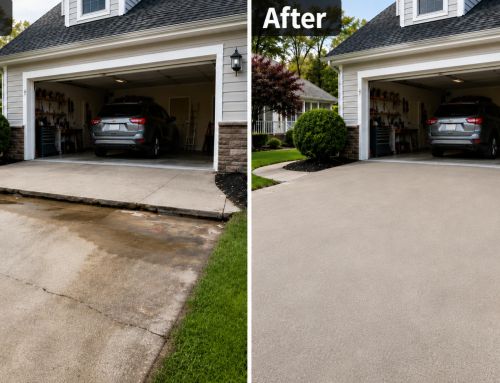
4. A Lip or Gap Has Formed at the Garage Entrance
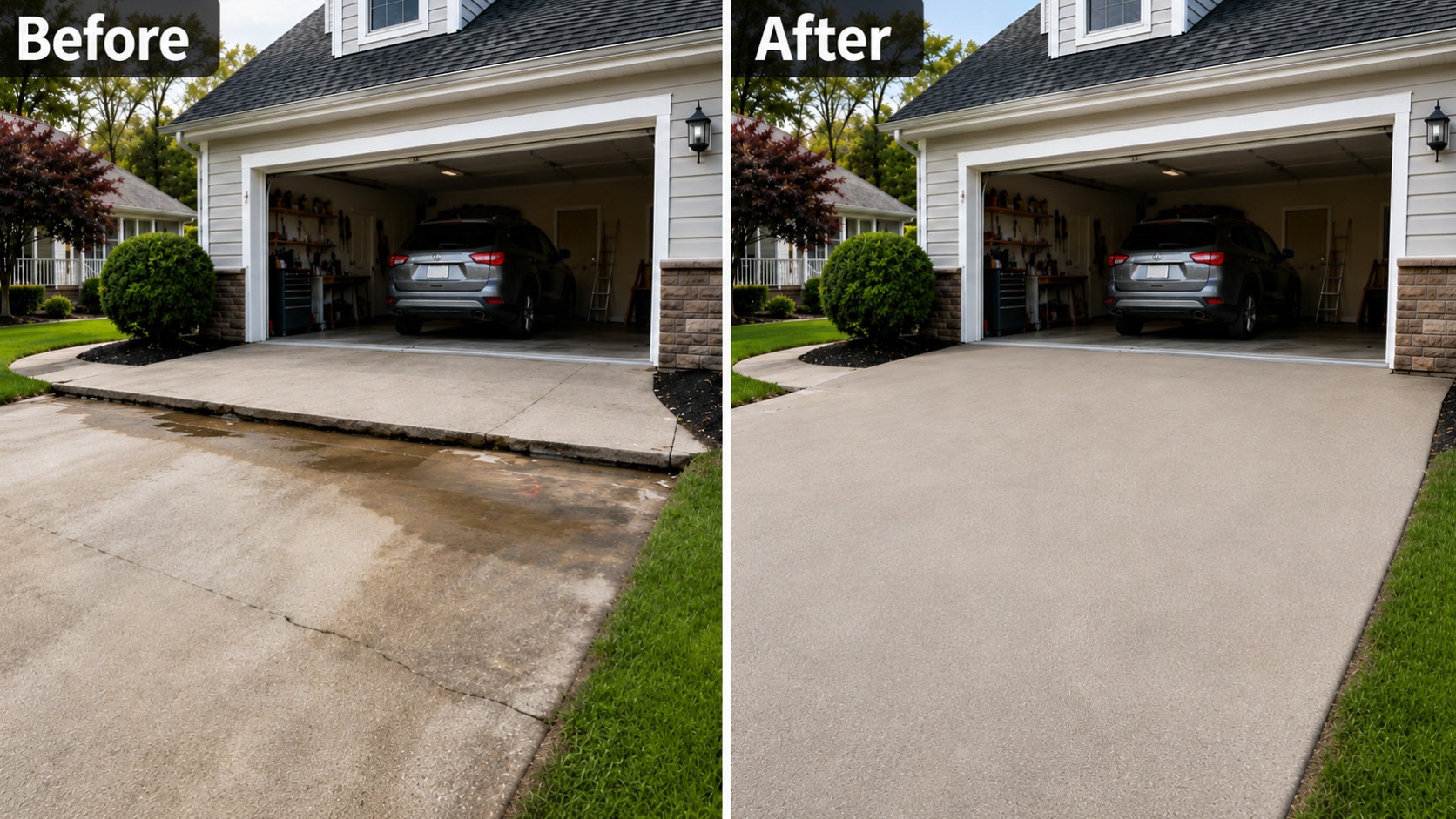
The point where the driveway meets the garage floor is one of the easiest places to spot settlement.
The garage slab may remain stable while the driveway apron outside begins to sink. This can leave a raised lip, wider joint, or low channel directly in front of the garage.
You may notice:
- A sharp bump when driving into the garage
- The driveway sitting below the garage floor
- A low vehicle scraping at the entrance
- Water collecting along the garage threshold
- The joint between the driveway and garage widening
- The driveway appearing to pull away from the garage
This problem can make everyday vehicle access uncomfortable and allow water to sit close to the garage. During winter, the uneven edge can also catch a shovel or snowblower.
Holmdel properties can have their own drainage and grading challenges. Holmdel Park, for example, is known for its wooded areas and rolling landscape. Although individual residential properties may have different ground conditions, sloped lots require careful water management because runoff naturally follows the lowest available path.
If water repeatedly moves beside or beneath a driveway, it can erode supporting soil and contribute to settlement. Homeowners experiencing this problem can learn more about our concrete leveling services in Holmdel, NJ.
When the movement extends into the garage, professional garage floor leveling and repair may also be required.
5. Gaps, Soil Washout, or Failed Patches Keep Reappearing
Sometimes the most important warning signs are visible around the edges and joints rather than in the middle of the driveway.
Check for:
- An open space beneath an exposed slab edge
- Soil washing away after heavy rain
- Gaps between adjoining driveway sections
- A joint that continues to widen
- Patches that crack or separate soon after installation
- One slab moving independently of the next
These conditions can indicate that the driveway no longer has consistent support underneath. Patching the top may temporarily improve its appearance, but it will not fill a deeper void or raise a slab that has already dropped.
Concrete lifting addresses the support problem by placing grout beneath the slab. When the slab is a suitable candidate, this process can fill voids, improve stability, and bring uneven sections closer to their proper level.
Homeowners with questions about drill holes, curing time, cost factors, or suitable surfaces can review our mudjacking frequently asked questions.
Why Concrete Driveways Sink in New Jersey
Driveway settlement can have more than one cause. Common contributors include:
- Poorly compacted soil or fill beneath the original driveway
- Natural soil settlement over time
- Water entering through open joints and cracks
- Downspouts discharging too close to the slab
- Erosion along the driveway edge
- Repeated freezing and thawing
- Underground utility work that disturbed the base
- Heavy loads on a slab with weak support
The visible low spot tells you where movement occurred, but it does not always reveal why it happened. Correcting drainage or erosion around the driveway can be just as important as lifting the slab itself.
For example, raising a slab may correct a low area, but the problem could return if a downspout continues discharging water beside the driveway. A proper inspection should consider both the condition of the concrete and what caused it to move.
Does Your Driveway Need Lifting or Replacement?
Slab lifting is not the correct repair for every damaged driveway.
It may be a good option when the slab is mostly intact but has settled, tilted, or lost support. Replacement may make more sense when the concrete is badly crumbled, severely deteriorated, or broken into many small, unstable pieces.
A driveway may be a candidate for lifting when:
- The slabs remain mostly intact
- The main problem is uneven height
- One or more sections have dropped
- Voids have formed beneath the concrete
- The driveway’s slope changed because of settlement
Replacement may be more appropriate when:
- Large areas are crumbling or flaking badly
- The concrete has broken into several loose pieces
- Major structural damage affects most of the driveway
- Previous repairs have left the slab too weak to lift safely
Read our guide on concrete repair versus replacement for more help understanding the difference.
For cracked, sinking, or unsupported sections that remain repairable, Concrete Chiropractor also provides professional concrete slab repair in New Jersey.
Do Not Wait for a Small Drop to Become a Bigger Problem
A slightly uneven slab may not appear urgent. However, settlement can create a cycle in which water enters the low area, washes away more support, and allows the slab to move farther.
As the height difference increases, the repair can become more complicated. Cracks may spread, adjoining slabs may begin moving, and the driveway may eventually deteriorate beyond the point where lifting is practical.
Early evaluation does not automatically mean immediate repairs are required. It gives you a clearer understanding of what is happening and whether the driveway should be monitored, lifted, or replaced.
Schedule a Driveway Slab Lifting Assessment in NJ
An uneven driveway will not usually return to its original position on its own. If you see a dropped slab, widening settlement crack, drainage problem, garage entrance lip, or exposed void, it is better to have the area evaluated before the damage becomes more difficult to correct.
Concrete Chiropractor has served homeowners and property owners across New Jersey and Eastern Pennsylvania for more than 25 years. We use proven mudjacking methods to lift suitable concrete slabs, fill unsupported spaces, and restore safer, more usable surfaces.
Learn more about our concrete driveway leveling and repair services in New Jersey, or contact Concrete Chiropractor today to request an assessment and free concrete repair estimate for your sunken driveway.

- Can You Fix a Settled Patio Without Replacing It? Repair in Ambler, PA - August 31, 2026
- How We Restore Sunken Garage Floors in South Plainfield, NJ - August 31, 2026
- Top 5 Concrete Floor Problems in Garages and Solutions - August 31, 2026