

IN THIS ARTICLE
Why Your Driveway is Sinking in Front of Your Garage in New Jersey
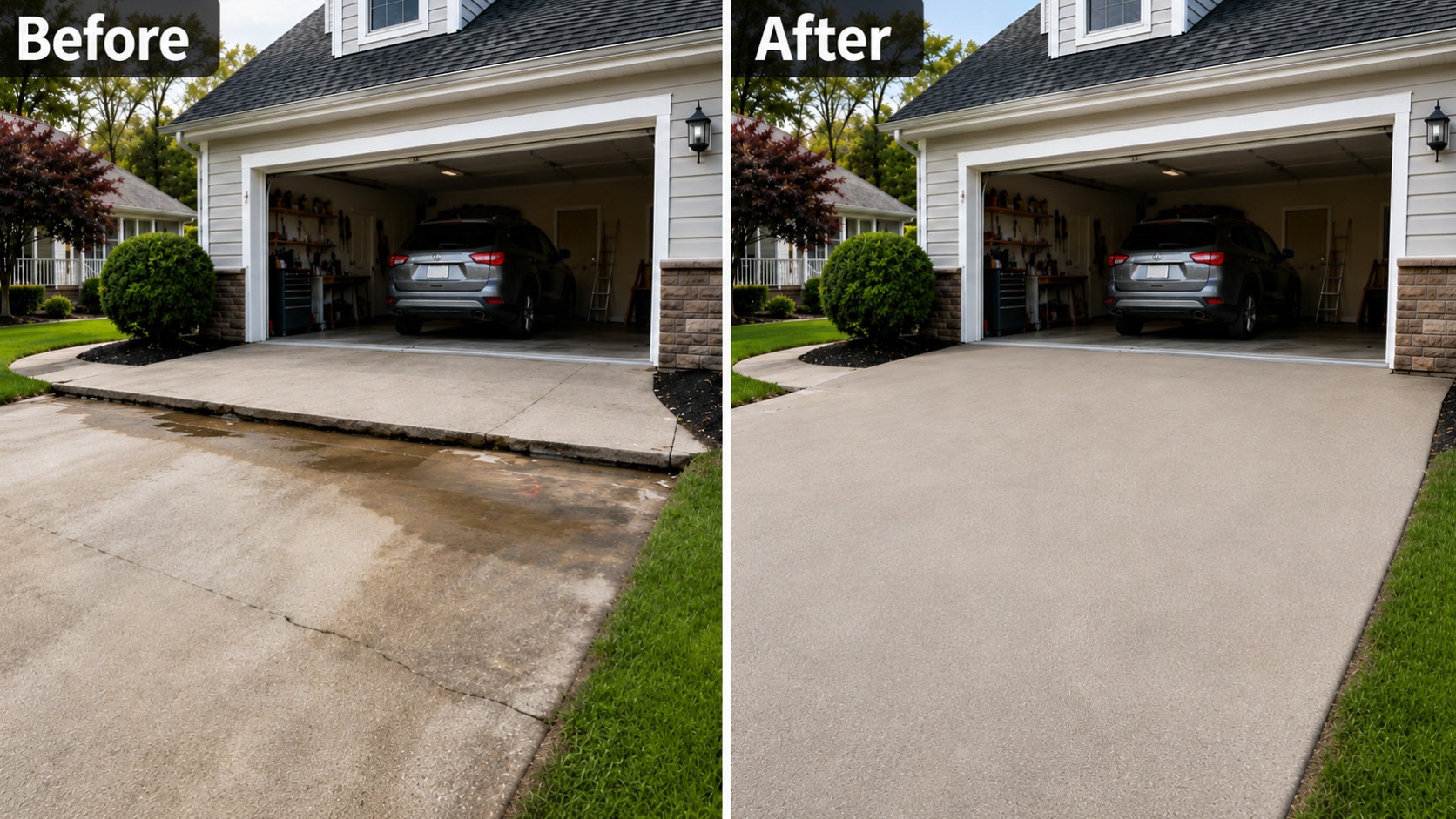
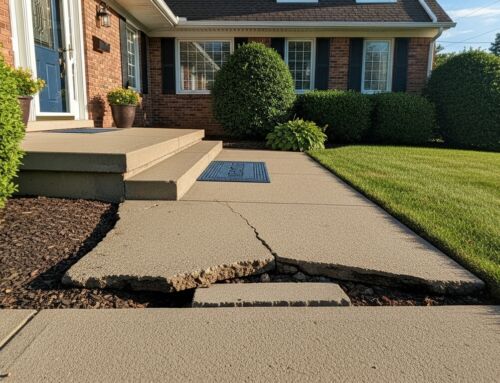
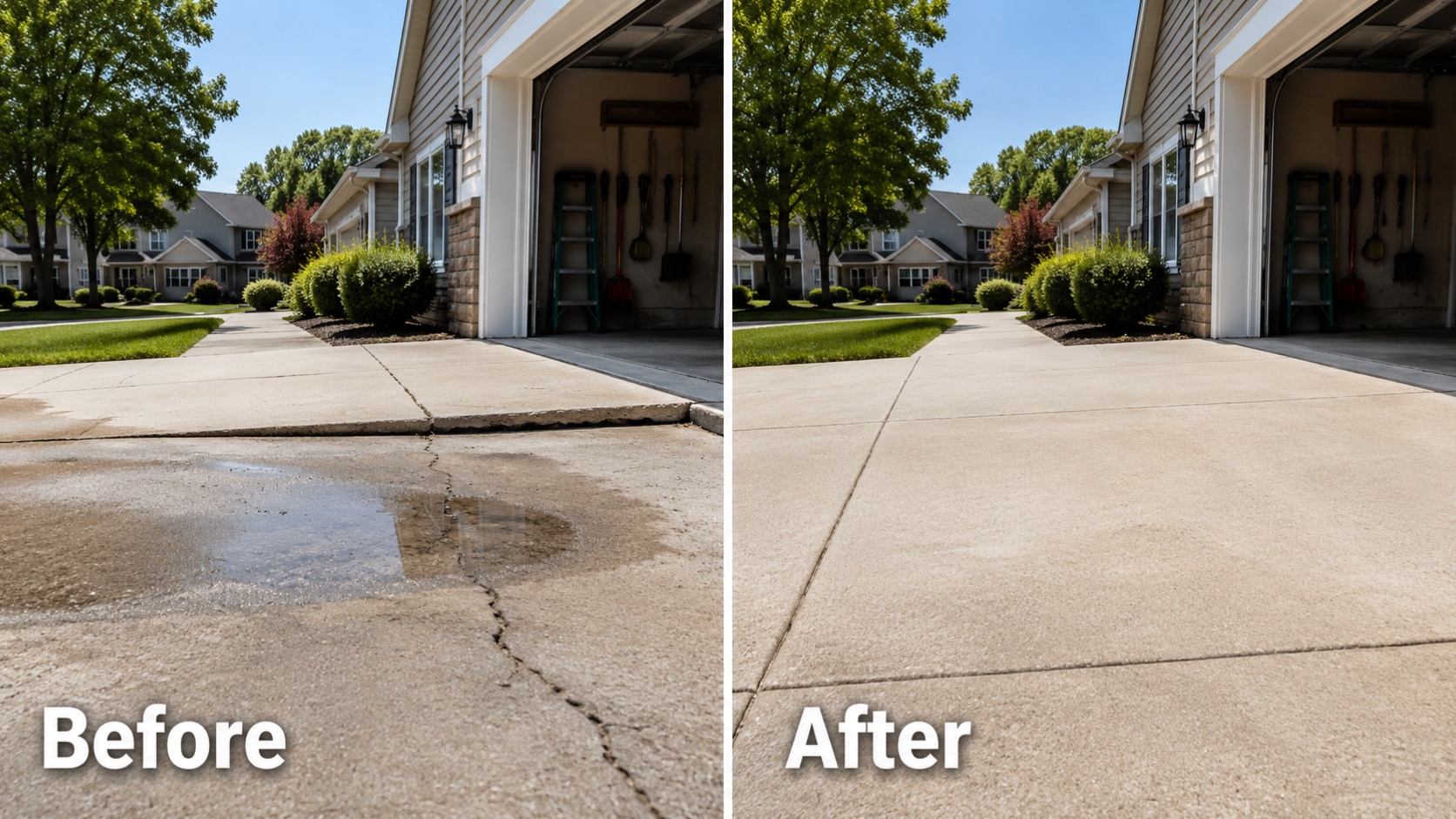
A driveway sinking in front of the garage is more than an appearance problem. The lowered slab can create a hard bump when you drive into the garage, collect rainwater near the foundation, and leave an uneven edge that becomes a tripping hazard.
This problem is common across New Jersey, where heavy rain, winter freezing, soil movement and drainage problems can gradually remove support from beneath concrete slabs.
The good news is that a structurally sound driveway may not need to be demolished and replaced. Professional concrete driveway leveling and repair can raise the affected slab, fill the empty space beneath it, and restore a smoother transition into the garage.
However, lasting repair begins with understanding why this particular section of the driveway sank.
Why Does the Driveway Sink Directly in Front of the Garage?
The first concrete slab outside a garage experiences conditions that may not affect the rest of the driveway as severely.
Poorly Compacted Soil Near the Foundation
During home construction, soil around the garage foundation is excavated and later replaced. If that backfilled soil was not compacted sufficiently, it may compress gradually under the weight of the driveway.
As the soil settles, an empty space develops between the ground and the concrete. Without complete support underneath, the driveway slab can begin to drop.
This explains why the concrete immediately outside the garage may sink even when slabs farther down the driveway remain relatively level. Our guide to what causes concrete settlement and how it can be repaired examines these underlying problems in more detail.
Water Erosion Beneath the Driveway
Water is one of the most common contributors to sinking concrete.
A downspout positioned near a garage corner may discharge hundreds of gallons of water beside the driveway during repeated storms. Water can also enter through an open joint between the driveway and garage floor.
Over time, this water may wash away fine soil particles beneath the slab. Once enough soil has been displaced, the unsupported concrete drops into the resulting void.
Look for:
- Water pooling beside the garage
- Downspouts emptying near the driveway edge
- Washed-out soil along the slab
- A wide opening between the driveway and garage
- A driveway that slopes toward the garage
Raising the concrete without considering the drainage problem may restore the slab’s height, but continuing erosion could eventually cause new settlement.
New Jersey Freeze-Thaw Cycles
Water that enters the soil beneath a driveway can freeze during winter. As it freezes, it expands and moves the surrounding soil. When temperatures rise, the ground thaws and may settle into a different position.
This repeated movement can gradually weaken the base supporting the driveway. Open joints, poor drainage and underground voids make the problem worse because they allow more water beneath the concrete.
Repeated Vehicle Loads
Every vehicle entering or leaving the garage crosses the same section of concrete. If the base is already weak or partially eroded, repeated vehicle weight can accelerate settlement.
The vehicle does not usually cause the original underground void. Instead, its weight exposes a support problem that already exists.
Poor Original Drainage or Grading
A concrete driveway should generally direct surface water away from the garage and surrounding structures. If the original slope was inadequate—or settlement changed that slope—water may collect directly in front of the garage door.
The low area then receives even more water, which may increase erosion and allow the slab to continue sinking.
Signs Your Garage-Side Driveway Slab Needs Attention
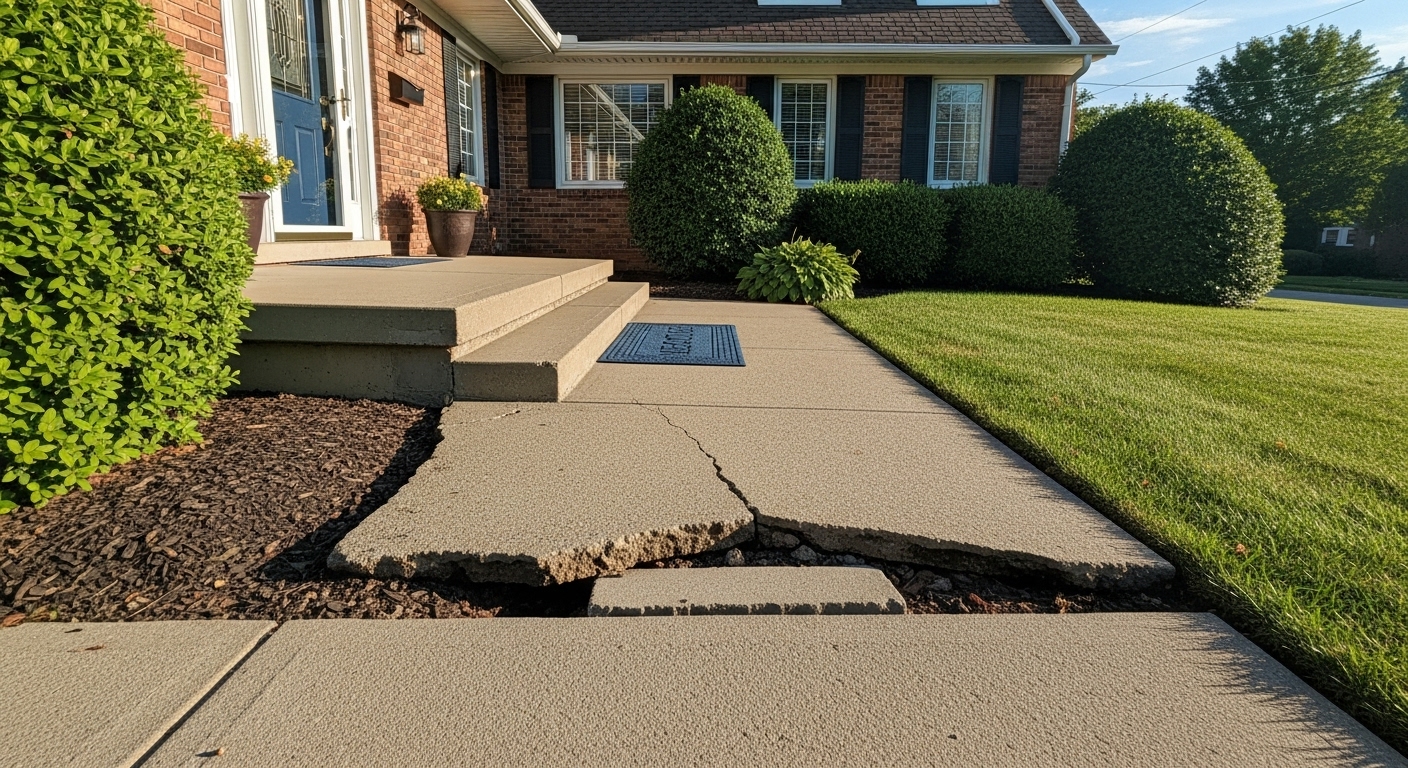
The problem often begins with a small height difference that homeowners barely notice. It may then grow during repeated wet seasons and winters.
Common warning signs include:
- A noticeable bump when driving into the garage
- A widening gap between the garage and driveway
- Standing water in front of the garage door
- Water entering the garage during heavy rain
- Cracks across the first driveway slab
- A slab that rocks or sounds hollow
- A raised garage-floor edge that creates a trip hazard
- Vehicle bumpers or low body panels scraping the concrete
A crack alone does not always mean the driveway must be replaced. The slab’s overall condition, the direction of settlement and the condition of the supporting soil all matter.
Why Patching the Low Area Usually Does Not Last
Homeowners sometimes try to correct the height difference by applying patching material, asphalt or self-leveling concrete over the sunken area.
This may create a smoother ramp temporarily, but it does not replace the missing soil beneath the slab. The original concrete remains unsupported and may continue to move.
Resurfacing also adds weight to the slab without addressing the underground void. Caulk can help limit water entry through a joint, but caulk cannot lift sunken concrete.
A longer-lasting solution must restore support from underneath.
Can a Sunken Driveway Be Lifted?
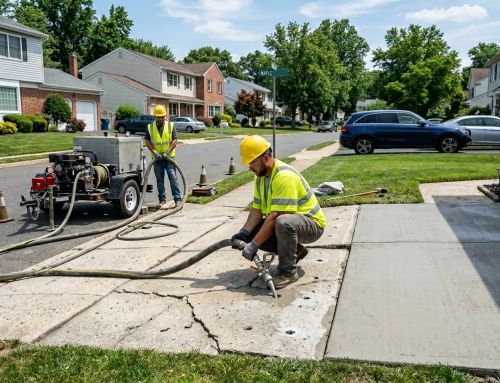
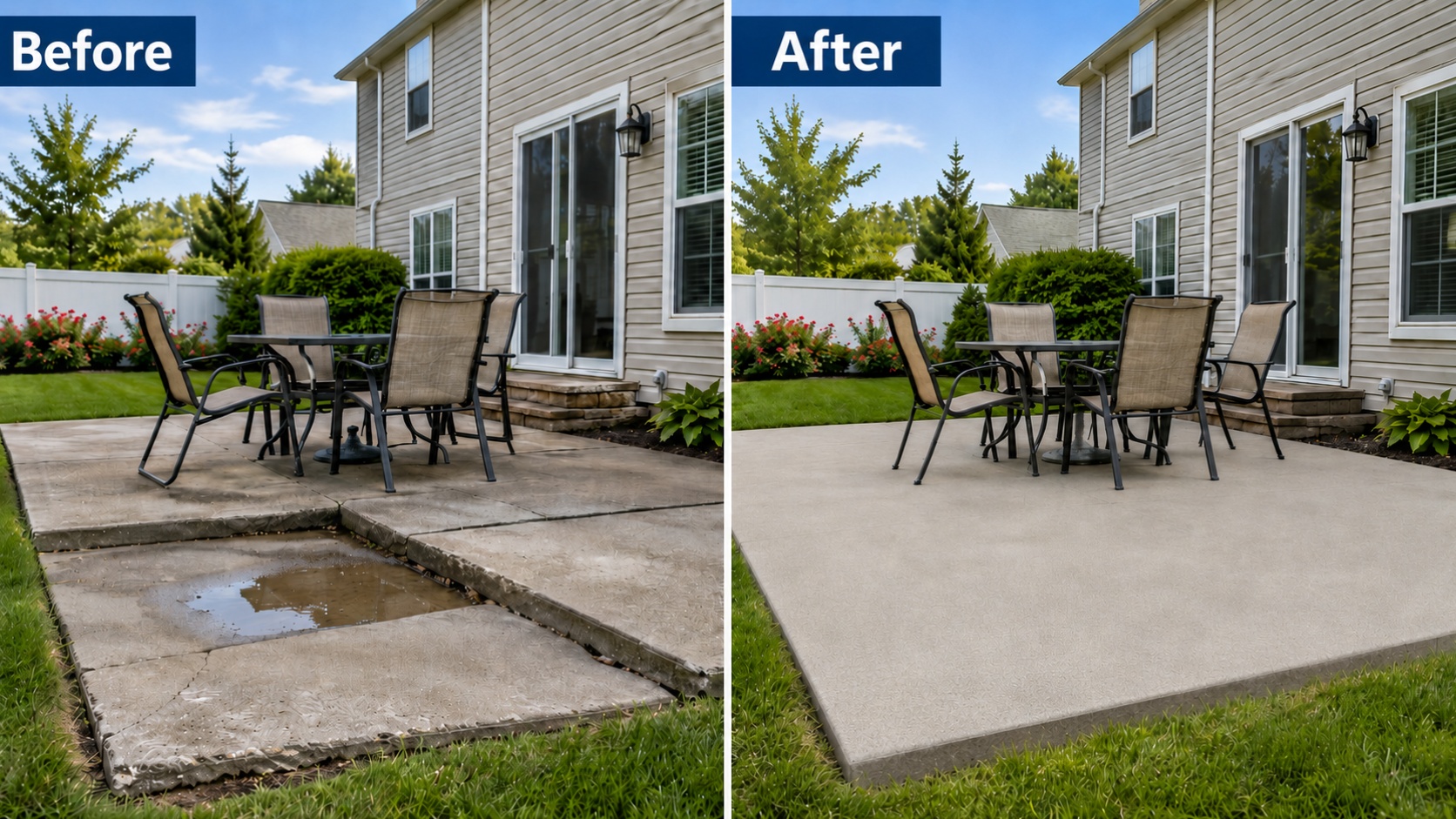
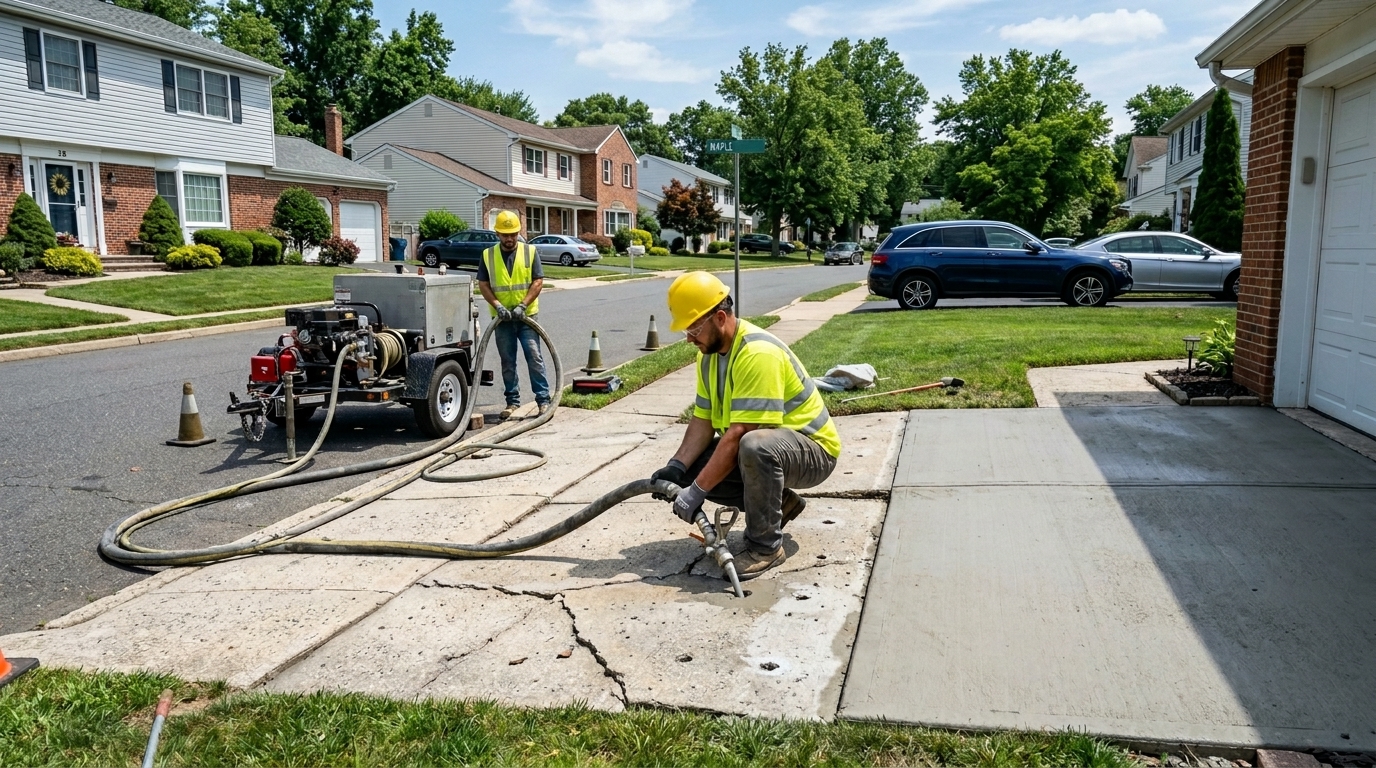
Concrete lifting is often suitable when the driveway slab is still mostly intact. During the process, carefully positioned holes are drilled through the affected concrete. A cement-based grout is then injected beneath the slab.
The grout fills underground voids and gradually raises the concrete toward the required elevation. Once lifting is complete, the injection holes are patched.
You can see a more detailed explanation in our article on how mudjacking corrects dropped concrete slabs.
Professional lifting may:
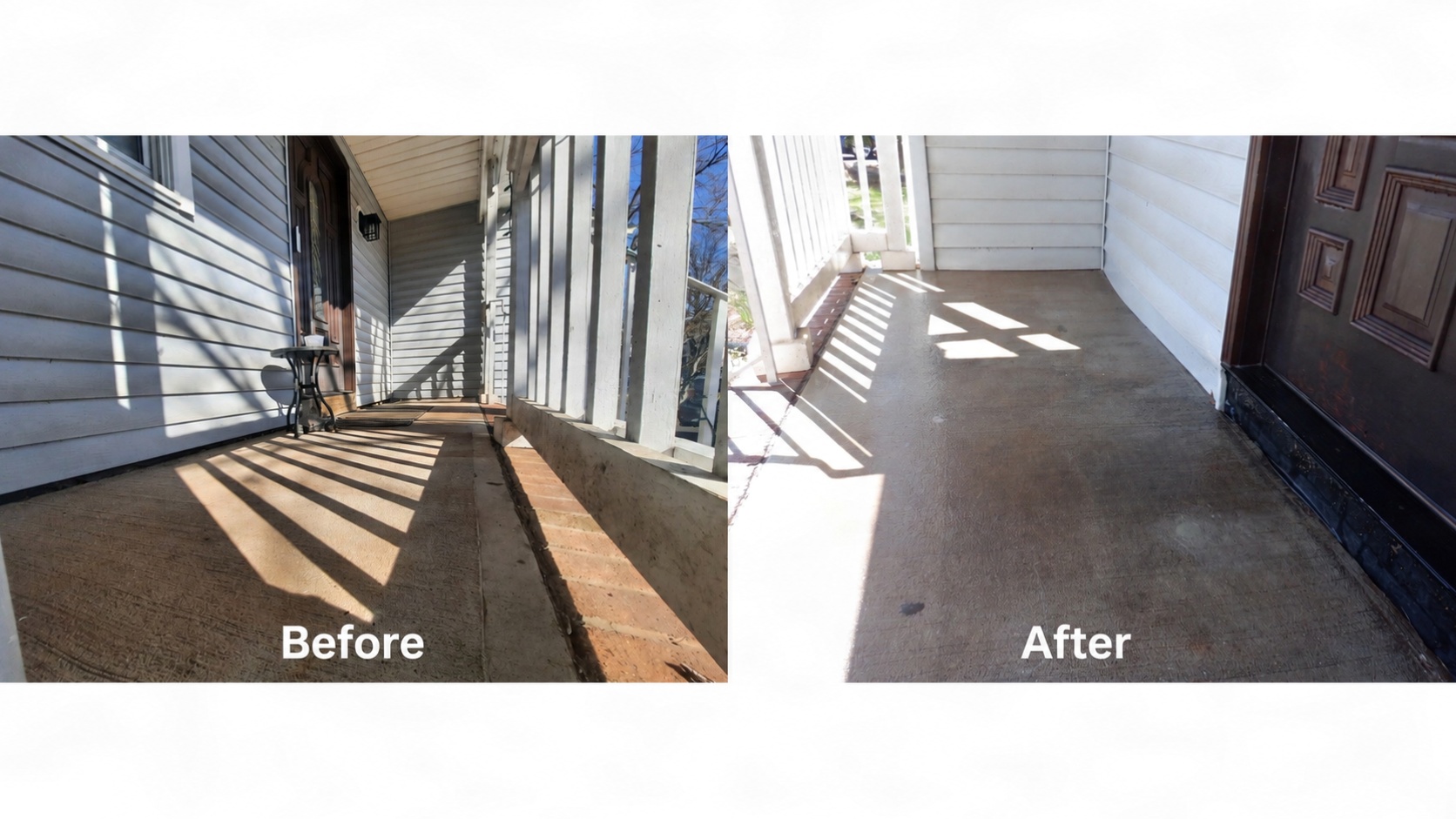
- Reduce the height difference at the garage entrance
- Restore support beneath the driveway
- Improve surface drainage
- Remove a tripping or driving hazard
- Avoid unnecessary demolition
- Cost less than replacing otherwise usable concrete
Concrete Chiropractor’s driveway-leveling process uses cement grout to fill voids and raise settled driveway slabs, often with less disruption than full removal and replacement.
What Makes a Driveway Repair More Lasting?
No concrete contractor should promise that a lifted slab can never move again. Concrete settlement is influenced by soil, drainage, weather and changes around the property.
However, several steps can reduce the risk of recurring settlement.
1. Identify the Source of the Water
Before or after leveling, inspect gutters, garage-corner downspouts, landscaping and surface grading.
Downspout extensions may be needed to direct roof runoff farther from the driveway. Low soil beside the slab may also need to be restored so water does not collect along the concrete edge.
2. Fill the Void Beneath the Slab
Simply raising the visible surface is not enough. The lifting material should occupy the empty space and provide support beneath the affected driveway section.
Concrete Chiropractor uses a cement-grout lifting method rather than lightweight plastic foam. Homeowners comparing repair materials can read our guide to mudjacking versus polyjacking.
3. Restore a Practical Driveway Slope
The goal is not always to make every surface perfectly level. Exterior concrete generally needs an appropriate slope so rainwater moves in a safe direction.
The slab should be raised carefully to improve the transition into the garage without directing water toward the home.
4. Protect Open Joints
Once the concrete is lifted, open joints may need appropriate sealing or maintenance to reduce water infiltration. Joint treatment does not replace leveling, but it may help protect the repaired base from future washout.
5. Correct Nearby Drainage Problems
Sprinklers, leaking water lines, poorly positioned drains and runoff from neighboring surfaces can all keep soil excessively wet.
Unless these conditions are addressed, replacement concrete can settle too. New concrete is not automatically protected from the same soil and drainage problems that affected the original slab.
For answers about repair life, slab condition and project suitability, review our concrete-leveling frequently asked questions.
When Should the Driveway Be Replaced Instead?
Concrete lifting is not appropriate for every driveway.
Replacement may be more sensible when:
- The slab is broken into many small pieces
- The concrete is severely deteriorated or crumbling
- Large sections have extensive surface failure
- The driveway was poured incorrectly
- Lifting cannot create a safe final elevation
- Underground utility or structural problems require excavation
A professional evaluation should separate settlement from concrete failure. If the slab is structurally usable but has simply lost support, concrete slab repair and leveling may prevent unnecessary replacement.
When the sinking is inside the garage rather than outside it, the project requires a different assessment. Learn more about concrete garage-floor leveling and repair.
Driveway Settlement in Freehold, Holmdel and Other New Jersey Communities
Driveway settlement does not look exactly the same in every New Jersey town.
In Freehold, properties around established residential neighborhoods and Downtown Freehold may have older driveways, aging drainage systems or soil that has shifted through decades of wet winters.
Homes in Holmdel, including properties around Holmdel Park and its surrounding residential areas, often have larger lots and longer driveways. More driveway surface means more joints, edges and drainage paths that should be inspected when settlement develops. Holmdel Park and Downtown Freehold are recognized local destinations within their respective communities.
In Morristown, older properties and sloped streets around the Morristown Green area can make water management especially important. The exact cause still depends on the individual property, not simply the town or neighborhood.
South Plainfield contains both residential and commercial areas. Where driveways receive heavier or more frequent vehicle traffic, weak soil support may become noticeable sooner.
In established Fair Lawn neighborhoods, mature landscaping, older concrete, and changing drainage patterns can all affect how water moves around driveway slabs.
Concrete Chiropractor also provides more localized information about raising sunken driveways and sidewalks in Monmouth County, including Freehold and Holmdel.
Get a Professional Assessment of Your Sunken Driveway
A driveway sinking in front of the garage rarely corrects itself. As the slab drops, the opening beneath it may grow, drainage can worsen, and the garage entrance can become more difficult to use.
Concrete Chiropractor has over 25 years of experience leveling concrete across New Jersey and Eastern Pennsylvania. We specialize in lifting settled driveways, sidewalks, patios, and other concrete slabs using a cement-grout process designed to fill voids and restore support.
Before paying for complete driveway replacement, let our experienced team determine whether the existing concrete can be saved.
Contact Concrete Chiropractor today for a free evaluation and learn whether concrete driveway lifting and leveling can restore a safer, smoother entrance to your garage.

- Can You Fix a Settled Patio Without Replacing It? Repair in Ambler, PA - August 31, 2026
- How We Restore Sunken Garage Floors in South Plainfield, New Jerse - August 31, 2026
- Top 5 Concrete Floor Problems in Garages and Solutions - August 31, 2026
Get Social