
IN THIS ARTICLE
How to Know When Your Uneven or Sinking Patio Needs Professional Concrete Leveling
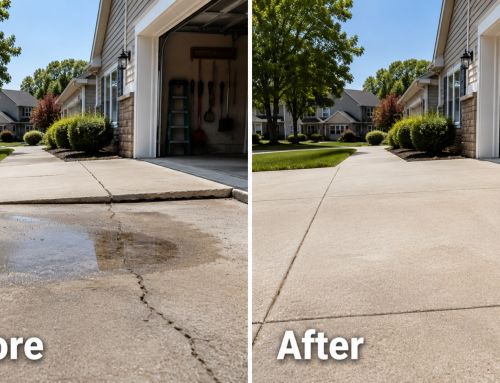
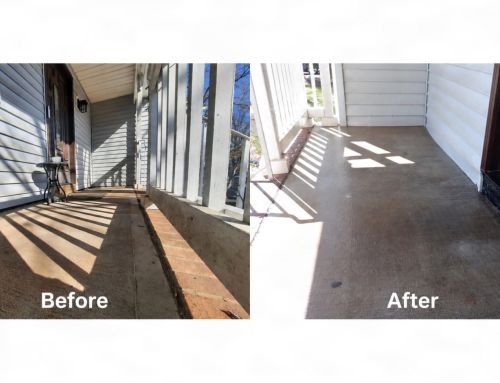
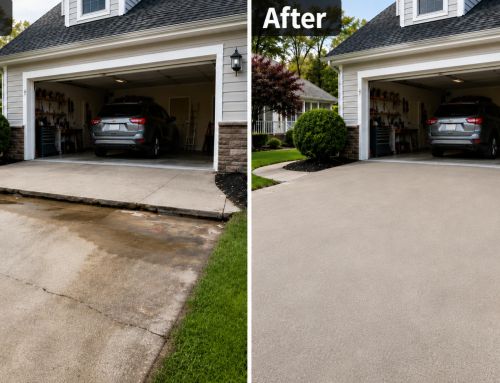
A concrete patio should provide a flat, stable space for outdoor furniture, grilling, entertaining and relaxing. However, the soil supporting a patio can gradually settle, erode or wash away. When this happens, part of the slab may sink and leave the patio uneven.
At first, the change may look minor. You may notice a small puddle after rain or feel your patio chair rocking slightly. Over time, the settlement can create trip hazards, drainage problems, widening gaps and additional concrete damage.
Concrete Chiropractor has more than 25 years of experience lifting settled concrete throughout New Jersey and Eastern Pennsylvania. Here are five common signs that your concrete patio in NJ may need professional lifting.
1. One or More Patio Slabs Have Visibly Sunk
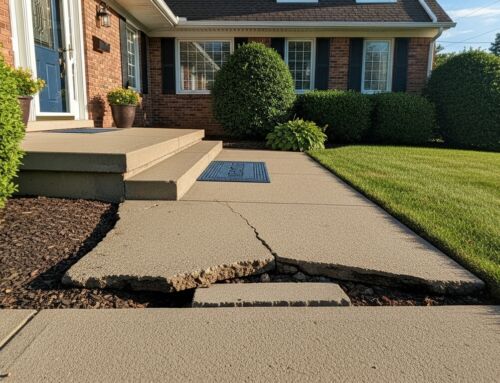
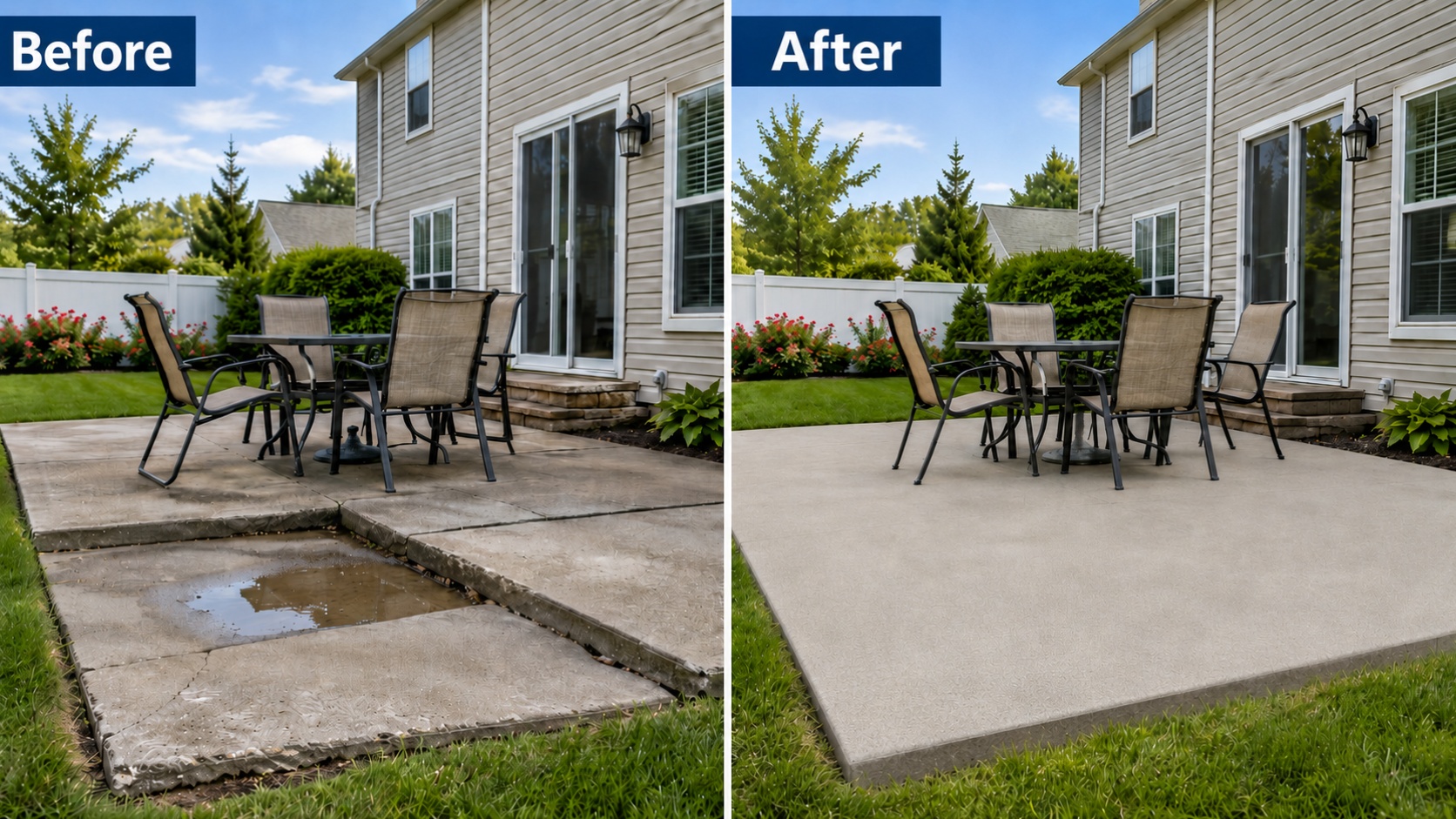
A visibly sunken slab is one of the clearest signs that your patio needs concrete lifting.
Stand several feet away and look across the surface from a low angle. You may notice that one section sits lower than the adjoining slab, patio door, walkway or concrete step. Other warning signs include:
- A noticeable height difference between patio slabs
- A patio table or chair leaning to one side
- One corner sitting below the surrounding lawn
- A slab dropping away from the house
- An unusually high step from the patio to a doorway
Concrete slabs are heavy. If the soil beneath one section becomes loose or develops a void, the slab may lose support and gradually sink into the empty space.
This commonly happens when the original soil or backfill was not compacted properly. Water can also carry supporting soil away from beneath the patio. Once the slab begins moving, it rarely returns to its correct position without professional repair.
See how we corrected this type of problem in our Ringoes, NJ sunken patio leveling project.
2. Water Pools on the Patio or Drains Toward Your House
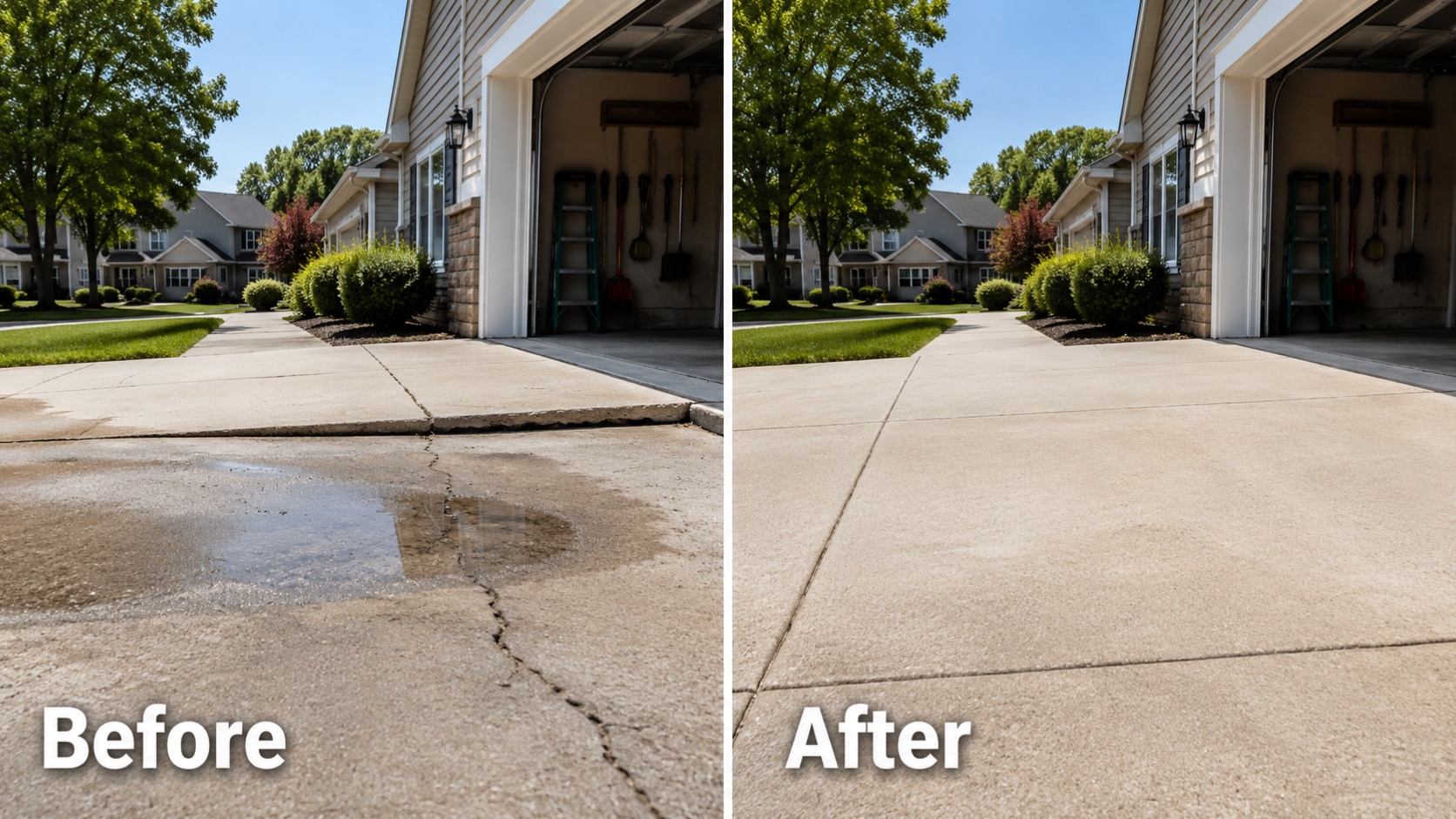
Your patio should have a slight slope that directs water away from your home. When part of the slab sinks, the original slope changes.
You may begin noticing:
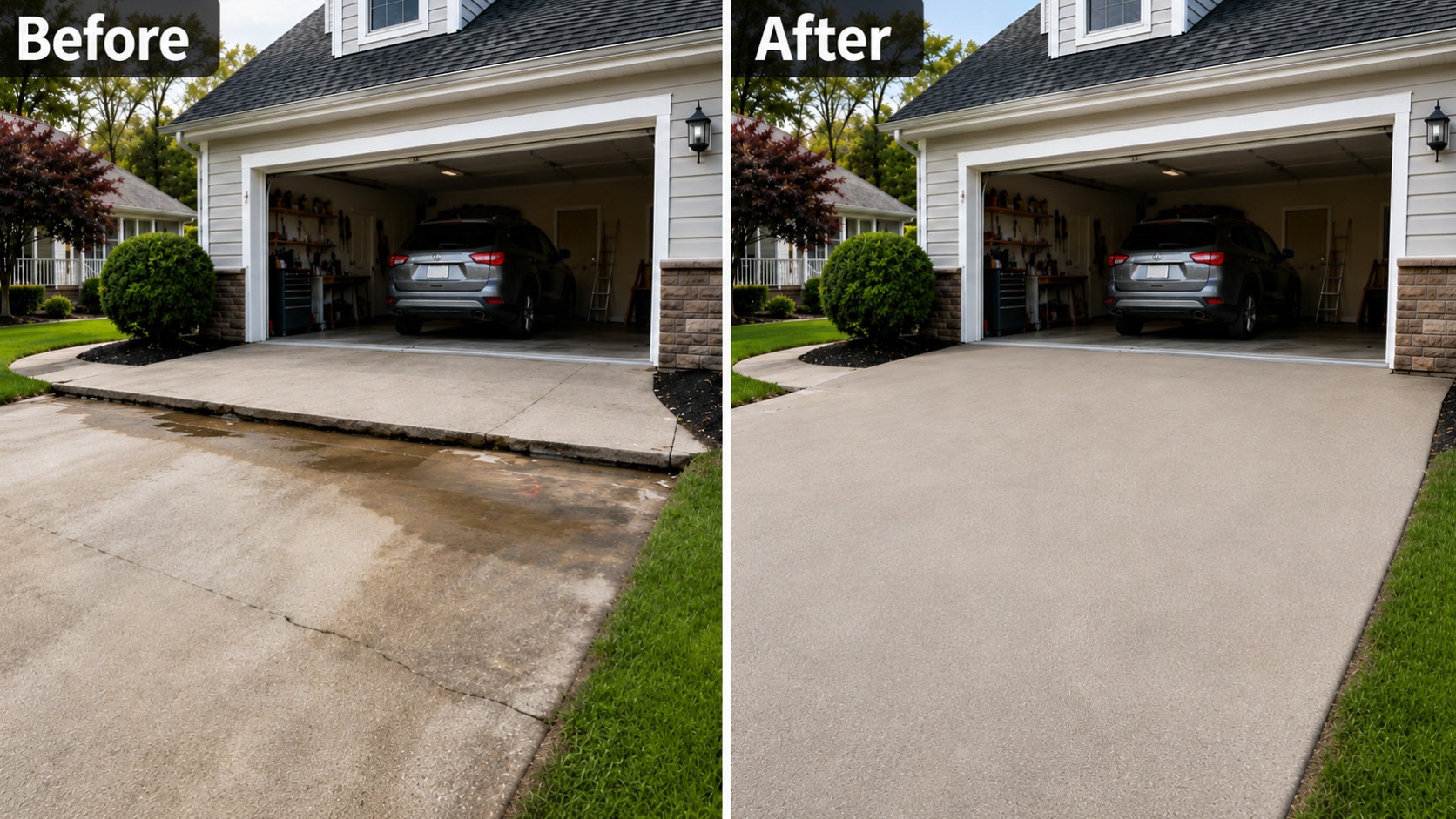
- Water collecting in the middle of the patio
- Puddles forming along control joints
- Rainwater flowing toward the foundation
- Water sitting beside a patio door
- Ice forming in low areas during winter
Pooling water is more than an inconvenience. Water that repeatedly enters the joints or edges of the patio can soften or wash away additional soil. This may enlarge the void beneath the slab and cause further settlement.
Water flowing toward the house can also contribute to moisture problems around the foundation. Lifting the affected patio slabs may restore a better slope and improve drainage without removing the entire patio.
Our article on using patio lifting to correct drainage problems explains this issue in greater detail.
3. Patio Cracks and Joints Are Becoming Misaligned
Not every small crack means that a patio needs lifting. Concrete can develop minor surface or shrinkage cracks without significant settlement.
You should be more concerned when:
- One side of a crack is higher than the other
- A crack continues to widen
- The control joints no longer line up
- Separate slabs are pulling apart
- A crack passes through an obviously sunken section
- Caulk repeatedly separates from the joint
These signs suggest movement beneath the concrete rather than a simple surface crack.
When the supporting soil settles unevenly, one part of the patio moves while another remains in place. This creates stress in the slab and can produce cracks, gaps and raised edges.
Concrete lifting works best when the slab remains reasonably solid. A patio that is badly crumbling, severely deteriorated or broken into many small pieces may need replacement instead. A professional can determine whether the existing slab can be saved.
Homeowners considering repairing the problem themselves should first read our comparison of DIY patio lifting versus hiring a professional in New Jersey.
4. Raised Edges Have Become Trip Hazards
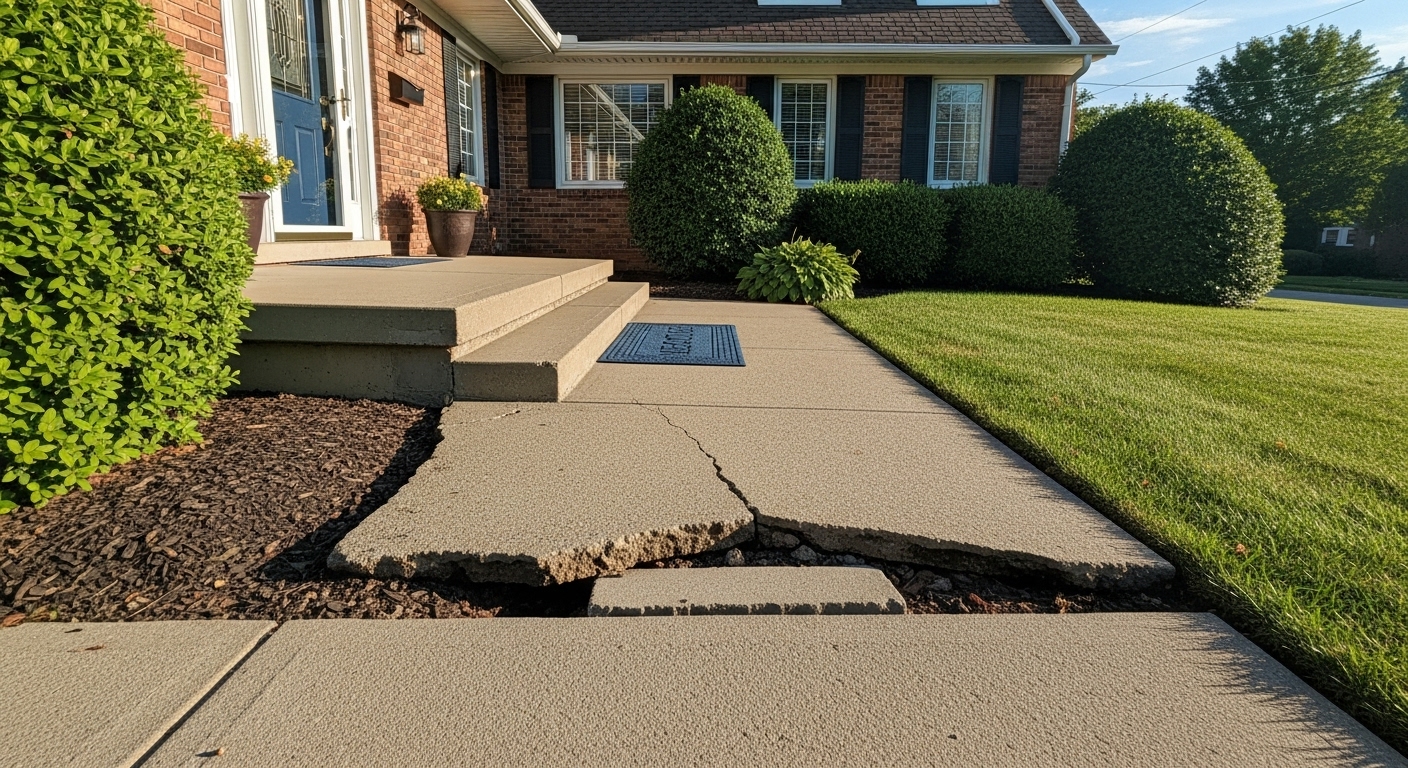
When one patio slab sinks, the adjoining slab may appear raised even though it has not moved. This creates a lip or uneven transition that can catch someone’s shoe.
Trip hazards are especially concerning around:
- Patio entrances
- Concrete steps
- Sliding doors
- Walkways leading to the patio
- Outdoor kitchens and grilling areas
- Areas used by children or older family members
An uneven patio can also make chairs, tables and grills unstable. Rolling a serving cart, lawn equipment or grill across the patio may become difficult.
Waiting for the height difference to become severe can lead to more damage. As settlement progresses, the edges of the concrete can begin chipping or cracking under repeated use.
Where uneven patio slabs connect to sinking steps or walkways, additional services such as concrete step leveling or sidewalk and walkway leveling may also be needed.
5. The Patio Is Pulling Away From the House or Steps
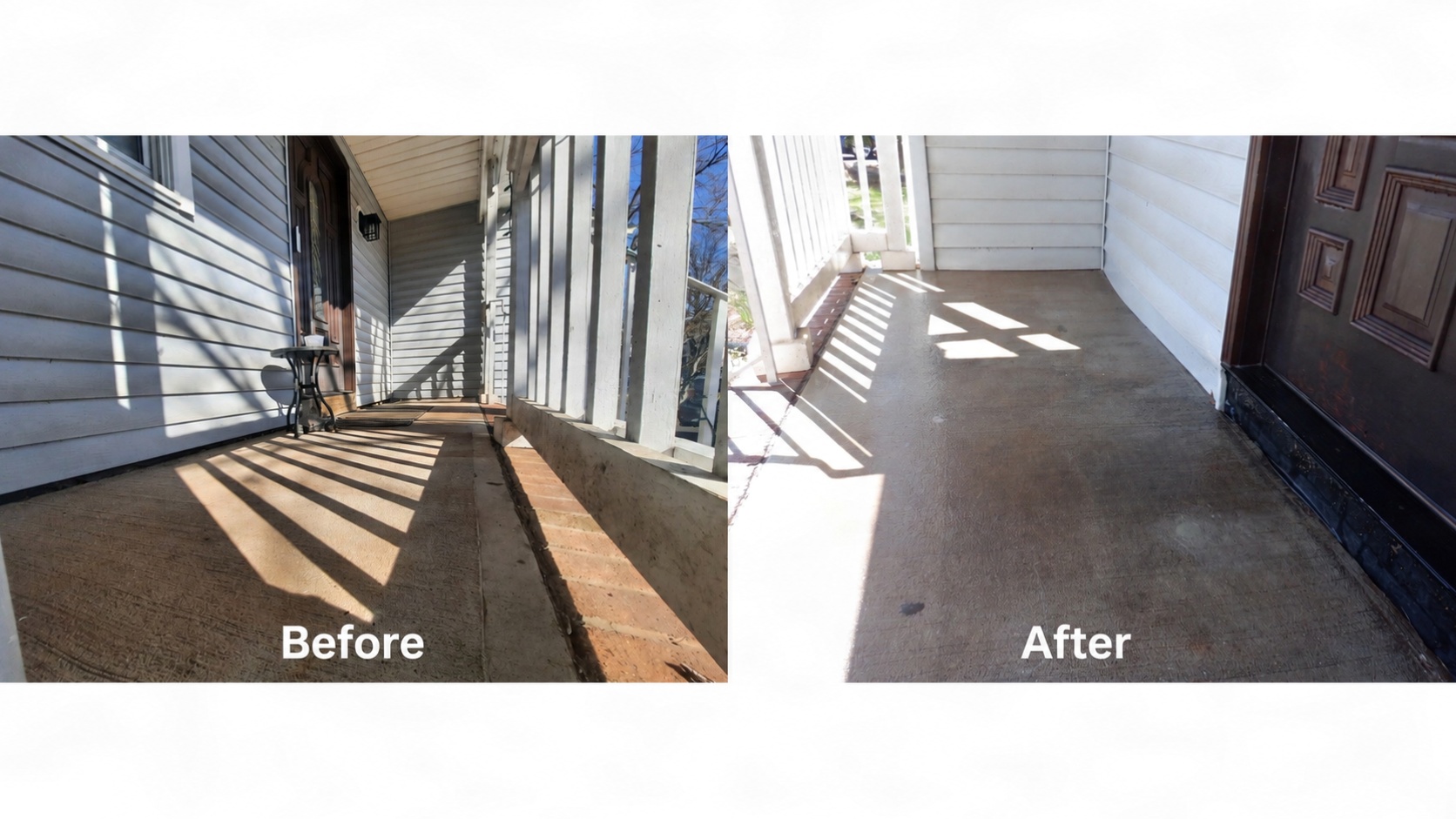
A growing gap between the patio and your home is another warning sign of settlement.
Check where the patio meets the:
- Foundation wall
- Porch
- Concrete steps
- Walkway
- Patio door threshold
- Other adjoining slabs
You may see a widening joint, separated caulk, exposed soil or an open space beneath the slab edge. The patio may also sit noticeably lower than it did when it was installed.
This movement can allow more water to enter around the slab. Water may then wash away more soil, making the settlement progressively worse.
If similar settlement is appearing at the front of your property, Concrete Chiropractor also provides concrete driveway lifting and repair for uneven driveway slabs.
Why Concrete Patios Sink in New Jersey
Concrete patio settlement is usually related to the ground beneath the slab rather than the concrete surface itself.
Common causes include:
- Poorly compacted soil or construction backfill
- Heavy rainfall and uncontrolled runoff
- Downspouts discharging beside the patio
- Soil erosion beneath slab edges
- Underground plumbing or drainage leaks
- Repeated changes in soil moisture
- Winter freezing and spring thawing
- Tree roots disturbing the supporting soil
Local property conditions can vary considerably. In East Brunswick neighborhoods around Farrington Lake and elsewhere in Middlesex County, heavy rain can quickly reveal poor grading or drainage around a patio.
Bridgewater properties can also vary from relatively level residential lots to sloped areas near the Watchung Ridge and Washington Valley Park. On a sloped lot, controlling runoff above and around a patio is especially important. Washington Valley Park lies along the First Watchung Ridge in Bridgewater Township.
Morristown homeowners must also account for seasonal weather changes. The area is known for the historically severe winter experienced by the Continental Army around what is now Morristown National Historical Park. Modern patios can still be affected when water enters joints, freezes and contributes to movement or deterioration.
Homeowners in these communities can learn more about our local services through our pages for:
- Concrete leveling in East Brunswick, NJ
- Concrete leveling in Bridgewater, NJ
- Concrete leveling in Morristown, NJ
How Concrete Patio Lifting Works
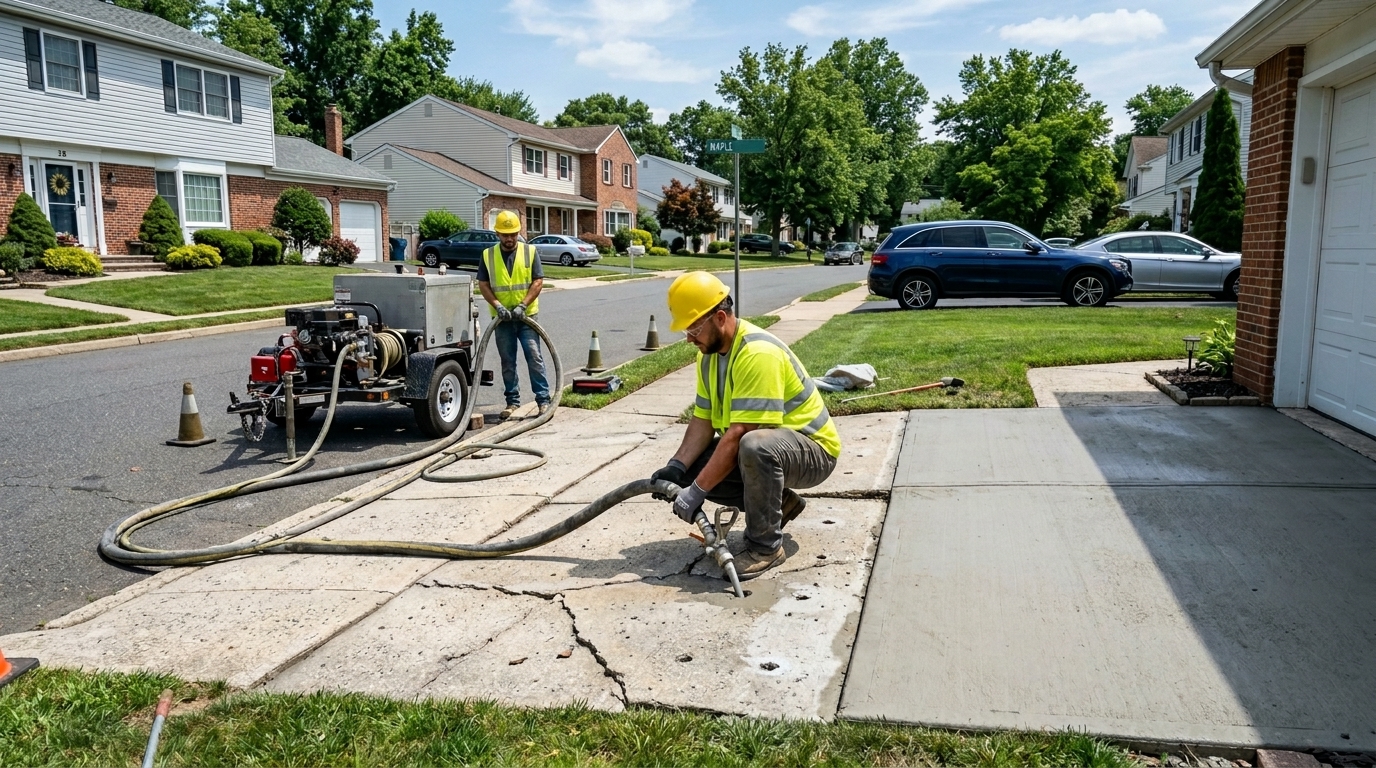
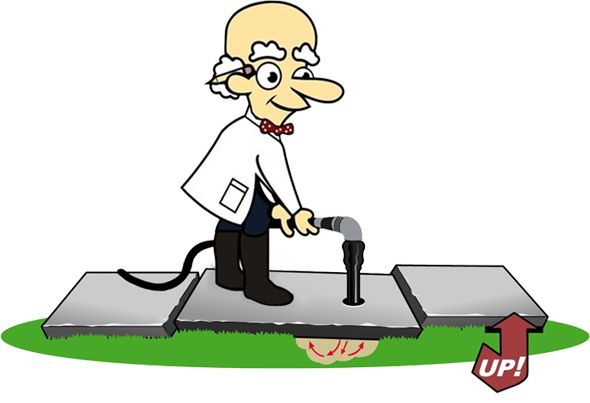
Concrete lifting, also called mudjacking or slabjacking, raises the existing patio instead of demolishing and replacing it.
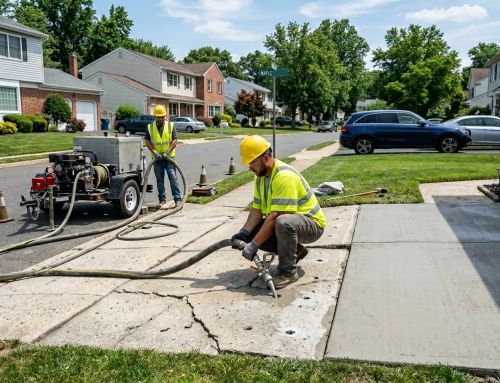
Small holes are drilled in carefully selected locations. A cement-based grout mixture is pumped beneath the slab, where it fills the empty spaces and gradually lifts the concrete. Once the slab reaches the desired position, the access holes are patched.
The process addresses the unsupported area beneath the concrete rather than simply covering the uneven surface. It can also reduce disruption to nearby lawns, landscaping and outdoor living areas.
For more information about the process, read our concrete leveling frequently asked questions or learn about the environmental benefits of traditional mudjacking.
Should You Lift or Replace Your Concrete Patio?
Lifting may be appropriate when the patio has settled but the individual slabs remain structurally sound.
Replacement may be more practical when the concrete is:
- Severely crumbled or deteriorated
- Broken into numerous unstable pieces
- Extensively damaged by tree roots
- Poorly designed for the property
- Too thin or weak to lift safely
Do not assume that an uneven patio automatically needs to be torn out. A professional evaluation can help determine whether lifting can extend the life of the existing concrete.
Get Your Uneven Concrete Patio Inspected
A sunken patio will not correct itself. The longer the slab remains unsupported, the greater the possibility of worsening settlement, drainage problems, trip hazards, and cracking.
Concrete Chiropractor has been lifting patios, driveways, walkways, steps and other concrete surfaces throughout New Jersey and Eastern Pennsylvania for more than 25 years.
Our experienced team can review your patio and determine whether concrete lifting is a suitable alternative to replacement.
Visit our concrete patio leveling and repair service page and request your free estimate today. Mother Nature may shift it, but we can lift it!

- Can You Fix a Settled Patio Without Replacing It? Repair in Ambler, PA - August 31, 2026
- How We Restore Sunken Garage Floors in South Plainfield, NJ - August 31, 2026
- Top 5 Concrete Floor Problems in Garages and Solutions - August 31, 2026