
IN THIS ARTICLE
What Is Mudjacking and Why It’s a Natural Solution
If you have a sunken driveway, a tilting patio slab, or a cracked sidewalk, you have probably looked into ways to fix it without tearing everything out. One of the most practical options out there is mudjacking. It has been around for decades, it works, and it does the job without introducing anything harmful into the ground beneath your home.
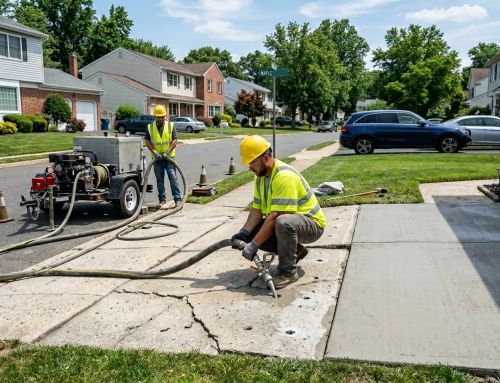
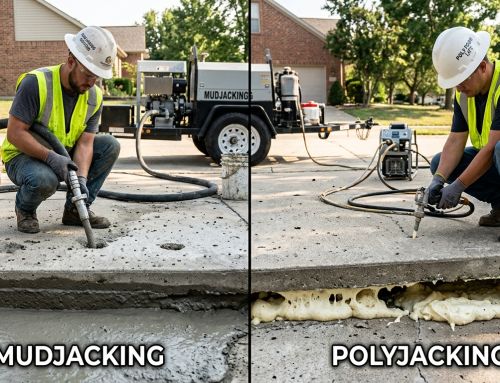
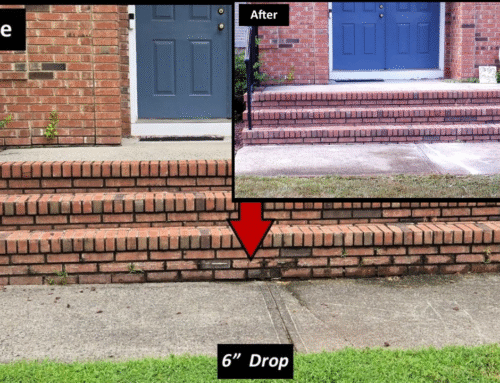
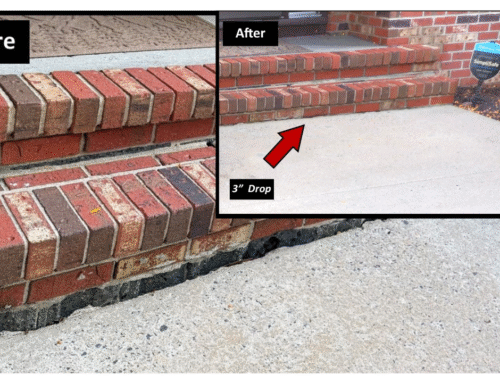
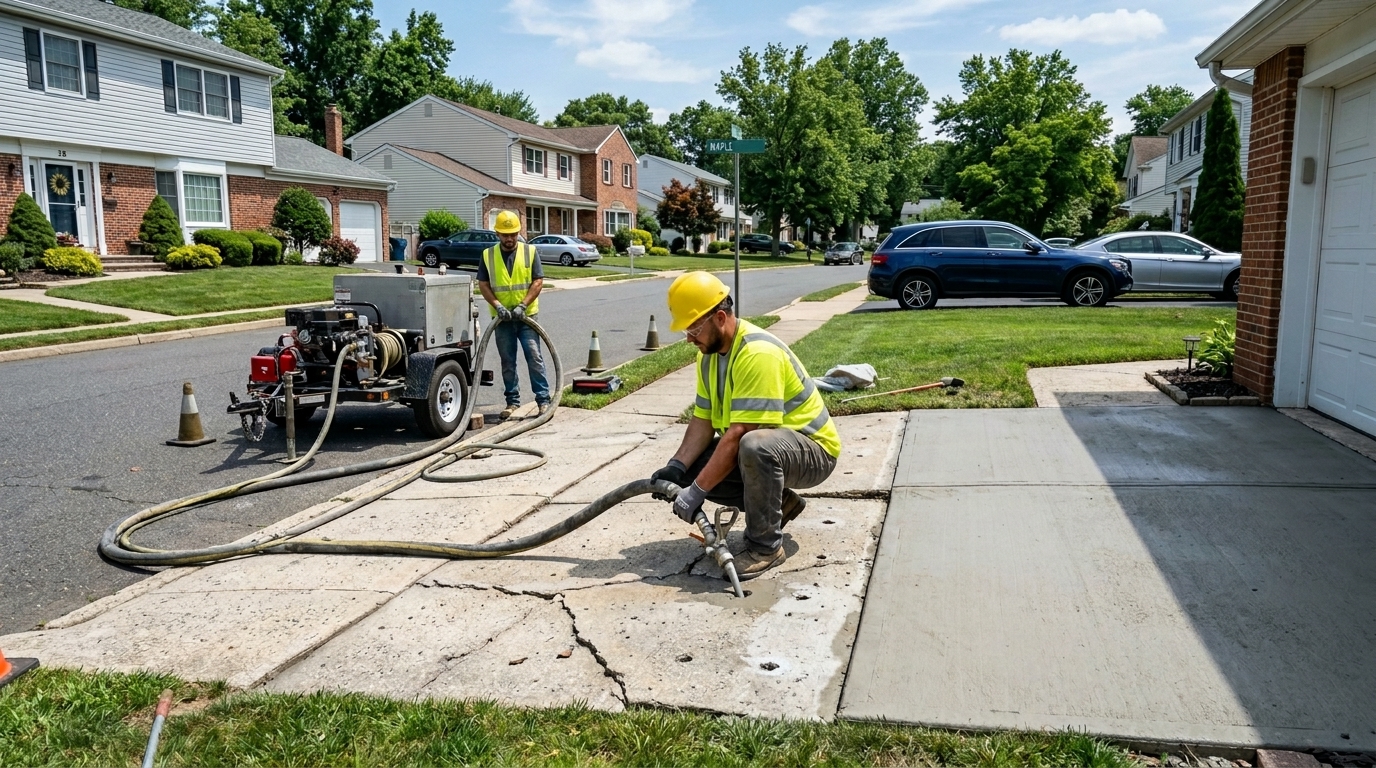
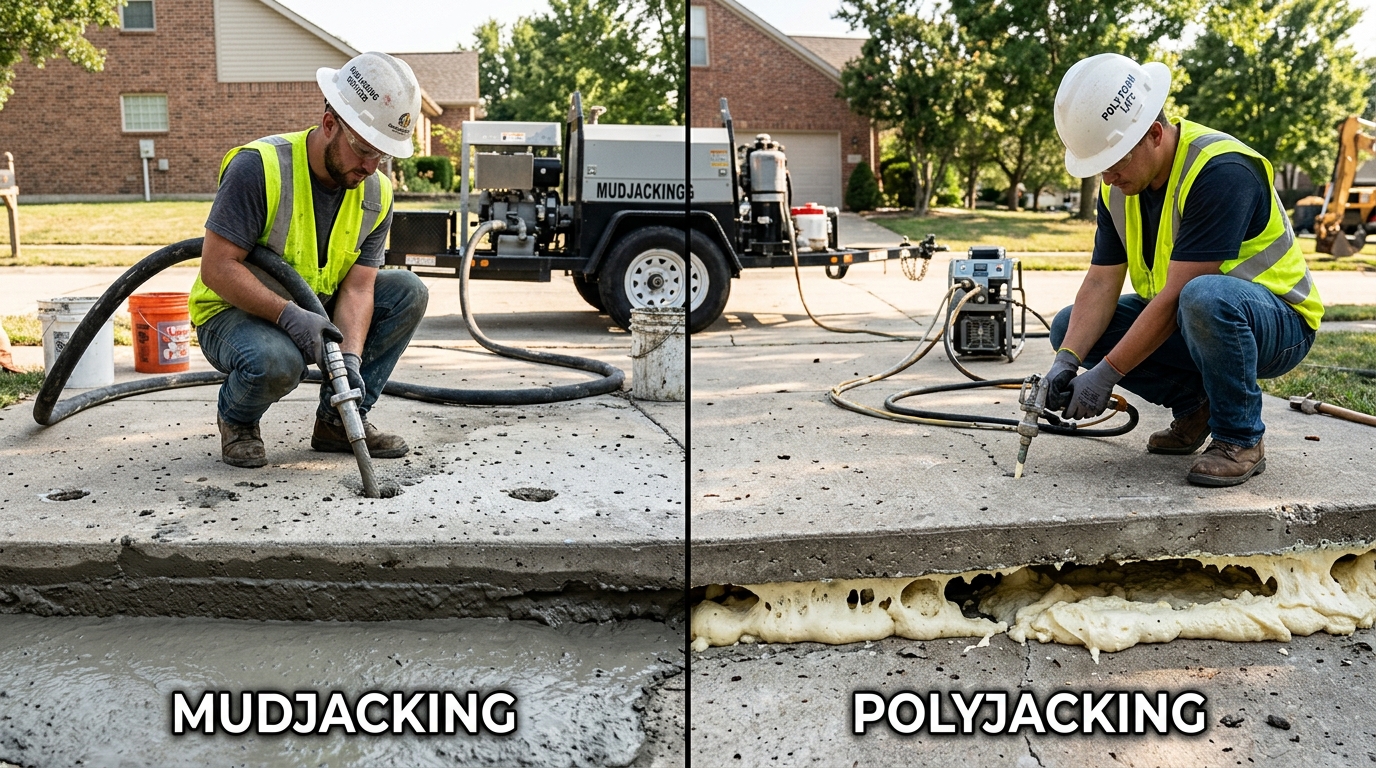
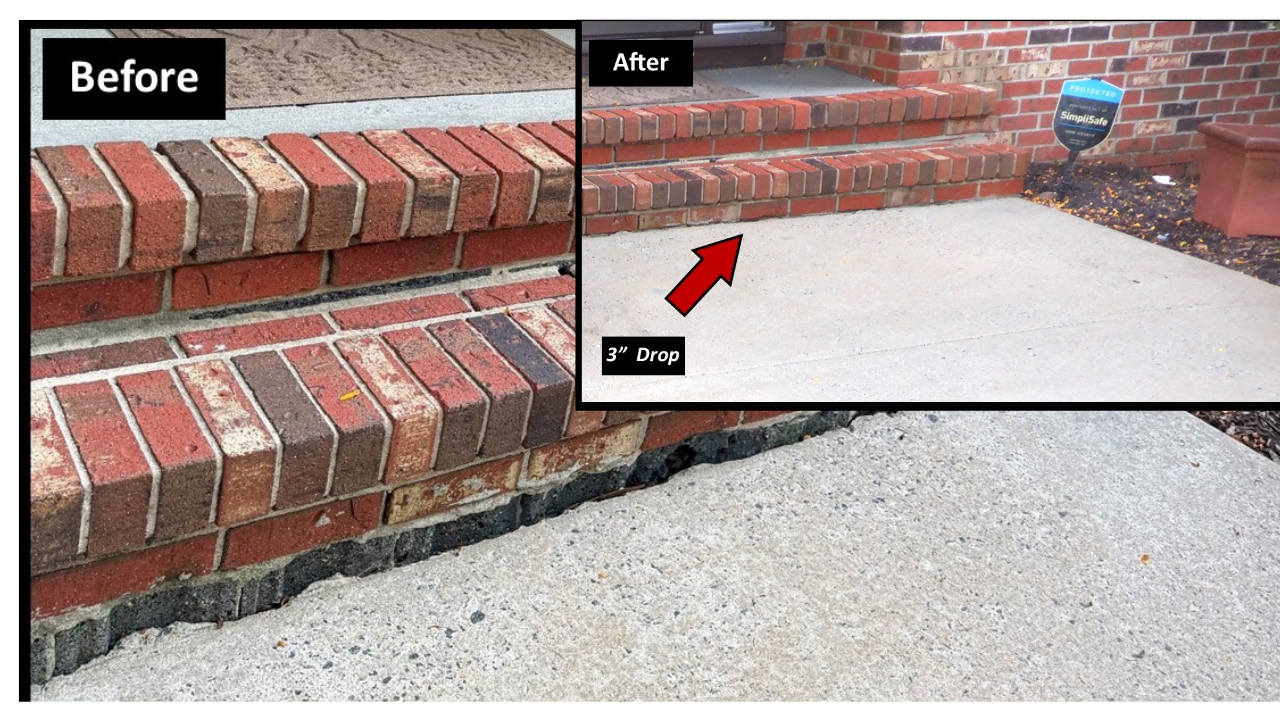
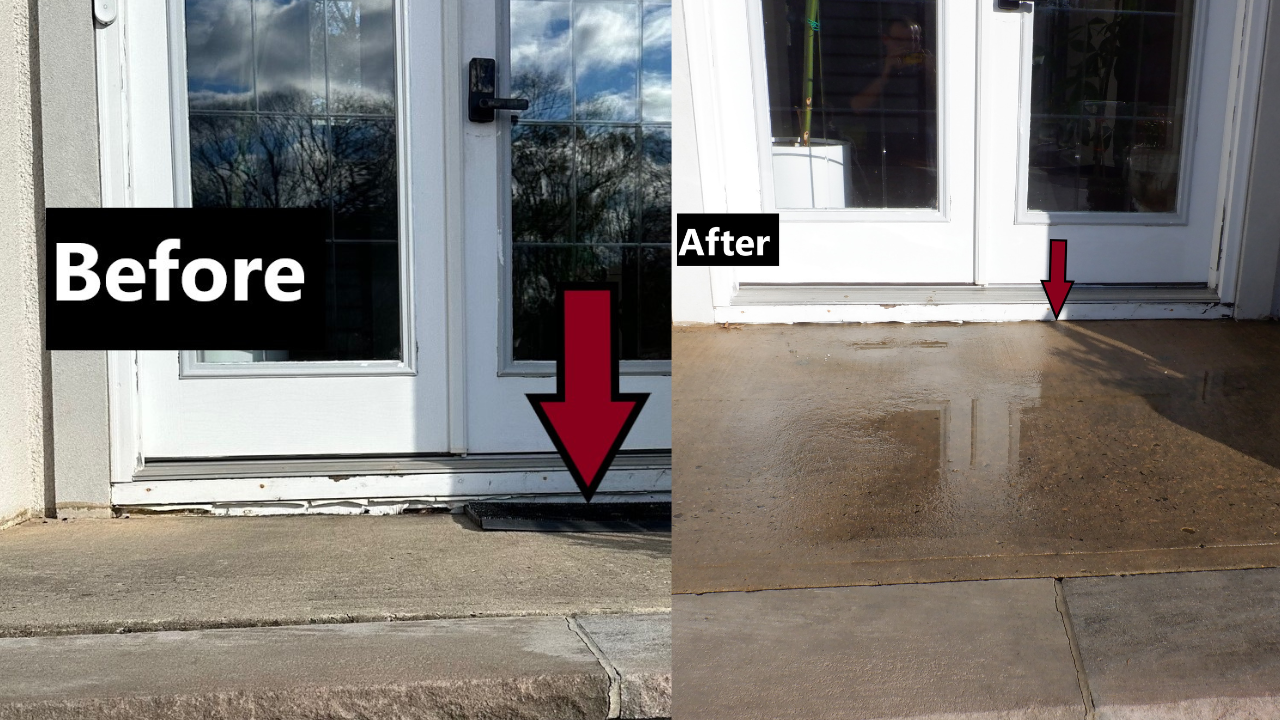
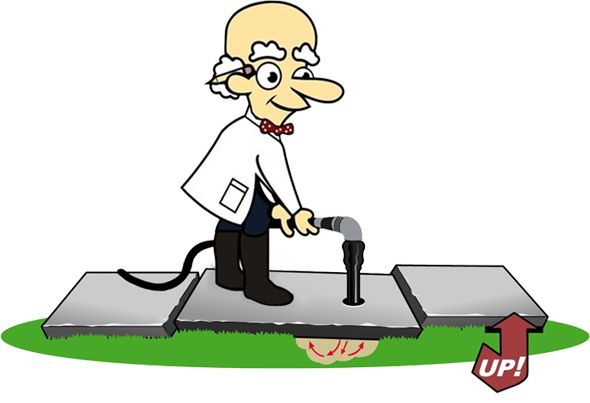
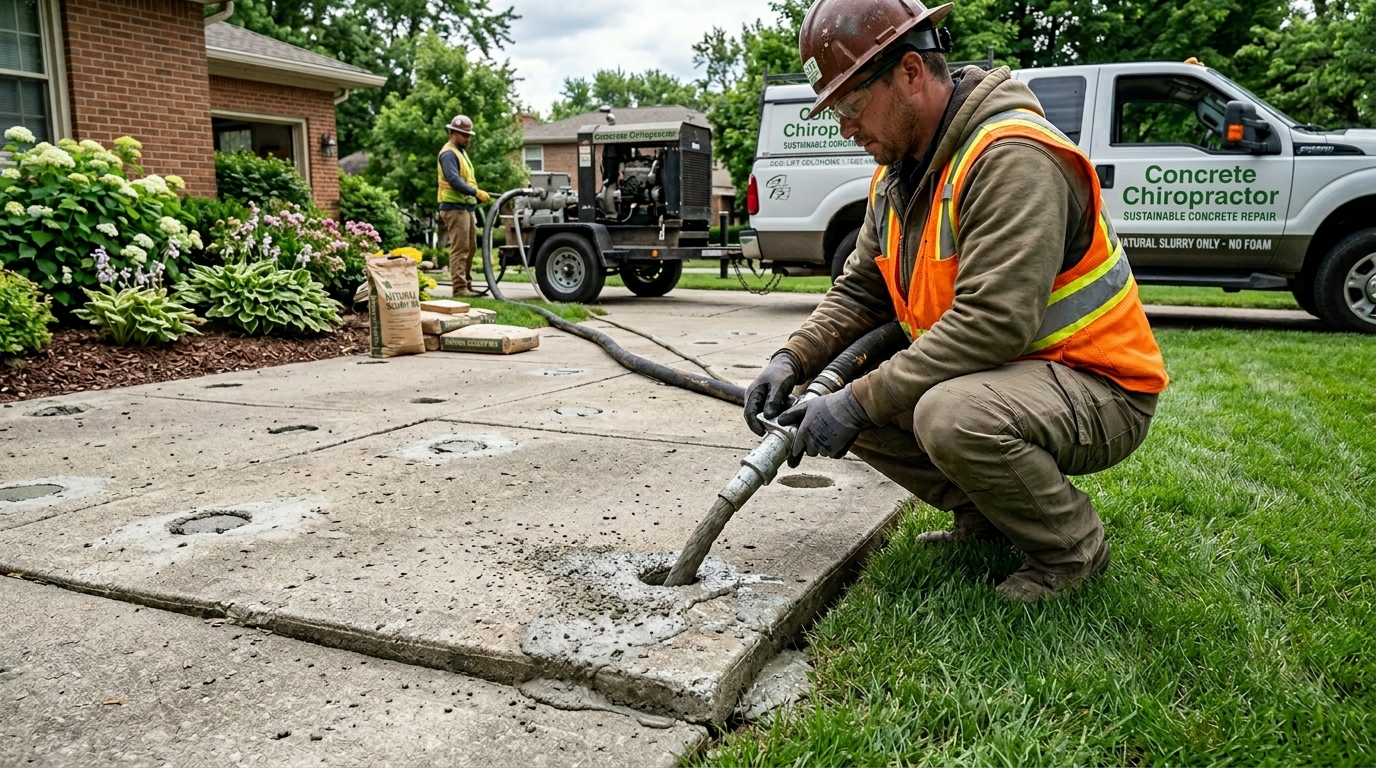
Mudjacking is sometimes called slab lifting or grout lifting. The process is straightforward. A contractor drills small holes into the sunken concrete, then pumps a mixture of sand, soil, cement, and water underneath the slab. As the mixture fills the voids below, it pushes the concrete back up to its original position. Once the slab is level, the holes are patched and the job is done. Most repairs are finished in a few hours.
The materials used in mudjacking are about as basic as it gets. Sand, soil, Portland cement, and water. Nothing synthetic, nothing chemically complex. The slurry that gets pumped under your concrete is essentially the same type of material that is already in the ground around your home. That is what makes it a natural process. There are no fumes, no off-gassing, and no concern about what might leach into your yard over time.
You will find mudjacking used on all kinds of residential concrete. Driveways, patios, sidewalks, garage floors, pool decks, and front stoops are the most common. Anywhere a concrete slab has settled due to soil erosion, poor compaction, or water movement underneath, mudjacking is a solid candidate.
The alternative that has grown in popularity over the past decade or so is foam lifting, also called polyurethane foam injection. Foam lifts concrete too, and it does so quickly. But the materials involved are very different from the natural slurry used in mudjacking. We will get into that in the next section.
The Environmental Concerns with Foam-Based Concrete Lifting
Foam lifting uses polyurethane, a synthetic chemical compound that expands rapidly when injected under a slab. It is effective at raising concrete, and contractors who use it often point to how lightweight it is compared to mudjacking slurry. But there are real questions worth asking about what that foam is doing once it is in the ground.
Polyurethane is a plastic. It does not break down in the soil. Once it is under your driveway or patio, it stays there indefinitely. That alone is worth thinking about, especially if you care about what is happening in the ground around your home and garden.
The formulations used in foam lifting vary by manufacturer, and not all of them are the same. Some contain isocyanates and other chemical compounds that raise questions about soil interaction, particularly in areas with high moisture or close proximity to landscaping and garden beds. The research on long-term soil impact from polyurethane foam is still limited, but the concern is real enough that more homeowners are starting to ask their contractors about it before agreeing to the work.
There is also the matter of disposal. With mudjacking, if the slab ever needs to be removed in the future, the material underneath is just compacted soil and cement. Harmless. With foam, you are dealing with plastic material that has expanded and hardened in place. It cannot be recycled, and it will not decompose.
We are not saying foam lifting is a bad product or that contractors who use it are doing something wrong. The point is simply this: know what is going under your home. You deserve to understand the difference between a natural repair and a synthetic one before you make a decision.
Key Environmental Benefits of Mudjacking
This is where mudjacking really stands out, especially for homeowners who think about the long-term health of their property and the environment around it.
The most important benefit is the simplest one. Mudjacking uses natural, earth-based materials. The slurry is made from things that are already in the ground. When it cures under your slab, it becomes part of the soil environment rather than a foreign object sitting in it.
There is no plastic involved. No synthetic foam. No chemical compounds that raise questions about what they might do to nearby plant roots, soil microbes, or water that moves through the ground. For homeowners with gardens close to their driveways or patios, that matters quite a bit.
The repair process itself causes very little disruption. The holes drilled into the concrete are small, typically around one to two inches in diameter. There is no excavation, no heavy equipment tearing up your yard, and no need to remove and replace the existing slab. The surrounding soil stays intact. Your landscaping stays intact.
Long-lasting results are another environmental win, even if it is not the first thing people think about. A good mudjacking job can last ten to fifteen years or longer when done correctly. That means fewer repairs over the life of your concrete, which means less material, less labor, and less disruption overall. Fewer repairs is always better for the environment than more frequent ones.
And when you add it all up, mudjacking leaves a much smaller environmental footprint than foam. No plastic left in the ground, no chemical compounds to worry about, and a repair process that works with the natural materials already present on your property.
Why Eco-Friendly Concrete Repair Matters for Homeowners
You might be thinking that your driveway or patio is a small thing in the grand scheme of environmental concerns. And you are right that no single repair job is going to change the world. But the choices you make about your home do add up, and they do affect the small ecosystem right around your house.
The soil around your home supports your landscaping, your garden beds, your lawn, and in some cases, trees that have been growing for years. Introducing synthetic materials into that environment, even indirectly through concrete repair, is something worth being thoughtful about. Mudjacking lets you fix your concrete without changing the chemistry of the ground beneath it.
There is also the question of chemical exposure around your living spaces. Most of us spend time on our patios, driveways, and walkways regularly. Children play on these surfaces. Pets walk on them. While foam-lifted concrete is not coated in chemicals you can touch, the compounds used in the process are present in the soil directly underneath. With mudjacking, you do not have that concern.
Choosing sustainable repair solutions is also becoming a factor in property value. Buyers in New Jersey and Eastern Pennsylvania are increasingly aware of eco-friendly home improvements, and a home maintained with environmentally responsible products is a home that tells a good story to the next buyer.
Beyond all of that, there is something to be said for peace of mind. Knowing what is under your concrete means you are not left wondering whether a past repair might cause problems down the road. With mudjacking, the answer is simple. It is sand, soil, cement, and water. That is it.
Get a Free Concrete Floor Assessment for Your Home
Not sure whether your driveway, patio, walkway, or garage floor needs attention? That is exactly what we are here for.
Our team specializes in natural, long-lasting mudjacking solutions for homeowners across New Jersey and Eastern Pennsylvania. We use earth-based materials, we do not cut corners, and we will give you a straight answer about what your concrete actually needs.
We can assess your slabs via a clear image and walk you through the options. No pressure, no upselling, just an honest assessment from people who know concrete repair. Contact us today to schedule your free concrete floor assessment.

- Can You Fix a Settled Patio Without Replacing It? Repair in Ambler, PA - August 31, 2026
- How We Restore Sunken Garage Floors in South Plainfield, NJ - August 31, 2026
- Top 5 Concrete Floor Problems in Garages and Solutions - August 31, 2026