
IN THIS ARTICLE
Find out why we stick with Mudjacking for Concrete leveling in New Jersey and Eastern PA Areas
You step outside and notice it, a concrete slab that’s sunk, cracked, or sitting at an awkward angle. Maybe it’s your driveway, your front walkway, or the patio where your family spends summer evenings. It’s not just an eyesore. It’s a trip hazard, a drainage problem, and if you leave it long enough, a much bigger repair bill. When you start looking for solutions, two names keep coming up: mudjacking and polyjacking. Both claim to fix the problem. But they are not the same, and the difference matters more than most people realise.
We’ve spent years working with mudjacking, and we stand behind it completely. Here’s why.
What Is Mudjacking and Polyjacking?
Before you can choose the right method, you need to understand what each one actually does.
How Mudjacking (Grout Lifting) Works
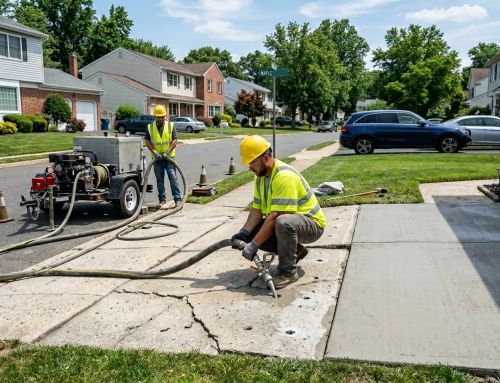
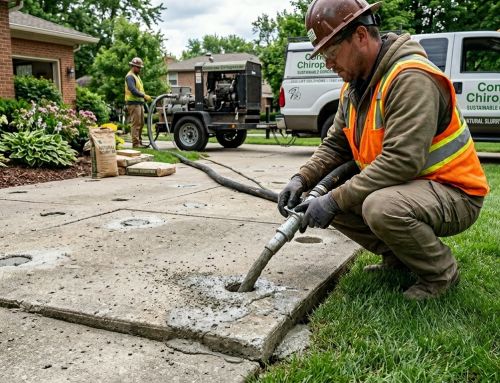
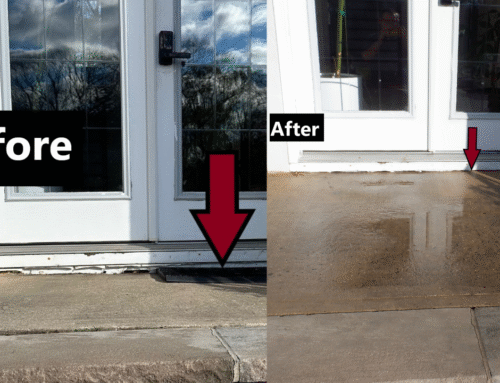
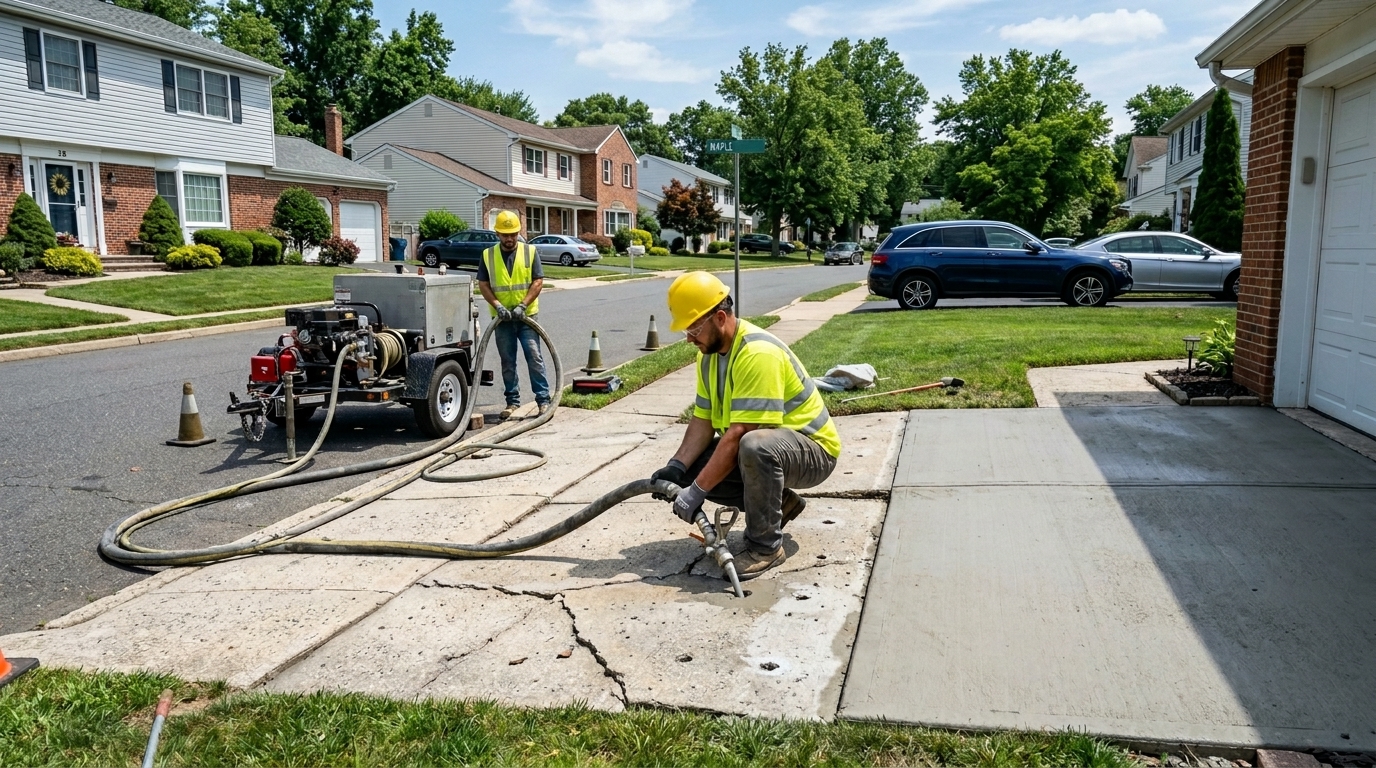
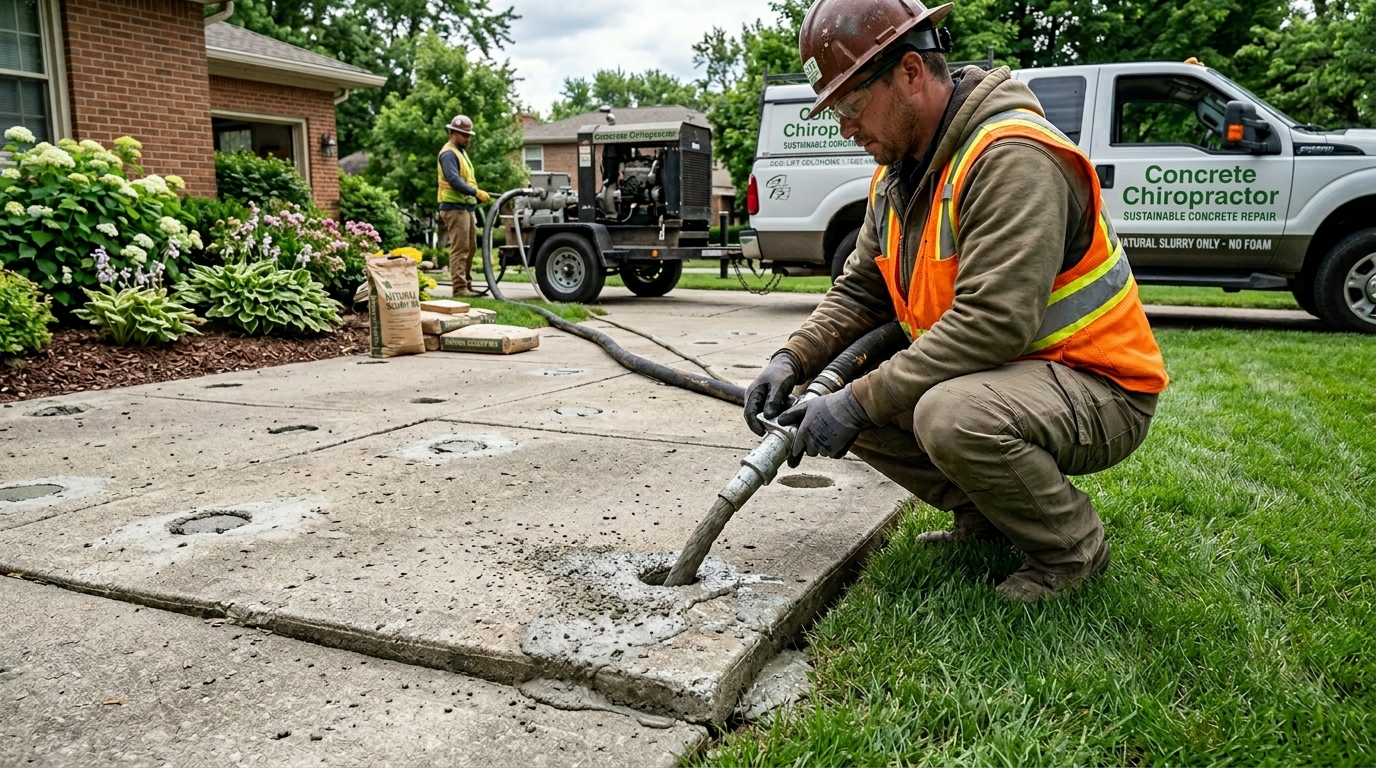
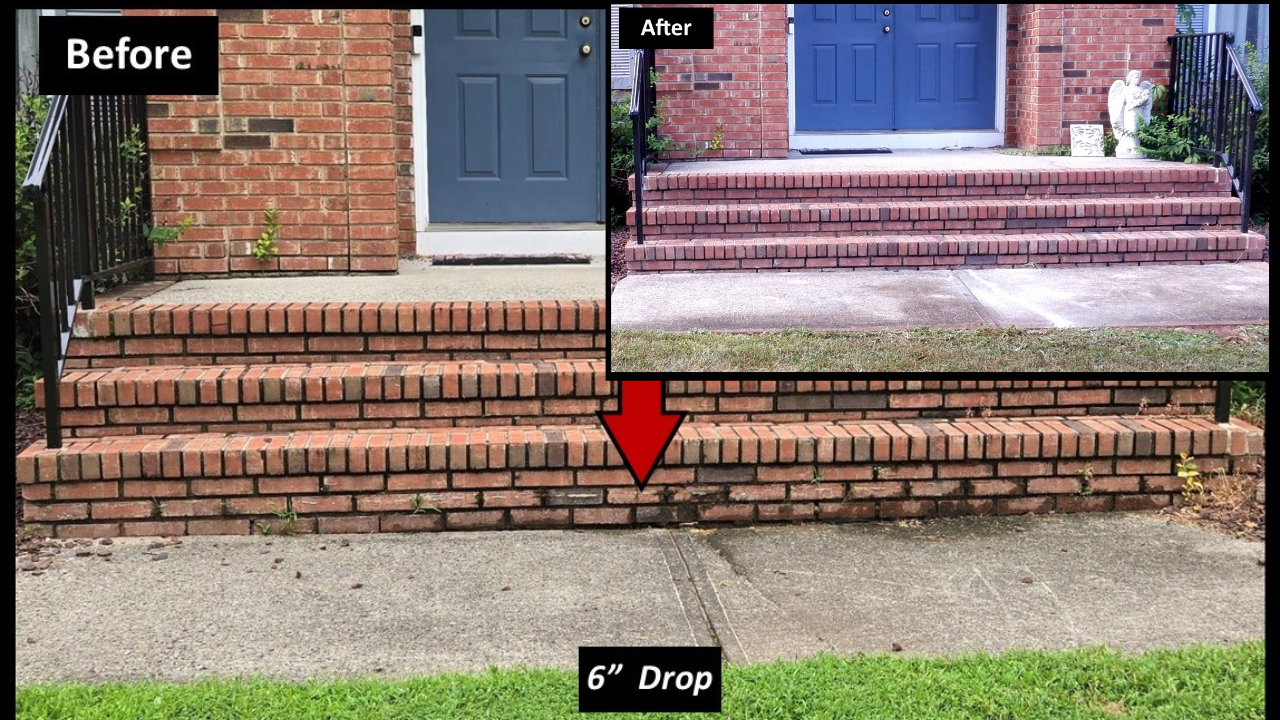
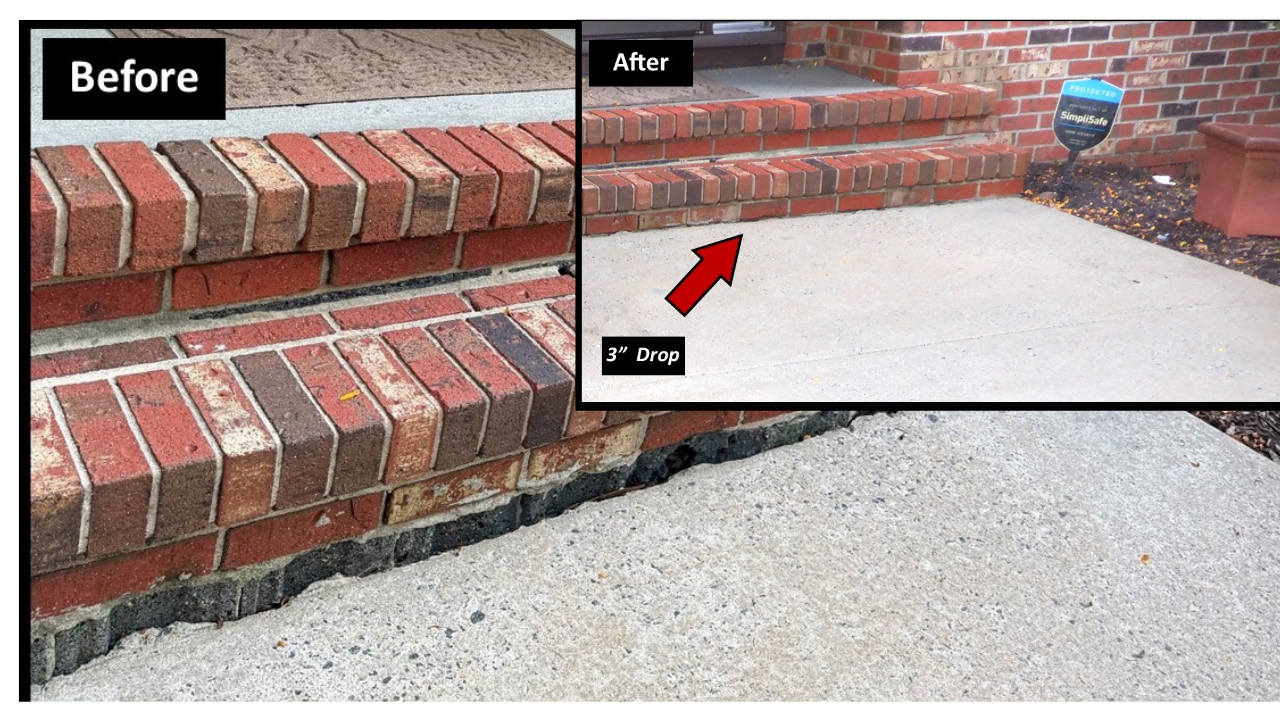
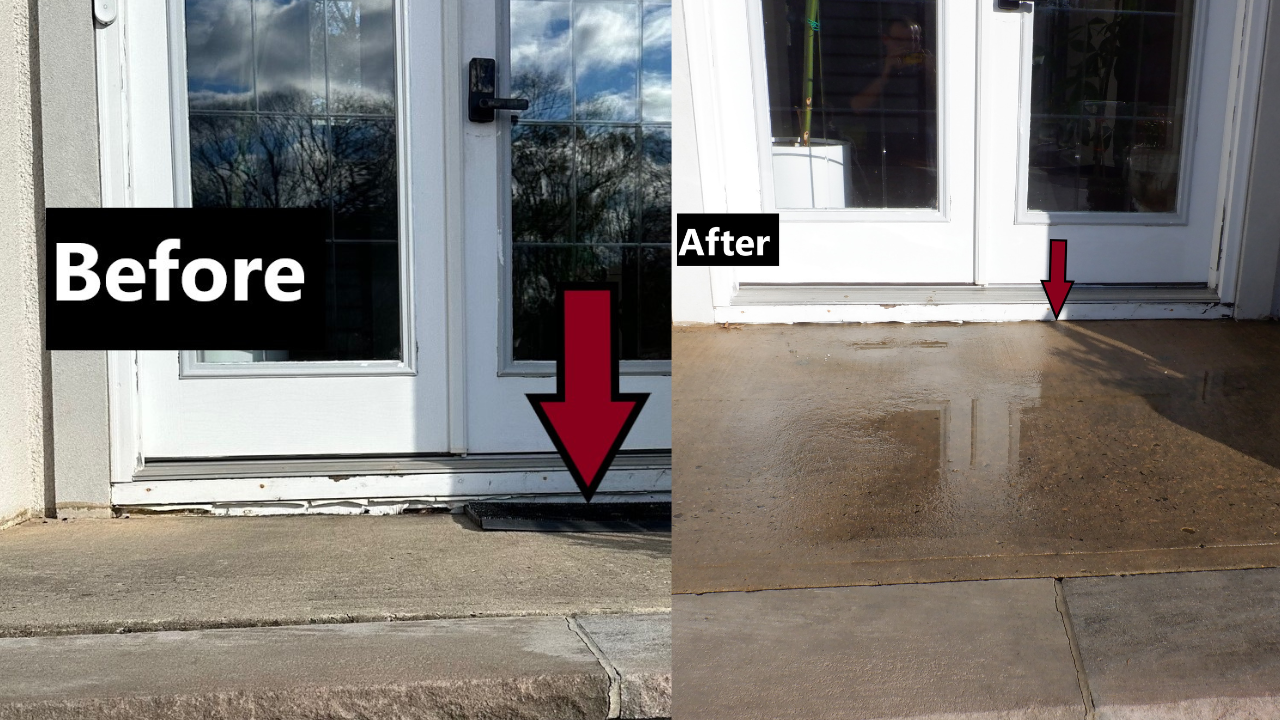
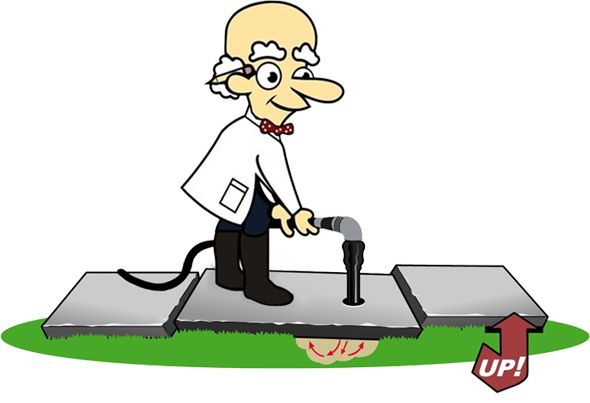
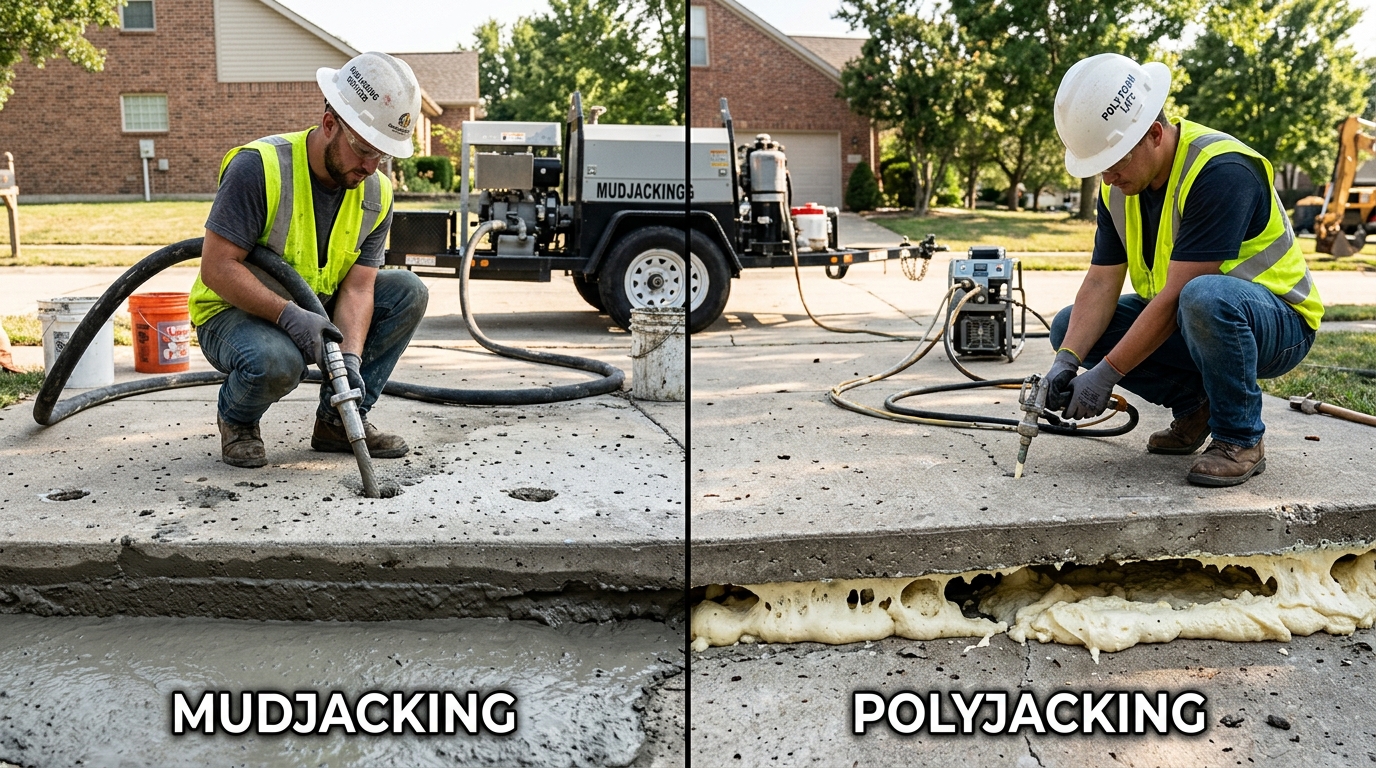
Mudjacking, also called slab jacking or grout lifting, is a straightforward process. We drill small holes into the sunken concrete slab, then pump a slurry mixture of water, soil, and cement underneath it. As the mixture fills the voids below the slab, the pressure slowly and steadily lifts the concrete back to its original position. Once the slab is level, we seal the drill holes, and the job is done.
The material we pump in is dense, natural, and load-bearing. It doesn’t just lift the slab; it becomes a solid support base beneath it.
How Polyjacking (Foam Lifting) Works
Polyjacking follows a similar concept but uses a very different material. Instead of a grout slurry, it injects expanding polyurethane foam through small holes drilled into the slab. The foam expands as it’s injected, and that expansion pushes the concrete upward.
The holes used in polyjacking are smaller, and the process is faster. That’s where most of its appeal begins and ends.
The Key Difference: Natural Material vs. Synthetic Foam
This is the core of the debate. Mudjacking uses a natural, cement-based mixture that cures into a firm, stable mass. Polyjacking uses a synthetic chemical foam that expands and then hardens. One becomes part of the ground. The other sits in it.
That distinction has real consequences for how long your repair lasts and how well it holds up under pressure.
Where These Methods Are Typically Used
Both methods are used on residential concrete , driveways, sidewalks, patios, garage floors, pool decks, and front stoops. They’re both marketed as alternatives to full concrete replacement. In commercial settings, you’ll also see them used under warehouse floors, loading docks, and sidewalk panels.
Why Homeowners Often Hear About Both Options
Polyjacking has been heavily marketed in recent years, largely because it’s faster and the equipment is more compact. Some contractors have moved toward it because of the convenience factor. Marketing has reached homeowners, and so now people often come to us asking which one is better. We’re glad they ask, because the answer matters.
Why Polyjacking Is Not Ideal for Residential Concrete
We’re going to be direct here. Polyjacking has real limitations when it comes to residential concrete lifting, and we think homeowners deserve to know them.
Lightweight Foam Does Not Provide Long-Term Structural Support
Polyurethane foam is lightweight by nature. That’s a selling point for speed, but it’s a problem for stability. Residential concrete slabs carry significant weight , foot traffic, vehicles, outdoor furniture, and the natural pressure of the soil around them. A dense grout base is built to handle that. Foam is not. Over time, a lightweight fill under a heavy slab is more likely to compress or shift than a solid grout bed.
Risk of Over-Expansion and Uneven Lifting
Foam expands as it’s injected, and that expansion is harder to control with precision. In some cases, the foam can over-expand, pushing one section of a slab higher than intended. This creates new unevenness , the very problem you were trying to fix. With mudjacking, the lift is gradual and controlled, which gives the technician much better command over the final result.
Voids Can Return, Leading to Re-Settlement
If the underlying cause of the sinking is water erosion, poor compaction, or soil movement, then the voids beneath your slab didn’t just appear once , they’re likely to form again. Mudjacking fills those voids completely with a material that bonds and hardens like the ground itself. Foam fills the void too, but because it doesn’t integrate with the surrounding soil the same way, it’s more vulnerable when the ground shifts again. Re-settlement after polyjacking is a common complaint.
Chemical-Based Material Concerns Around Homes
Polyurethane foam is a synthetic chemical product. While manufacturers describe most formulations as stable once cured, there are legitimate questions about chemical leaching in areas with heavy rainfall or high water table , conditions common in many parts of New Jersey and Eastern Pennsylvania. Around garden beds, near water features, or in areas where kids and pets play, natural grout is the straightforward, no-questions choice.
Shorter Lifespan Compared to Traditional Methods
Mudjacking repairs, when done properly, can last 10 years or more. In many cases, significantly longer. Polyjacking repairs tend to have a shorter track record in residential settings, and the long-term performance data simply doesn’t match what decades of mudjacking results show. Faster installation doesn’t mean a longer-lasting fix.
Why Mudjacking Remains the Proven, Reliable Solution
We don’t just use mudjacking because it’s what we know. We use it because the results speak for themselves, consistently, year after year.
Dense Grout Creates a Solid, Load-Bearing Base
The slurry we pump beneath your slab isn’t just filler. It cures into a dense, cement-based mass that becomes a structural part of the ground beneath your concrete. It can carry the weight of vehicles. It doesn’t compress under pressure. It behaves like the stable base your slab should have had from the start.
Fills Voids Completely for Lasting Stability
One of the main reasons concrete sinks is that voids form in the soil beneath it , caused by water erosion, compaction, or organic material breaking down. Mudjacking fills those voids thoroughly. The slurry flows into every gap and hardens in place, eliminating the empty space that caused the problem in the first place.
Controlled Lifting With Predictable Results
Because we control the flow and pressure of the grout mixture, we can lift your slab gradually and with precision. We can stop at exactly the right point. We can monitor the lift in real time. This level of control means fewer surprises and cleaner results, a slab that’s level, not just approximately level.
Decades of Proven Performance in Residential Settings
Mudjacking has been used to repair residential concrete for decades. It has a long track record across different climates, soil types, and use cases. That’s not something you can say about newer methods that have only been in wide use for a fraction of that time. When you choose mudjacking, you’re choosing a method with a history of working.
Natural, Eco-Friendly Material Safe for Your Property
The materials we use, water, soil, and cement, are the same basic materials already in and around your property. There’s nothing synthetic being introduced into your soil. That matters for families who care about what goes into their yard, and it matters for properties near water or in environmentally sensitive areas.
Homeowners need a solution that lasts, not a temporary lift.
What Homeowners in NJ & Eastern PA Should Know
If you live in New Jersey or Eastern Pennsylvania, your concrete floor faces some specific challenges that make material choice even more important.
Soil Movement and Settling are Common in the Region
The soil composition across much of NJ and Eastern PA is varied, clay-heavy in some areas, sandy in others. Both types are prone to shifting, especially with changes in moisture. Clay expands when wet and contracts when dry. Sandy soil erodes easily. Neither condition is forgiving for lightweight repair materials.
Freeze-Thaw Cycles Affecting Concrete Slabs
This region experiences real winters. The ground freezes, thaws, and freezes again, sometimes multiple times in a single season. That repeated movement puts stress on everything beneath your concrete floor. A dense, hardened grout fill holds up through those cycles far better than foam, which can be more susceptible to movement when the ground is active.
Drainage and Water Erosion Around Homes
Poor drainage is one of the most common culprits behind sinking concrete in this region. Water pools against foundations, runs under slabs, and erodes the soil support over time. When you’re dealing with water erosion, you need a fill material that bonds with the surrounding soil and resists being undermined again. Grout does that. Foam doesn’t have the same resistance to water-driven erosion beneath the slab.
Why Lightweight Solutions Struggle in These Conditions
Put it plainly: this region’s climate and soil conditions are demanding. Freeze-thaw stress, clay movement, and active water drainage all work against lightweight fills. A material that performs well in stable, dry conditions may not hold up through a New Jersey winter followed by a wet spring. Dense grout was built for exactly this kind of environment.
Importance of Choosing a Long-Term Fix
Concrete repair isn’t something most homeowners want to revisit every few years. The cost, the disruption, the inconvenience , nobody wants a repeat job. Choosing the right method the first time isn’t just about saving money now. It’s about not having to make that call again two or three years down the road.
Choosing a Concrete Lifting Method That Actually Lasts
When you’re standing in front of a sunken slab trying to decide what to do, here’s what we’d want you to know.
Why Quick Fixes Often Lead to Repeat Repairs
Faster isn’t always better. A repair that takes a little longer but addresses the root cause , the void, the unstable base, the settling soil , will always outperform a quick patch that only treats the surface symptom. We’ve seen homeowners go through multiple foam-lifting jobs in the span of time that one mudjacking repair has held firm.
The Importance of Long-Term Stability Over Speed
Yes, polyjacking can be done faster. But your driveway doesn’t need to be fixed in 30 minutes , it needs to stay fixed. When you frame the decision around long-term stability rather than convenience, the choice becomes clearer. A solid, load-bearing base that lasts a decade or more is worth a few extra hours on the job.
Signs Your Driveway, Patio, or Walkway Needs Lifting
You don’t need to wait for a major crack or a serious hazard. Look for slabs that have dropped even slightly below adjacent panels, water pooling on surfaces that used to drain properly, gaps forming between slabs, or any concrete near your home that rocks or shifts when you step on it. Catching settling early makes the repair simpler and cheaper.
What to Expect From Professional Mudjacking
The process is less disruptive than most people expect. We drill a series of small holes, typically 1.5 to 2 inches in diameter, through the slab. We inject the grout mixture until the slab lifts to the correct level. Then we fill the holes with a matching concrete mix. Most jobs are done in a matter of hours, and you can walk on the surface shortly after. Vehicles can typically use a repaired driveway within 24 hours.
Why Working With an Experienced Grout Specialist Matters
Not all mudjacking is equal. The mixture ratios, the injection pressure, and the placement of the drill holes are details that come with experience. Done right, mudjacking is a long-lasting repair. Done carelessly, even a good method can produce mediocre results. When you work with a specialist who has done this for years and stands behind their work, you’re getting the method and the expertise together. That combination is what actually makes concrete stay level. Give us a call today for a free concrete floor assessment.

- Can You Fix a Settled Patio Without Replacing It? Repair in Ambler, PA - August 31, 2026
- How We Restore Sunken Garage Floors in South Plainfield, NJ - August 31, 2026
- Top 5 Concrete Floor Problems in Garages and Solutions - August 31, 2026