

IN THIS ARTICLE
How Concrete Lifting Fixes a Sinking Porch Without Full Replacement
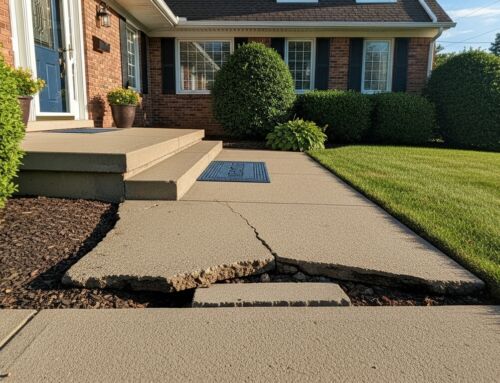
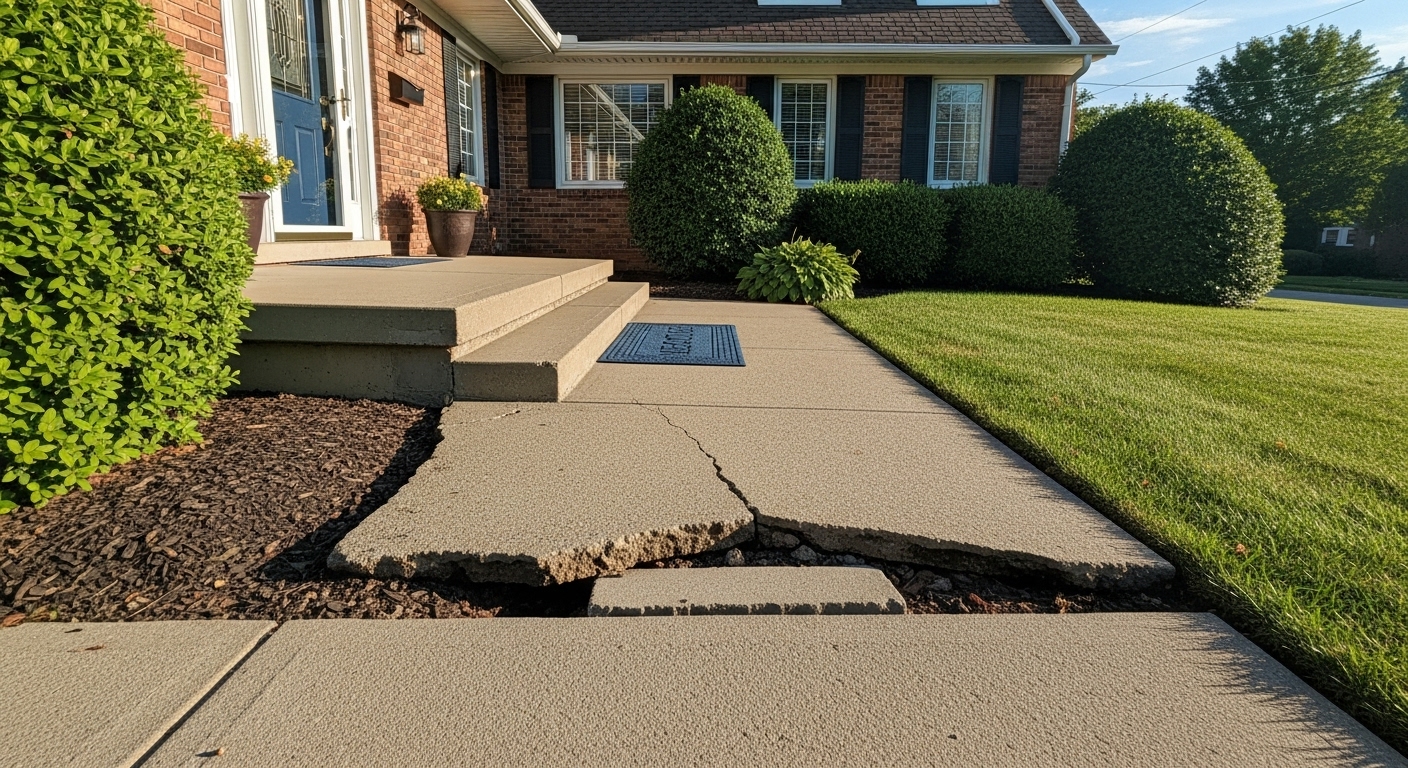
Porch top settlement can turn a safe, attractive entrance into an uneven surface that collects water and creates a tripping hazard. You may notice that the concrete porch has dropped below the front door, separated from the house, or caused the steps to become uneven.
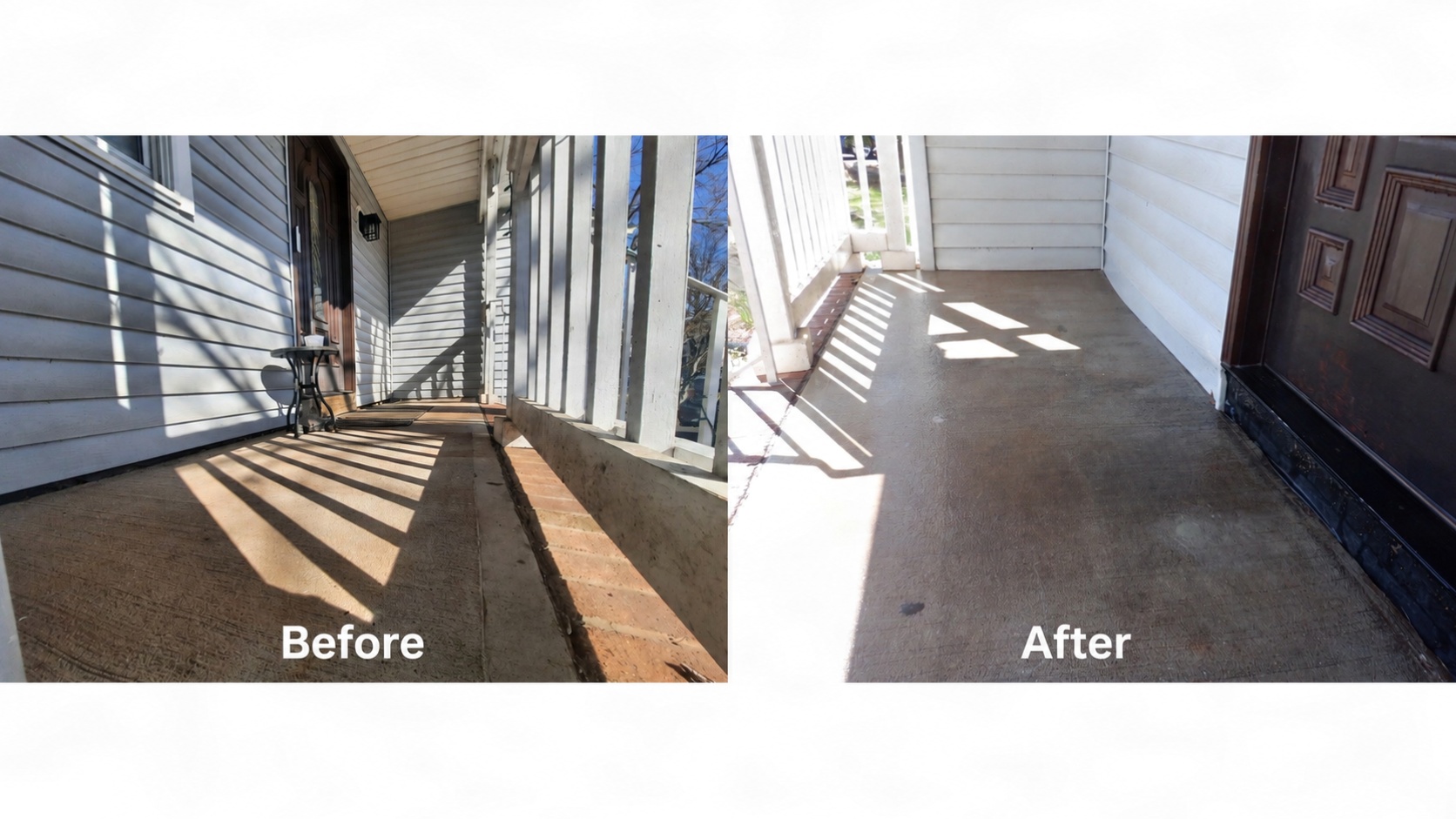
The good news is that a settled concrete porch does not always need to be demolished and replaced. When the concrete remains in reasonably good condition, professional concrete porch leveling and repair can raise the existing porch top, fill the empty spaces beneath it, and restore a safer slope.
At Concrete Chiropractor, we have more than 25 years of experience lifting and leveling concrete throughout New Jersey and Eastern Pennsylvania. Here is how to determine the best repair for porch top settlement at your home.
What Is Porch Top Settlement?
The porch top is the concrete walking surface at the front or rear entrance of a home. Porch top settlement occurs when the soil or fill beneath that concrete can no longer support it evenly.
As the supporting material compresses, erodes, or develops hollow areas, part of the porch begins to sink. The concrete may remain in one large section, but its height and slope change.
Common signs include:
- A gap between the porch and the house
- A porch surface that slopes toward the foundation
- Water collecting beside the front door
- A noticeable drop below the doorway
- Uneven porch steps
- Cracks that change in width or height
- Railings or columns that no longer sit correctly
- A hollow sound beneath parts of the concrete
Porch settlement is different from ordinary surface wear. Applying sealer, resurfacing the top, or filling a crack will not raise an unsupported slab. The empty space beneath the porch must be filled and the concrete returned to the correct height.
What Causes Porch Top Settlement in New Jersey?
Most porch settlement begins with the material beneath the concrete rather than the concrete itself. You can learn more in our guide to what causes concrete settlement in New Jersey.
Poorly compacted fill soil
When a house and porch foundation are built, the surrounding area is excavated and later refilled. If this soil is not properly compacted in layers, it can continue compressing for years after the porch is installed.
As the soil settles, the concrete above it loses support and drops.
Water erosion
Roof runoff, short downspouts, poor grading, and leaking gutters can direct water toward the porch. Moving water may gradually carry fine soil particles away, leaving hollow spaces beneath the slab.
New Jersey receives substantial precipitation and experiences freezing winter temperatures, so controlling water around exterior concrete is especially important.
Freeze-and-thaw conditions
Water that enters cracks or collects beneath concrete can freeze during cold weather. Repeated freezing and thawing may worsen existing movement, expand cracks, and disturb poorly supported areas.
Freeze-thaw weather is not always the original cause of porch settlement, but it can make an existing soil, drainage, or void problem worse.
Improper drainage slope
A porch should generally direct water away from the home. Once one section settles, the slope may reverse and send rainwater toward the foundation. That additional water can accelerate soil erosion and cause further movement.
Decaying roots or buried material
Tree roots, old construction debris, and organic material may leave empty spaces as they decay or shift. Concrete installed over these areas can eventually lose support.
What Is the Best Way to Repair Porch Top Settlement?
When the porch slab is still structurally sound, mudjacking is often the best way to repair porch top settlement without removing the existing concrete.
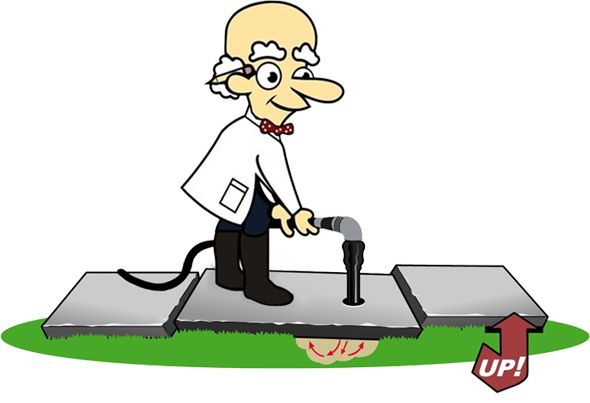
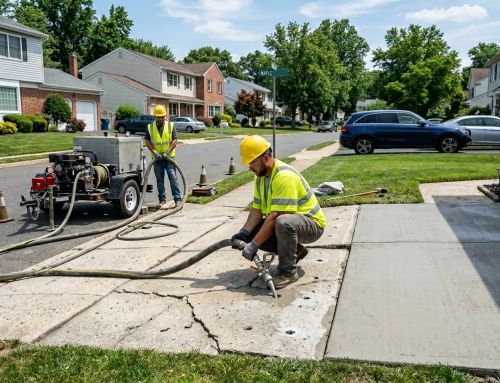
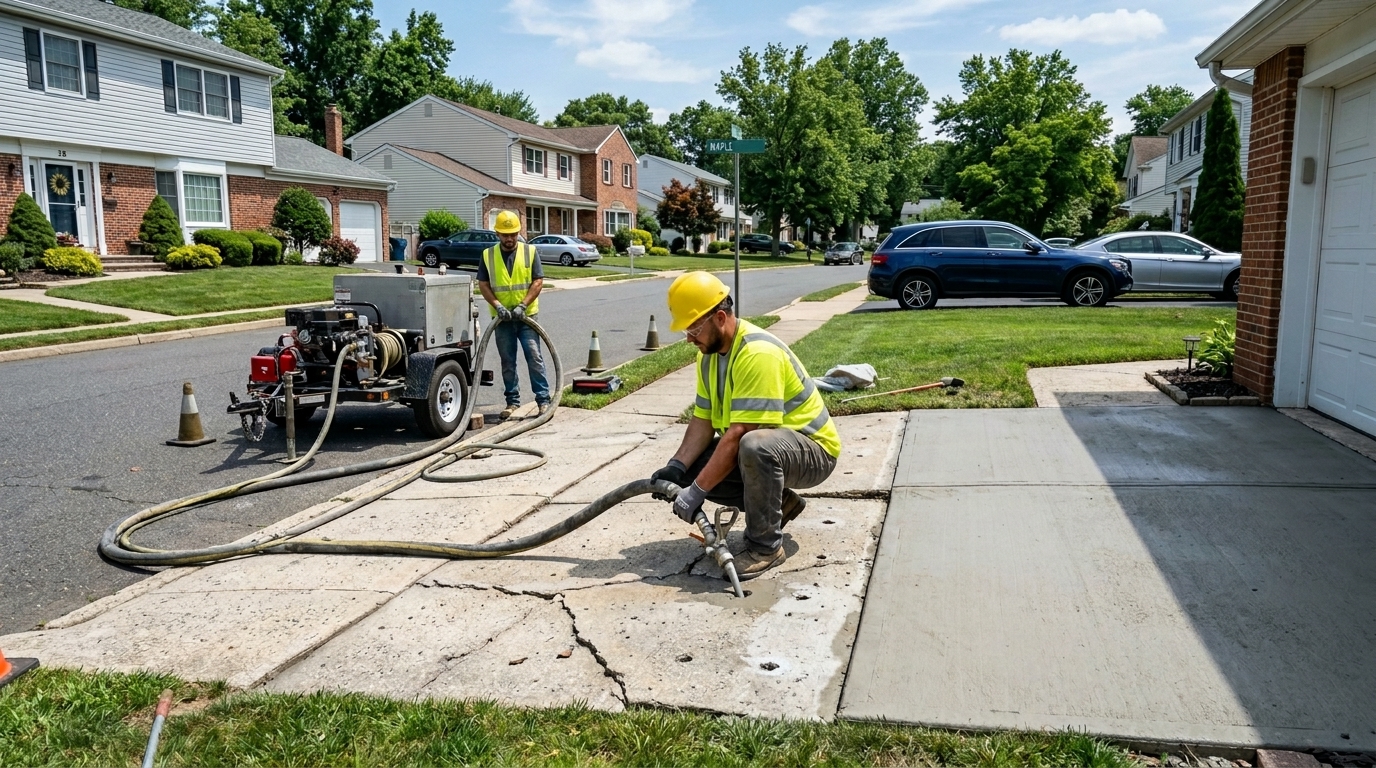
Mudjacking, also called slabjacking or concrete lifting, uses a cement-based grout pumped beneath the settled porch. The grout fills hollow spaces and creates enough controlled pressure to lift the slab toward its original position.
Unlike resurfacing, mudjacking addresses the loss of support beneath the concrete. Unlike replacement, it normally does not require breaking up the entire porch and hauling it away.
Concrete Chiropractor uses a three-step process:
- Small injection holes are drilled. The holes are placed in selected parts of the settled porch.
- Cement grout is pumped beneath the slab. The material fills larger voids and gradually raises the concrete.
- The injection holes are patched. Once the desired height and slope are achieved, the holes are filled with fast-setting cement.
The lifting must be completed carefully. Raising one section too quickly can place unnecessary stress on the slab, porch steps, railings, brickwork, or nearby walls. This is why substantial porch top settlement is not a practical do-it-yourself project.
Can a Settled Porch Be Lifted Without Replacement?
A porch is usually a good candidate for lifting when:
- The concrete remains mostly intact
- The slab has minimal deterioration or crumbling
- Most of the porch has moved as one section
- Settlement is caused by compressed soil or voids
- The porch can be accessed with professional equipment
- Lifting will not damage attached structural components
Concrete replacement may be more appropriate when:
- The porch is broken into several unstable pieces
- Large areas are crumbling or badly deteriorated
- Reinforcing steel is exposed or severely damaged
- Masonry walls beneath the porch are failing
- Structural footings have moved
- Roof-supporting columns are dangerously misaligned
- The slab cannot be lifted without causing additional damage
The condition of the concrete matters more than its age. An older but solid porch may be liftable, while a newer porch with extensive deterioration may need replacement.
Our concrete leveling frequently asked questions explain more about determining when lifting is suitable.
Is Porch Top Settlement a Foundation Problem?
Not every settled porch means that the house foundation is failing.
Porches are often supported separately from the main house, and the fill beneath the porch can settle while the home remains stable. However, a closer structural assessment may be necessary when you also notice:
- New cracks in the foundation
- Interior doors or windows sticking
- Significant brick separation
- Roof-supporting columns leaning
- Movement in the porch foundation walls
- Rapidly widening gaps between the porch and house
A professional inspection should distinguish a liftable concrete slab from a deeper footing or foundation problem before repairs begin.
What About Settled Steps, Walkways and Driveways?
Porch top settlement rarely affects only the porch. The adjoining steps or front walkway may also sink as the soil around the home consolidates.
If the steps have dropped or pulled away from the porch, concrete step leveling and repair may restore a safer and more consistent step height. An uneven path leading to the entrance may require sidewalk and walkway leveling.
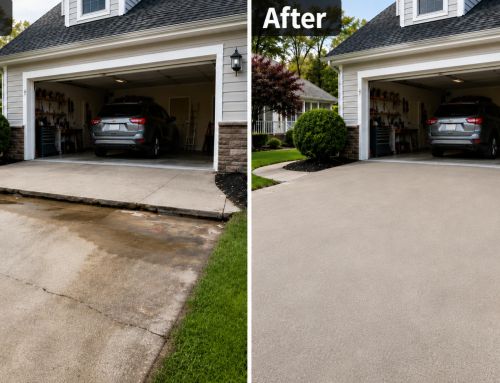
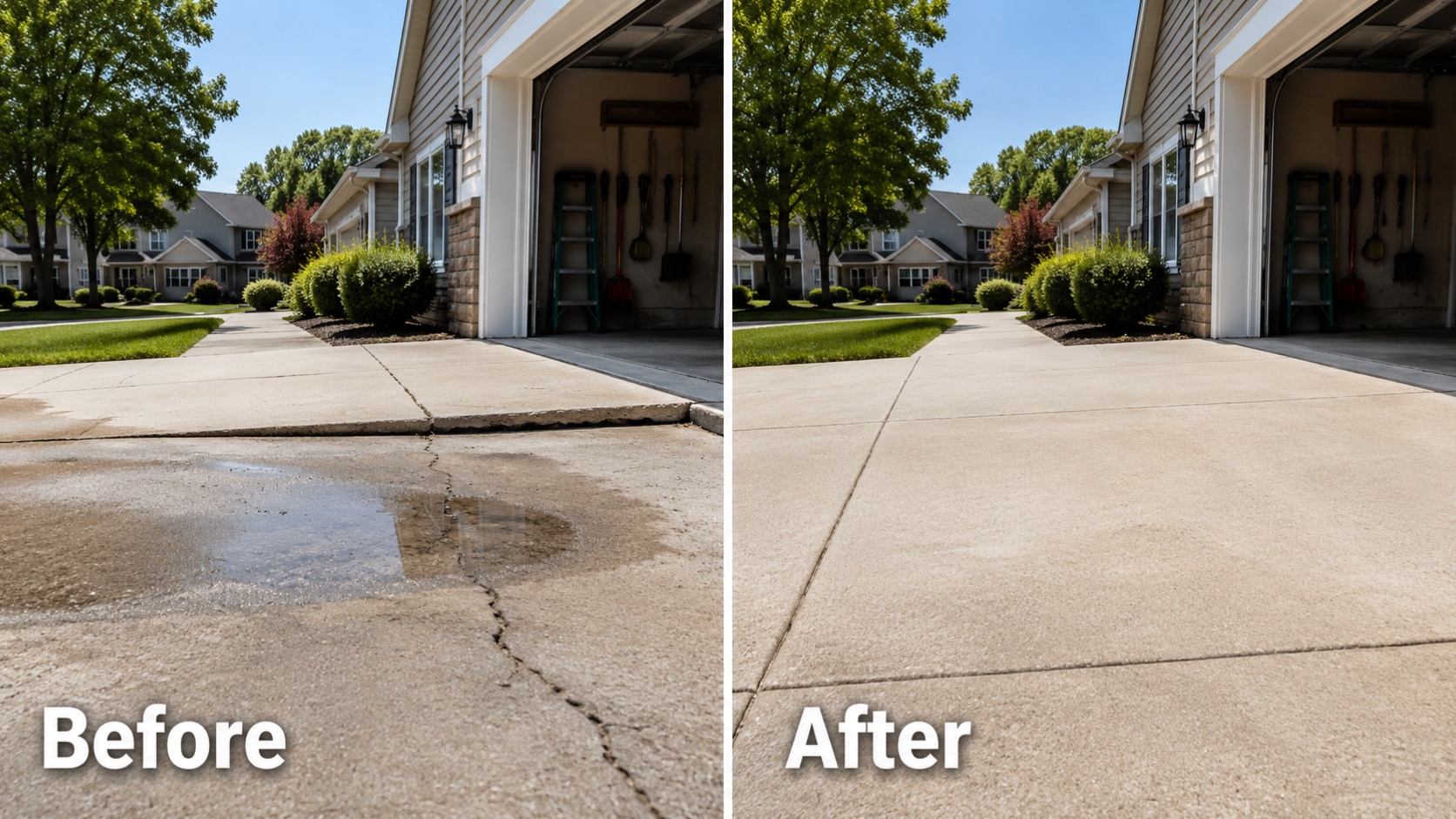
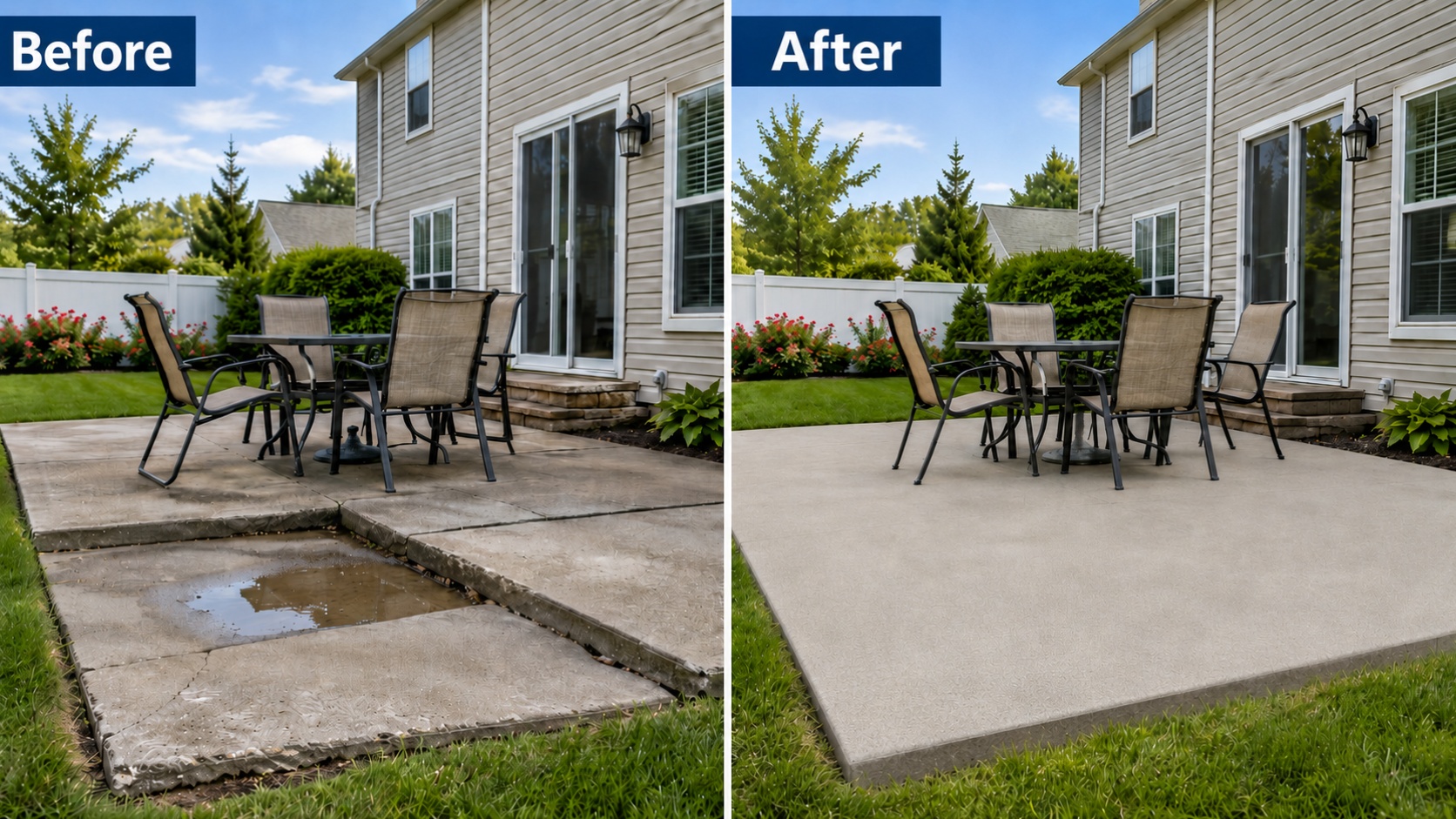
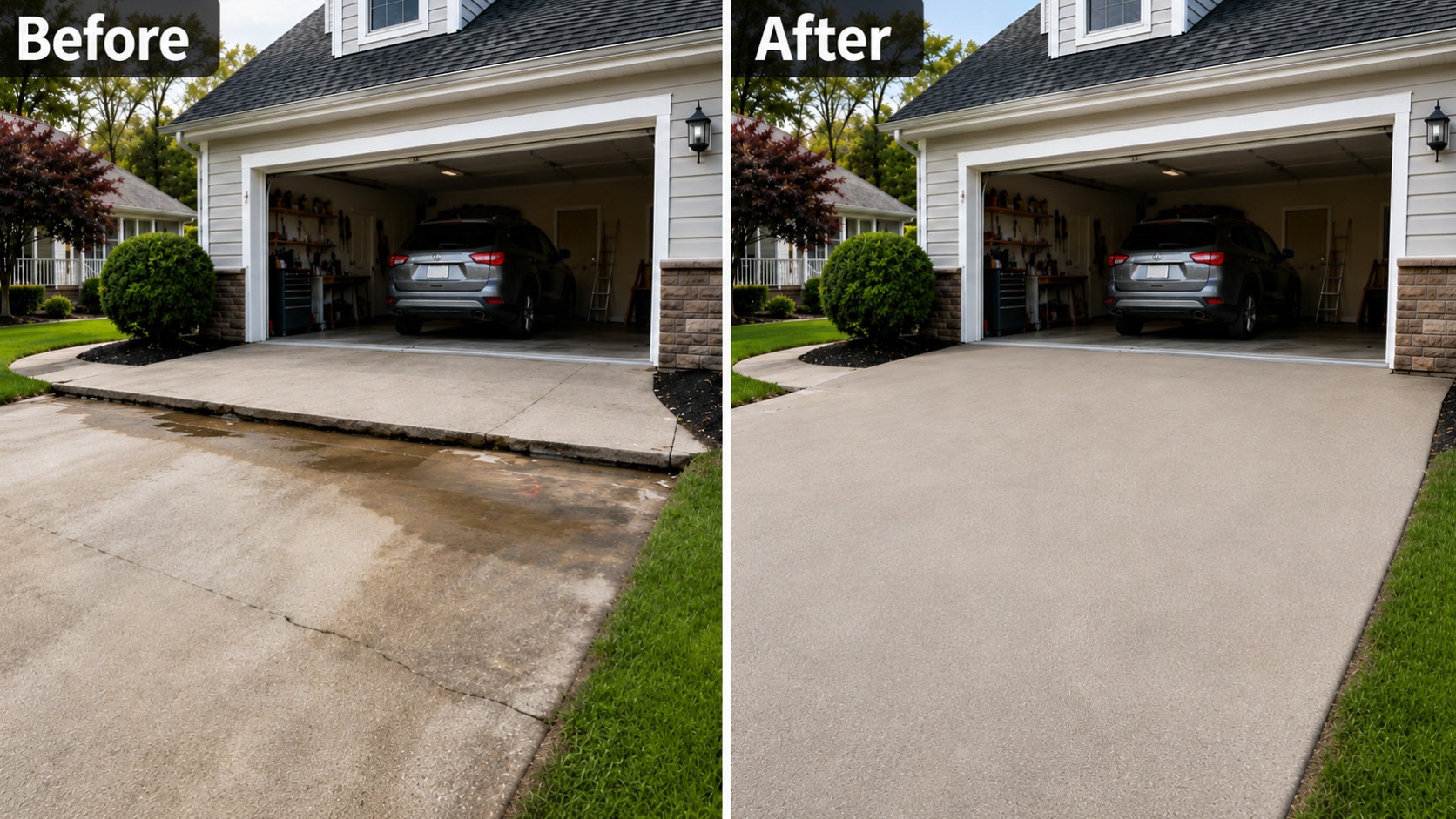
The driveway should also be inspected, especially where it meets the garage, sidewalk, or front walk. Our concrete driveway leveling and repair service raises settled driveway sections without automatically replacing the entire driveway.
Porch Top Settlement in New Jersey Communities
The cause of settlement varies from one property to another, even within the same town. Local development patterns, landscaping, drainage, and the age of a home can all affect the condition of the soil beneath a porch.
In Freehold, NJ, homes near Downtown Freehold and other established neighborhoods may have older porches, mature landscaping, and drainage systems that have changed over time.
Larger residential properties around Holmdel, NJ, including areas near Holmdel Park, may have longer rooflines and landscaped yards. Downspouts and grading should be checked to ensure water is not being directed toward the porch.
Around Morristown Green and the historic residential areas of Morristown, NJ, older masonry porches should be inspected carefully to determine whether movement is limited to the concrete top or also involves the supporting walls.
In South Plainfield, NJ, homeowners near Spring Lake Park and throughout the township should watch for water flowing from paved or landscaped areas toward porch slabs.
Established neighborhoods near Memorial Park in Fair Lawn, NJ often contain mature trees and older exterior concrete. Roots, changing drainage patterns, and soil disturbance should all be considered during an inspection.
How to Reduce the Risk of Future Settlement
Lifting the porch corrects its position, but homeowners should also address conditions that may have contributed to the problem.
Helpful steps include:
- Extend downspouts away from the porch
- Repair leaking or overflowing gutters
- Maintain grading that directs water away from the house
- Avoid allowing sprinkler systems to saturate porch edges
- Correct low landscaping areas that collect water
- Monitor gaps between the porch and house
- Address drainage problems before they wash away more soil
The lifespan of a repair depends partly on soil stability and water management. Read how long concrete leveling lasts for additional guidance.
Homeowners comparing lifting materials can also review mudjacking versus polyjacking and our explanation of what mudjacking is and how it is done.
Get Professional Porch Top Settlement Repair in NJ
Porch top settlement should not be ignored. A small drop can eventually create uneven steps, poor drainage, gaps beside the house, and an unsafe entrance.
Before paying for complete demolition, have the porch inspected to determine whether the existing concrete can be saved. Concrete Chiropractor has been raising and leveling concrete since 2000, serving homeowners throughout New Jersey and Eastern Pennsylvania with time-proven cement-grout lifting methods.
Is your porch sinking, sloping, or pulling away from your home? Contact Concrete Chiropractor for a professional evaluation and free estimate. We will inspect the concrete, explain whether lifting is appropriate, and recommend the most practical solution for your property.

- Can You Fix a Settled Patio Without Replacing It? Repair in Ambler, PA - August 31, 2026
- How We Restore Sunken Garage Floors in South Plainfield, New Jerse - August 31, 2026
- Top 5 Concrete Floor Problems in Garages and Solutions - August 31, 2026
Get Social