

IN THIS ARTICLE
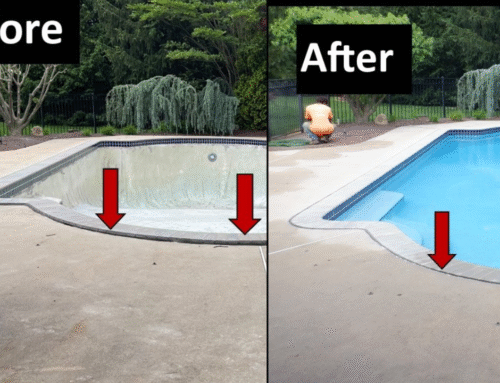
Discover the best way to handle an uneven concrete slab around a pool deck.
Uneven concrete around a pool deck is not something homeowners should ignore. What may start as a small height difference between two slabs can quickly become a trip hazard, a drainage problem, or a sign that the ground beneath the concrete is no longer supporting the slab properly.
For many homeowners, the first question is simple: what is the best way to fix uneven concrete around a pool deck?
The answer depends on the condition of the concrete, how much the slab has settled, whether there are voids underneath, and whether the existing concrete is still strong enough to repair. In many cases, the best solution is not full replacement. If the concrete is still structurally sound, professional pool deck leveling and repair can often lift and stabilize the affected areas without tearing out the entire pool deck.
Why Uneven Concrete Around a Pool Deck Is a Serious Problem
Uneven pool deck concrete is more than a cosmetic issue. Because pool areas are frequently wet, even a small raised edge can become dangerous. Children, guests, and homeowners walking barefoot around the pool can easily trip over settled or lifted concrete slabs.
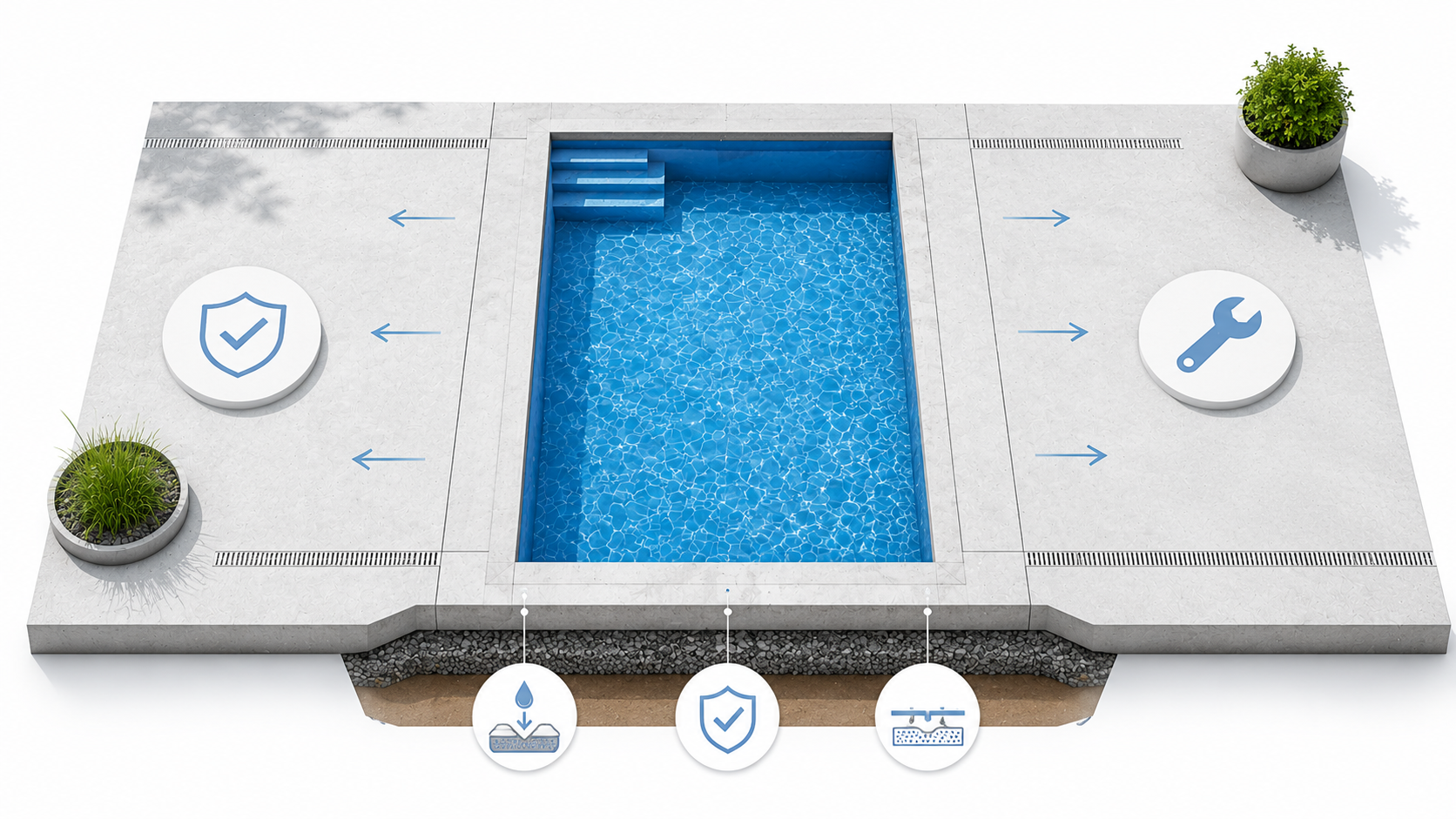
Uneven concrete can also affect drainage. If the slab has shifted toward the pool, toward the house, or toward low spots in the yard, rainwater may begin collecting where it should not. Over time, that water can enter joints and cracks, wash away soil beneath the slab, and make the settlement worse.
Common problems caused by uneven pool deck concrete include:
- trip hazards around the pool
- standing water after rain
- soil erosion beneath the slab
- cracks spreading across the pool deck
- voids forming under the concrete
- damage near coping or expansion joints
- sections of concrete sinking further over time
The longer uneven concrete is ignored, the more likely the repair becomes larger and more expensive.
What Causes Concrete Around a Pool to Become Uneven?
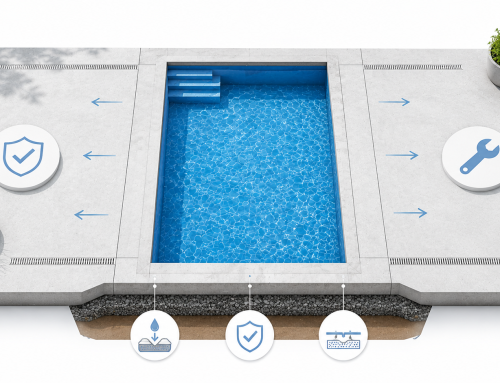
Most uneven pool deck problems begin underneath the concrete. When the soil below the slab shifts, settles, washes out, or loses compaction, the concrete above it no longer has even support.
Pool decks are especially vulnerable because they are constantly exposed to water. Rain, splash-out from the pool, poor grading, open joints, leaking plumbing, and freeze-thaw cycles can all contribute to soil movement beneath the slab.
Some of the most common causes include:
- water washing away soil beneath the concrete
- poor drainage around the pool deck
- improper soil compaction during installation
- voids developing under the slab
- freeze-thaw movement during winter
- settlement from age and long-term moisture exposure
- tree roots or landscaping pressure near the pool area
If you want a deeper breakdown of the causes, read our guide on why concrete around pools sinks. That article focuses more on the underlying reasons pool deck slabs settle over time.
The Best Way to Fix Uneven Concrete Around a Pool Deck
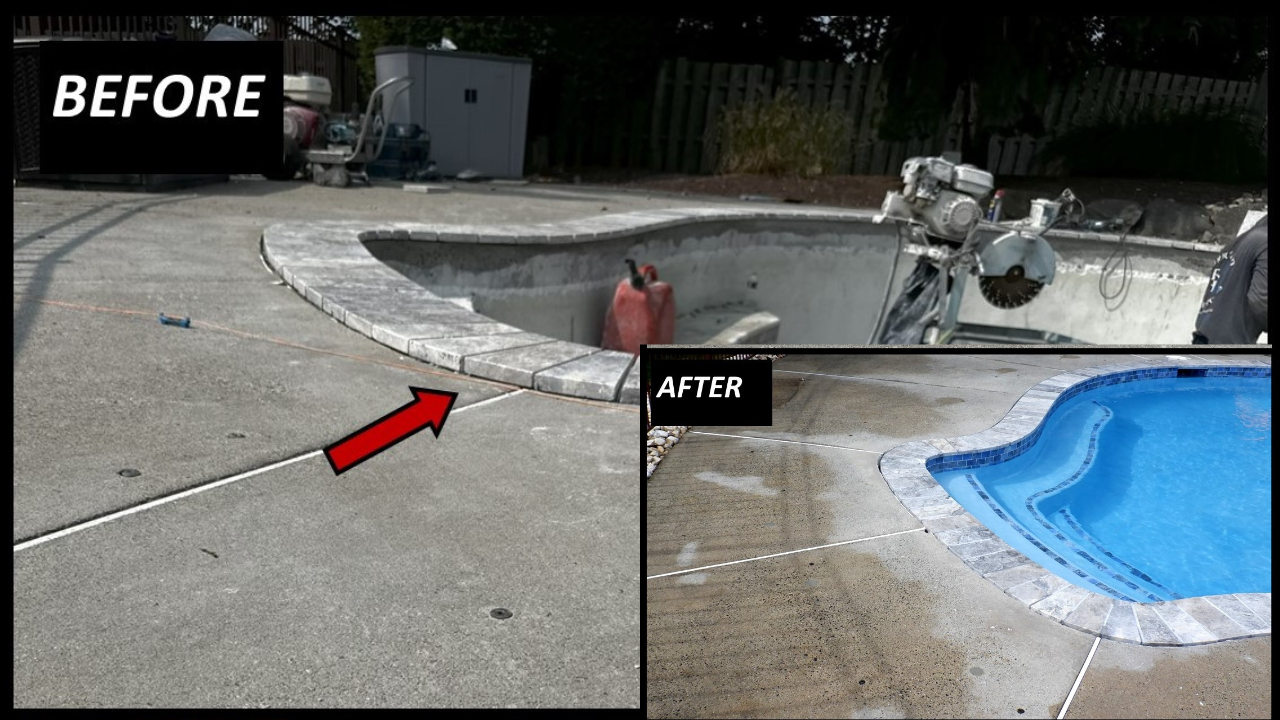
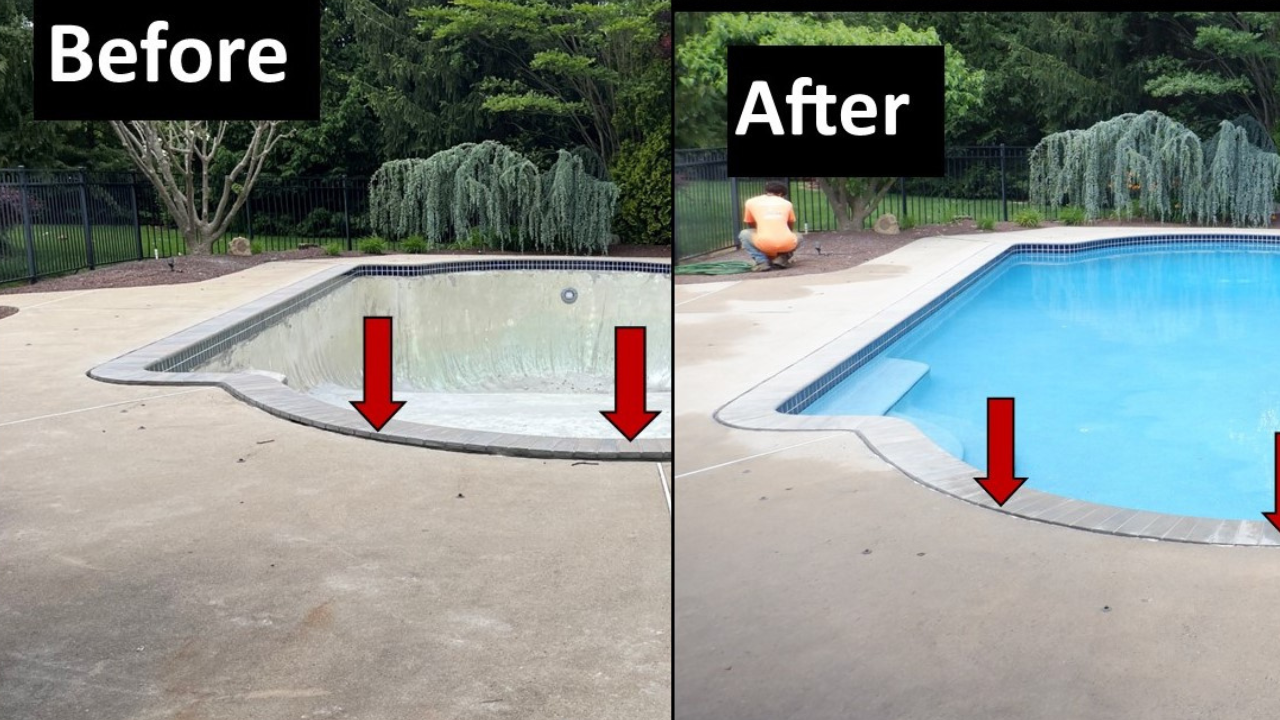
The best way to handle uneven concrete around a pool deck is to first determine whether the slab can be lifted and stabilized. If the concrete is still mostly intact, mudjacking is often one of the most practical repair options.
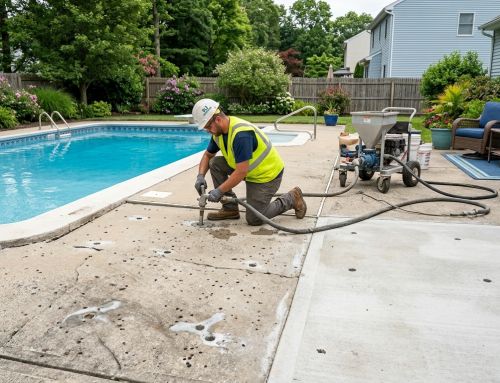
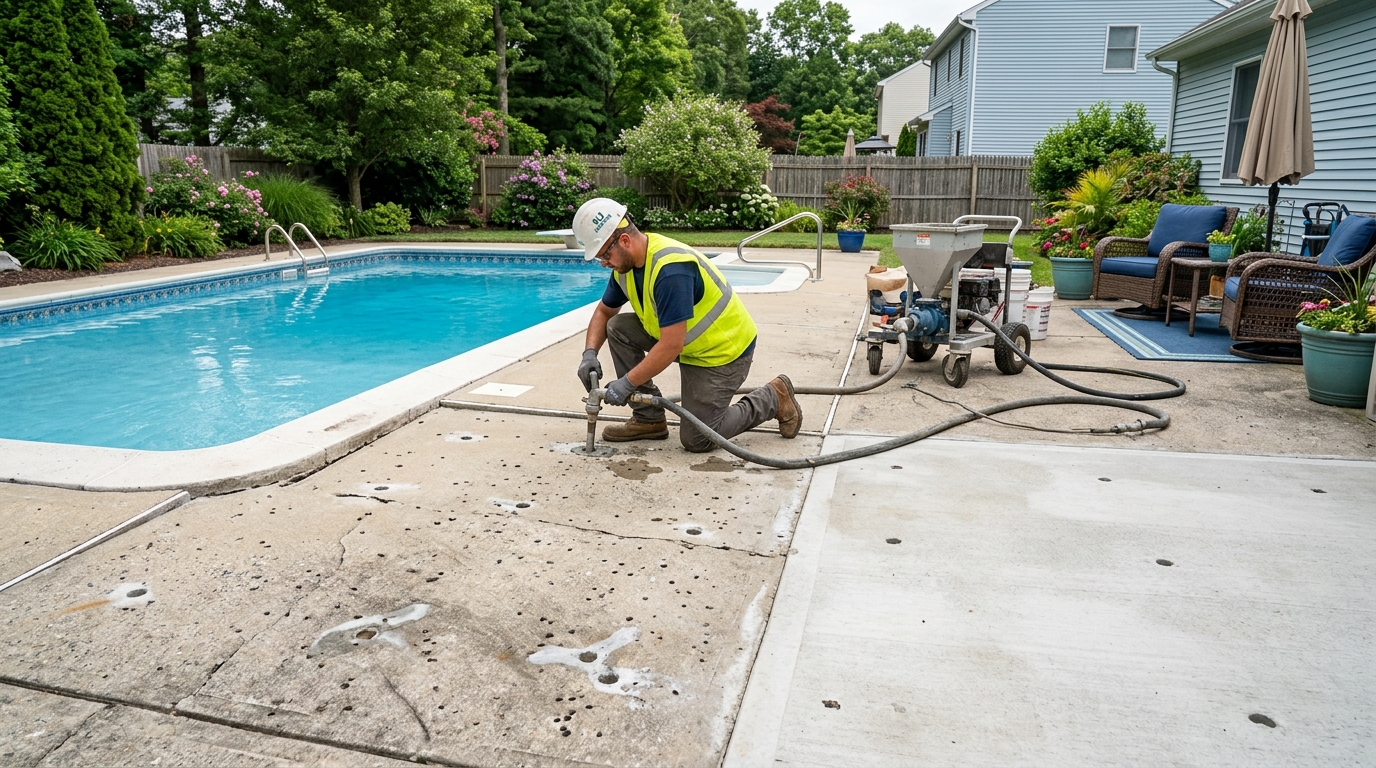
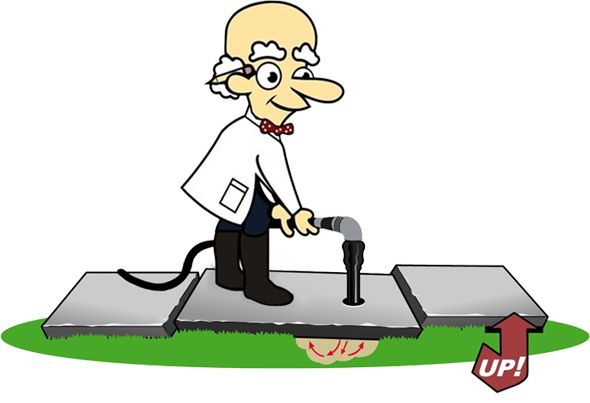
With mudjacking and concrete leveling, the settled slab is lifted by filling the empty spaces beneath the concrete. This helps restore support under the slab and bring uneven sections closer to their original position.
This approach is often preferred when the problem is settlement rather than complete concrete failure. Instead of removing the entire slab, mudjacking works with the existing concrete.
That matters around pools because full replacement can be disruptive. Removing concrete near a pool may involve demolition, debris removal, new concrete placement, curing time, and possible disruption around coping, landscaping, fencing, or surrounding hardscape areas.
Repair Options for Uneven Pool Deck Concrete
There are several ways homeowners may try to deal with uneven concrete around a pool. Some options are more effective than others depending on the actual cause of the problem.
1. Mudjacking
Mudjacking is often a strong option when the concrete has settled but is still structurally repairable. The process helps lift the slab and fill voids beneath it, improving support and reducing trip hazards.
This is usually a better solution than surface patching when the real problem is underneath the slab.
2. Concrete Grinding
Grinding may help reduce a minor raised edge between slabs, but it does not fix the underlying settlement problem. If one slab has dropped because of soil erosion, grinding only treats the surface condition. The slab may continue moving if the base is unstable.
Grinding can also create an uneven appearance and may not be appropriate for larger height differences around a pool deck.
3. Crack Filling or Patching
Crack filler and surface patching can help with minor surface defects, but they do not lift settled concrete. If the pool deck is uneven because the slab has dropped, patching alone will not solve the problem.
For cracked but repairable concrete, professional concrete repair may be part of the solution, but the settlement issue should still be addressed.
4. Full Replacement
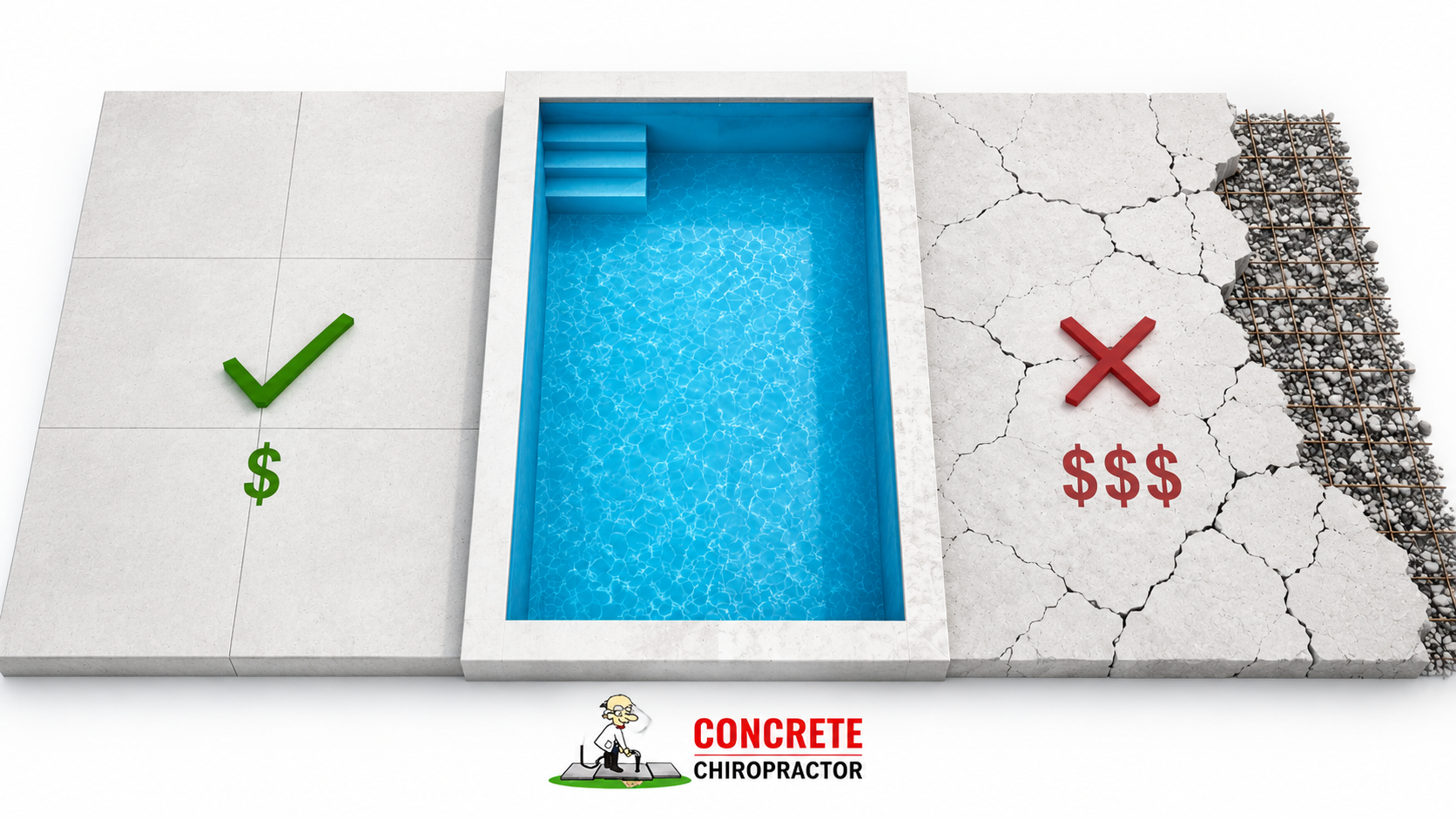
Replacement may be necessary if the concrete is severely broken, crumbling, poorly installed, or structurally beyond repair. However, replacement is not always the first or best option for uneven pool deck concrete.
If the slab is mostly intact and the main issue is settlement, lifting the existing concrete may be more practical and less disruptive.
When Concrete Leveling Is Better Than Replacement
Concrete leveling is often better than replacement when the slab is uneven but still usable. If the concrete has settled because of voids or soil erosion, the slab may be lifted and supported without tearing it out.
Pool deck leveling may be a good fit when:
- one or more sections of the pool deck have dropped
- the concrete is uneven but not destroyed
- trip hazards have formed around the pool
- water is pooling near settled areas
- voids are present beneath the slab
- the homeowner wants to avoid unnecessary replacement
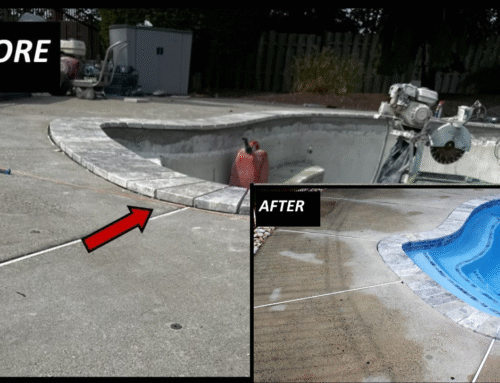
Professional concrete lifting can often restore safer, more even walking surfaces while preserving the existing concrete.
If your biggest concern is whether your pool deck must be replaced, read our article on repairing cracked pool decks instead of replacing them. That page explains when repair may still be realistic and when replacement may be necessary.
When Replacement May Be the Better Choice
It would be dishonest to say every uneven pool deck can be repaired. Some concrete is too damaged to lift successfully.
Replacement may be the better choice if the pool deck has:
- severe crumbling or surface deterioration
- multiple broken slab sections
- deep structural cracks throughout the area
- major heaving from roots or extreme soil pressure
- poor original installation that cannot be stabilized
- concrete that is too thin or too weak to lift safely
A reliable contractor should inspect the condition of the concrete before recommending a repair method. If the slab is still sound, leveling may make sense. If it is badly deteriorated, replacement may be the smarter long-term option.
How Much Does It Cost to Fix Uneven Concrete Around a Pool?
The cost to fix uneven pool deck concrete depends on the size of the affected area, the amount of settlement, the condition of the concrete, and whether there are voids beneath the slab.
Costs can also vary based on access around the pool, drainage conditions, and how many slabs need to be lifted or stabilized.
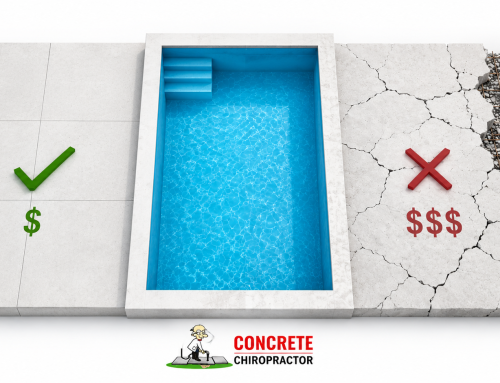
In general, repairing settled concrete is often less expensive than full replacement when the existing slab can be saved. Replacement usually includes demolition, hauling, disposal, new concrete installation, finishing, and curing time.
For a more detailed pricing discussion, read our full guide on pool deck repair costs.
Why Uneven Pool Decks Get Worse Over Time
Uneven concrete around a pool usually gets worse when water continues entering beneath the slab. Once the supporting soil begins to wash away, more empty space can form below the concrete.
As that void grows, the slab loses additional support and may continue to sink, crack, or separate from nearby sections.
That is why early repair matters. A small trip hazard today can become a larger settlement issue later, especially if drainage problems are not corrected.
Homeowners can reduce future repair costs by watching for early warning signs, sealing open joints, and correcting drainage issues before settlement spreads. For more guidance, see our article on how to prevent expensive pool deck repairs.
Uneven Pool Deck Repair in New Jersey Homeowners
Pool deck settlement is common in many New Jersey communities, especially where older concrete, moisture, and seasonal freeze-thaw cycles affect the soil beneath slabs.
For instance, homeowners looking for concrete leveling services in Holmdel, NJ may be dealing with uneven pool decks, sinking walkways, settled patios, or other concrete surfaces that have shifted over time.
The key is to avoid treating uneven concrete as only a surface problem. If the slab has dropped because of voids or soil movement, the underlying support needs to be addressed.
How to Know If Your Uneven Pool Deck Can Be Lifted
The best way to know whether your pool deck can be lifted is to have the concrete inspected. A professional will look at the condition of the slab, the amount of settlement, the cracks, drainage patterns, and whether the concrete still has enough structural integrity to repair.
Your pool deck may be a good candidate for leveling if:
- the slab is uneven but mostly intact
- the main issue is settlement
- there are visible trip hazards
- water is collecting near low areas
- the concrete has not severely crumbled
- the affected sections can be safely lifted
The earlier the problem is inspected, the more repair options you may have.
Professional Pool Deck Leveling in NJ and Eastern PA
The best way to handle uneven concrete around a pool deck is to fix the cause, not just the surface. If the concrete has settled because of soil erosion or voids, mudjacking may help lift and stabilize the slab without full replacement.
At Concrete Chiropractor, we provide mudjacking, pool deck leveling, concrete repair, and slab stabilization services throughout New Jersey and nearby Eastern Pennsylvania communities.
If your pool deck is uneven, sinking, cracked, or creating trip hazards, a professional inspection can help determine whether concrete leveling or replacement is the right solution.
FAQs
What are common signs of a sinking pool deck?
Common signs of a sinking pool deck include visible cracks in the concrete, water pooling in certain areas, and sloping or tilting surfaces that make walking hazardous. In some cases, you might notice gaps forming between the deck and the pool itself or between deck slabs. Additionally, you may hear unusual sounds when walking on the deck, indicating voids beneath the surface.
How long does it take to repair uneven concrete?
Repairing uneven concrete typically takes anywhere from a few hours to a full day, depending on the extent of the issue and the method used. Mudjacking, for example, is often completed in a morning or afternoon session, with most projects not extending beyond a single day. This quick turnaround means minimal interruption to your pool time.
Can I fix uneven concrete slabs myself?
While minor repairs might be attempted as DIY projects, fixing uneven concrete slabs around a pool deck is generally best left to professionals. The expertise and specialized equipment required to ensure a lasting, safe solution typically exceed the resources available to the average homeowner. Attempting these repairs without proper skills can lead to unsatisfactory results and potential safety hazards.
Can you put decking over uneven concrete?
Yes, you can install decking over uneven concrete, but proper preparation is crucial. The concrete must be leveled or stabilized first to ensure a secure foundation. Solutions include using shims or joist systems designed to accommodate irregular surfaces. However, addressing the root cause of unevenness before installation can prevent future issues.
What can I do about rough concrete around my pool?
To address rough concrete around your pool, consider options like resurfacing or applying a smoothing overlay. These methods involve adding a new layer over the existing concrete to create a smooth, slip-resistant finish. Alternatively, you might grind down the rough spots and seal the surface for improved texture and durability.

- Can You Fix a Settled Patio Without Replacing It? Repair in Ambler, PA - August 31, 2026
- How We Restore Sunken Garage Floors in South Plainfield, NJ - August 31, 2026
- Top 5 Concrete Floor Problems in Garages and Solutions - August 31, 2026