
IN THIS ARTICLE
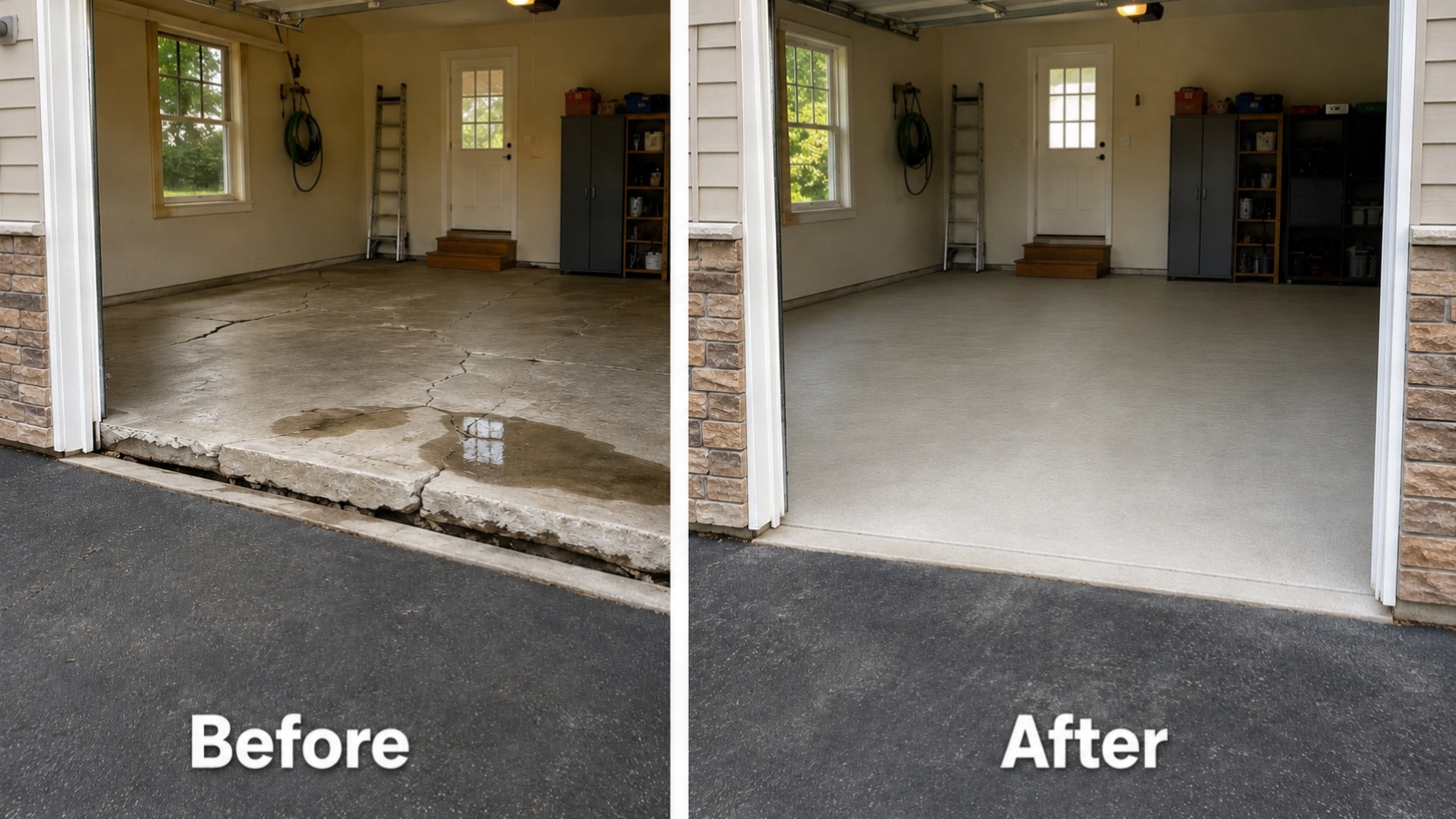
This is How We Repair Settled Garage Floors in South Plainfield, NJ
A sunken garage floor can be frustrating because it usually starts small.
Maybe you notice one corner sitting lower than the rest of the floor. Perhaps water suddenly starts collecting in an area that used to drain properly. Or you feel a bump every time your car crosses the garage entrance.
At first, it may seem like an annoying cosmetic problem.
But once a garage floor begins settling, homeowners in South Plainfield often want to know two things:
Why did it sink, and do I really have to replace the entire floor?
In many cases, the answer to the second question is no.
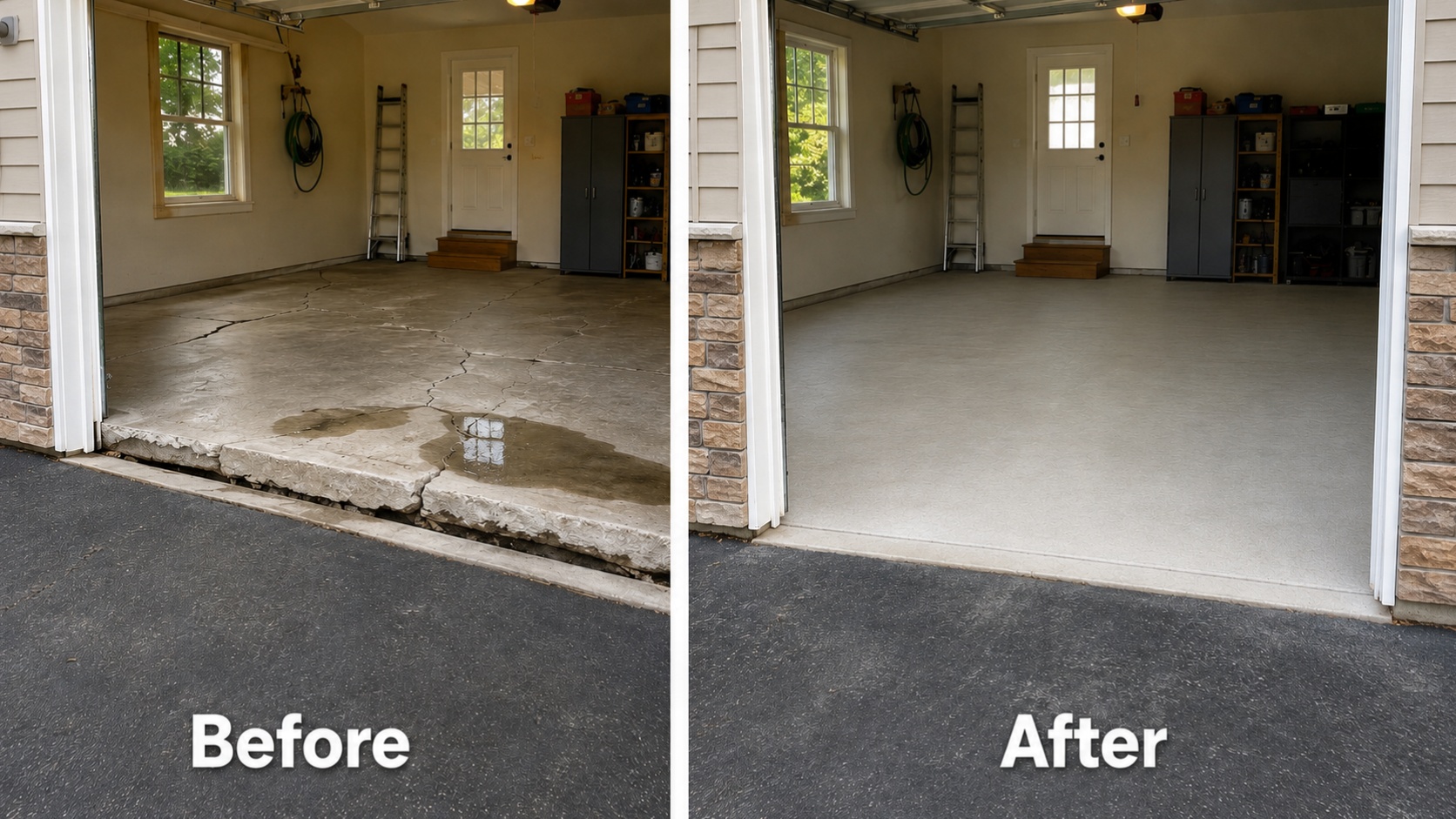
If your garage slab is still in good condition and the main problem is a loss of support underneath it, we may be able to raise the existing concrete instead of tearing it out.
At Concrete Chiropractor, we specialize in garage floor leveling and repair for homeowners throughout South Plainfield and other communities across New Jersey.
Here is how we approach the problem.
What Causes a Garage Floor to Sink?
When we look at a settled garage floor, we are not only interested in the concrete you can see.
We also think about what is happening underneath it.
Your garage slab depends on the soil and base material below it for support. If that supporting material settles, washes away, or was not compacted properly before the floor was originally poured, empty spaces can develop beneath the concrete.
Eventually, part of the slab may begin moving downward.
In South Plainfield and throughout Central New Jersey, garage floors can also be affected by water movement, drainage problems, seasonal moisture changes, and years of soil movement beneath the slab.
You may notice:
- One corner of the garage sitting lower than the others
- Cracks where one side is lower than the other
- A new dip in the middle of the floor
- Water pooling after rain or after parking a wet vehicle
- A gap developing between the slab and garage wall
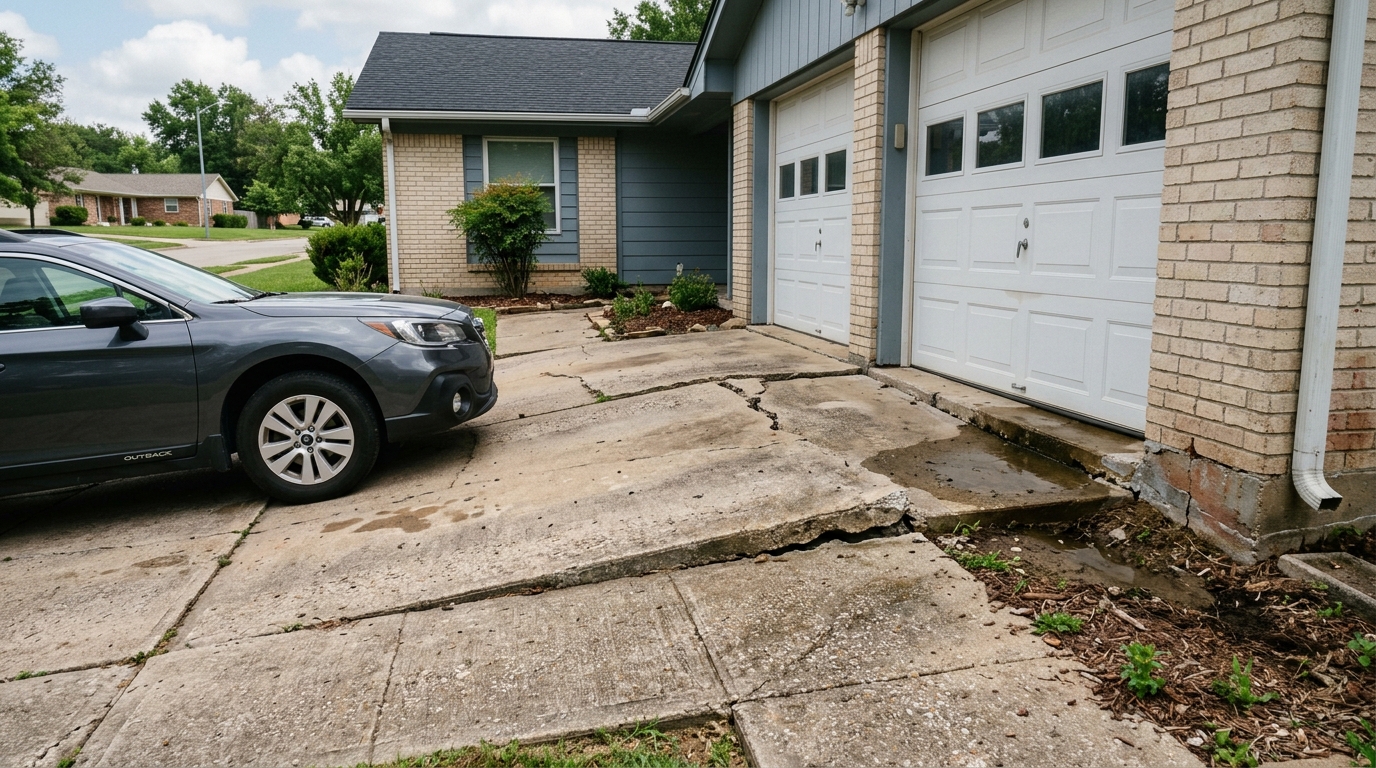
- An uneven transition between the driveway and garage
- A noticeable slope that was not there before
If you are seeing any of these problems, you can also read our guide to the signs your garage floor may need concrete lifting.
A Sunken Garage Floor Does Not Always Need Replacement
This is one of the most important things we want South Plainfield homeowners to understand.
Settled concrete and failed concrete are not necessarily the same thing.
Imagine that your garage floor is still solid and in relatively good condition, but the soil underneath one section has dropped.
The concrete may be perfectly capable of continuing to serve as your garage floor. It is simply sitting in the wrong position because it no longer has the support it once had.
Tearing out that entire slab could mean demolishing concrete that was still worth saving.
That is why our first goal is to determine whether professional concrete leveling can restore the existing floor.
If the slab is badly crumbling, shattered into unstable pieces, or severely deteriorated, replacement may be the better choice.
But if the concrete is still strong and settlement is the main issue, lifting deserves serious consideration.
First, You Show Us What Is Happening
We try to make getting an answer as straightforward as possible.
You do not have to know exactly what caused the floor to sink.
Simply contact us and explain what you are seeing.
We will ask you for clear photographs of the affected garage floor.
Good pictures are extremely helpful.
We recommend showing:
- The entire garage floor from a distance
- The area that appears to have settled
- Cracks or uneven joints
- Where the floor meets the garage walls
- The transition between the garage and driveway
- Steps leading from the garage into the house
- Areas where water collects
- Any obvious gaps around fixed objects
From there, we can get a much better idea of what you are dealing with.
If you live locally, our South Plainfield concrete leveling page also provides information about the services available in your area.
Next, We Explain What We See
We do not want to simply give you a price without helping you understand the problem.
After reviewing the condition of your garage floor, we explain what we believe is happening and whether lifting looks appropriate.
For example, if one section appears to have settled because of a void beneath the slab, we may recommend mudjacking.
If the floor appears badly deteriorated or there is another condition that concrete lifting will not solve, we tell you that too.
This matters because no homeowner should pay for a repair that does not fit the actual problem.
Our goal is to preserve existing concrete when it makes sense—not to pretend every slab can be saved.
How We Lift a Settled Garage Floor
When the garage floor is a good candidate for lifting, we use traditional cement-based mudjacking.
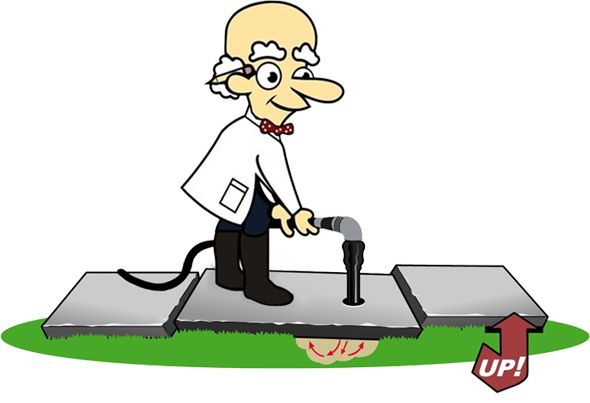
The process starts by drilling access holes through carefully selected parts of the garage slab.
We then pump a cement-based grout beneath the concrete.
That material moves into the empty spaces below the slab and begins restoring the support that was lost.
As the voids fill, controlled pressure helps raise the sunken portion of the floor.
This is where experience matters.
A garage floor does not always move as one perfectly uniform piece.
There may be walls, steps, door thresholds, cracks, control joints, or other fixed surfaces around it. We have to understand how the slab is likely to respond and raise it carefully.
Once the lifting is complete, the access holes are patched and the work area is cleaned.
You can learn more about this method on our mudjacking service page.
Why Filling the Void Matters
Homeowners sometimes ask why they cannot simply pour a leveling material over the low area.
The problem is that adding material to the surface does not necessarily fix what caused the floor to sink.
If there is an empty space underneath your garage floor, the slab still lacks proper support.
You would essentially be covering the visible symptom without dealing with the condition beneath it.
Mudjacking approaches the problem from underneath.
We introduce material below the slab to fill the void while raising the affected concrete.
That is an important difference.
What About Cracks in the Garage Floor?
Cracks do not automatically mean your garage floor is beyond repair.
Many older garage floors have some cracking.
What we want to know is how severe the cracks are and whether the concrete still behaves like a stable slab.
A relatively solid section with a crack may still be liftable.
Concrete that has broken into numerous loose pieces is a different situation.
We also pay attention to elevation differences across cracks.
If one side of a crack sits noticeably lower than the other, that can be a sign that one section of the garage floor has settled.
For more localized problems, our concrete slab repair service explains how lifting can be used to address individual sinking slabs that are still worth preserving.
What If the Problem Is Actually the Driveway?
This is another situation we see around garage entrances.
Sometimes homeowners assume the garage floor has sunk when the real problem is the driveway slab immediately outside the garage.
The opposite can happen too.
If the driveway and garage floor no longer meet at the proper height, you may notice a bump when driving into the garage, a gap near the garage door, or water collecting around the entrance.
We look at the relationship between both surfaces before deciding what needs to be lifted.
If the exterior slab is the problem, our concrete driveway leveling and repair service may be more appropriate.
Sometimes both areas deserve attention.
Why We Prefer Saving a Good Garage Floor
Replacing a garage floor is a major project.
The existing concrete has to be demolished and removed. The area beneath it has to be prepared, new concrete has to be poured, and you have to deal with the disruption that comes with replacing a large interior slab.
There are absolutely times when that work is necessary.
But if your floor is structurally usable and simply sitting too low, we would rather help you preserve it.
Concrete Chiropractor has been raising settled concrete since 2000, and our concrete leveling process is designed specifically to restore suitable slabs without unnecessary demolition.
For you, the goal is not to have a “new” garage floor.
The goal is to have a garage floor that works properly again.
Is Your South Plainfield Garage Floor Sinking? Send Us Pictures
If your garage floor has developed a low area, started collecting water, separated from the walls, or created an uneven transition at the garage door, do not assume replacement is your only option.
Let us take a look first.
Contact Concrete Chiropractor and send us clear photographs of the affected areas.
We will review what you send, explain where we believe the problem lies, and tell you whether garage floor lifting makes sense.
If the existing concrete is worth saving, we can schedule the work and mobilize to your South Plainfield property to raise and support the affected slab.
We have more than 25 years of experience helping homeowners with settled concrete throughout New Jersey, and we also provide concrete leveling services across our Eastern Pennsylvania service area.
If you are dealing specifically with a sinking garage floor in South Plainfield, start with our garage floor leveling and repair service or contact Concrete Chiropractor and send us pictures of the floor for an evaluation.
You may find that the concrete you thought needed replacing simply needs to be put back where it belongs.

- Can You Fix a Settled Patio Without Replacing It? Repair in Ambler, PA - August 31, 2026
- How We Restore Sunken Garage Floors in South Plainfield, NJ - August 31, 2026
- Top 5 Concrete Floor Problems in Garages and Solutions - August 31, 2026