
IN THIS ARTICLE
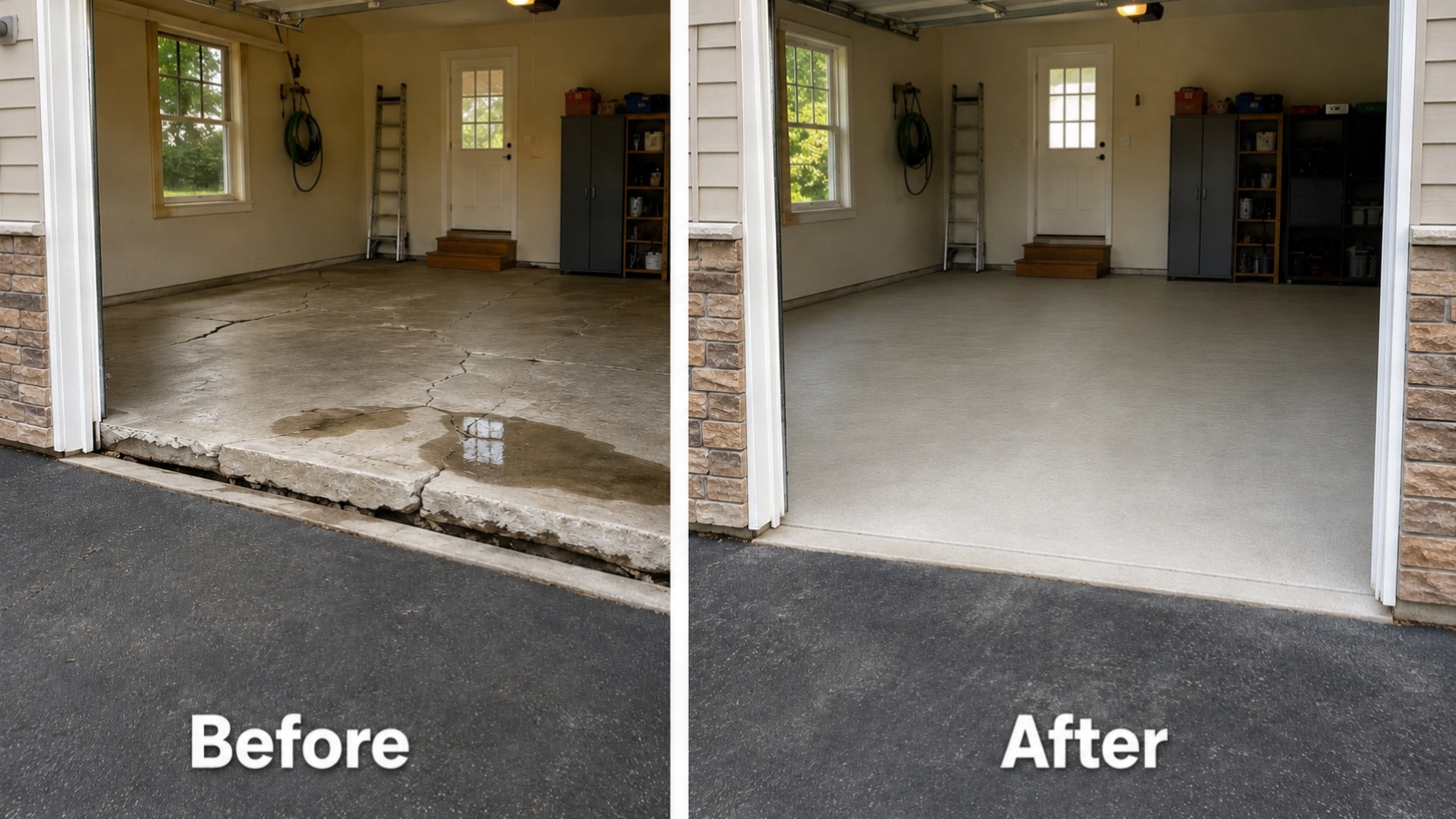
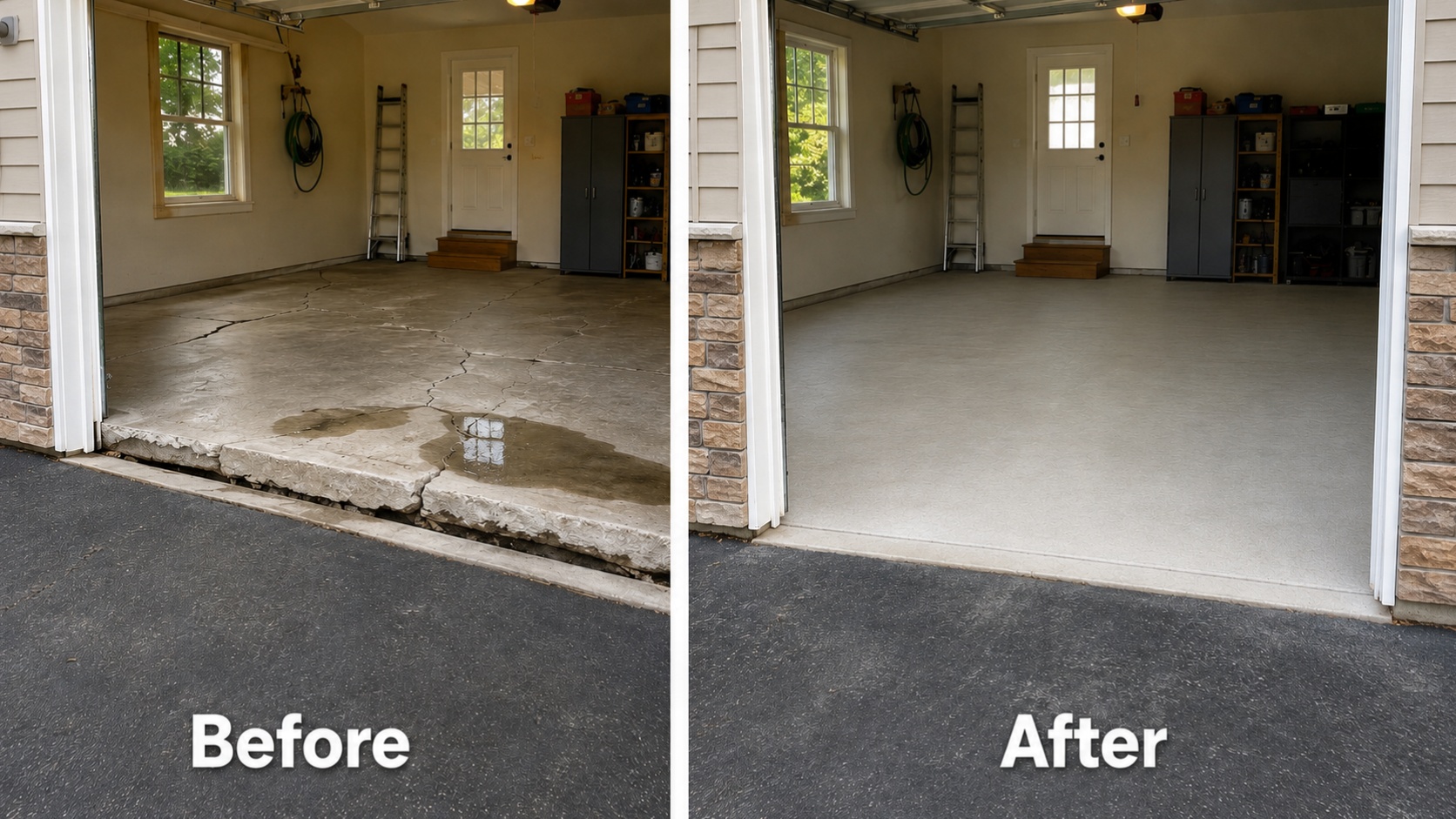
At first, these changes can look like minor cosmetic problems. However, a sinking garage floor can eventually create trip hazards, poor drainage, widening cracks, and difficulty using the garage safely.
The good news is that a structurally sound concrete slab may not need to be demolished and replaced. Professional garage floor concrete lifting and leveling can often raise the settled sections and restore the floor to a safer, more functional position.
Here are five signs your garage floor may need concrete lifting in NJ.
1. Cracks Are Widening or One Side Is Lower Than the Other
Not every crack means your garage floor is sinking. Small, flat hairline cracks can develop as concrete cures and ages.
The crack becomes more concerning when:
- It continues to widen.
- One side is higher than the other.
- The slab is separating along the crack.
- A previously repaired crack opens again.
- Several cracks appear around a visibly low section.
A crack with vertical displacement usually indicates that the concrete sections are no longer sitting at the same height. Soil settlement or a void beneath one section may allow it to drop while the adjoining section remains in place.
You can monitor a suspicious crack by taking a dated photograph and measuring its width. However, if the height difference is already creating a sharp edge or trip hazard, it is time to request a professional assessment.
Our guide on what to do when your garage floor cracks explains how to distinguish ordinary surface cracking from a more serious floor problem.
2. A New Lip Has Formed at the Garage Entrance
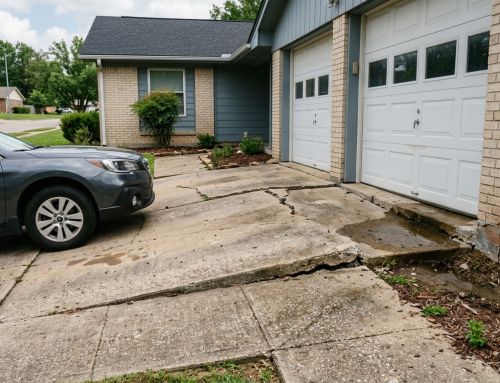
Check the transition between your garage floor and the driveway or concrete apron. These surfaces should meet without creating an abrupt height difference.
When the garage slab settles, you may notice:
- A bump when driving into the garage
- A sharp edge beneath the garage door
- A gap between the floor and threshold
- Difficulty rolling a mower, toolbox or other equipment across the entrance
- Water entering through the low section during heavy rain
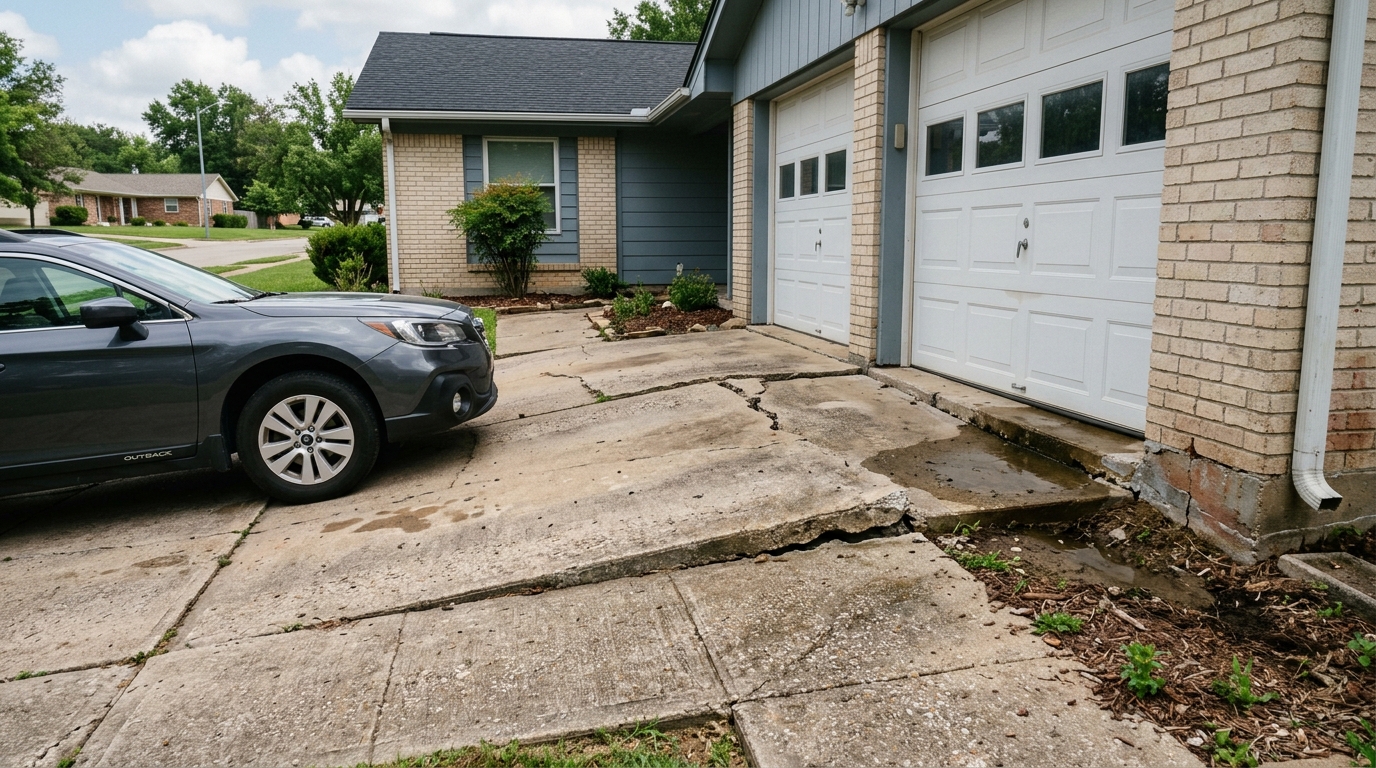
The problem may also be on the exterior side. A driveway slab can settle next to a stable garage floor, producing many of the same symptoms.
If the uneven section is outside the garage, our concrete driveway leveling and repair service may be the more appropriate solution. You can also read about why driveways sink near garage entrances.
A professional inspection can determine whether the garage floor, driveway, or both surfaces have moved.
3. Water Pools on the Floor or Flows Toward the House
A garage floor is normally pitched so that water moves toward the garage opening or an installed floor drain. Settlement can change this slope and create depressions where water collects.
Look at the floor after:
- Heavy rain
- Washing the garage
- Bringing in a wet vehicle
- Snow or ice melts from a parked car
Standing water can make the garage slippery and leave dirt, road salt and moisture concentrated in one area. It can also enter cracks or slab edges and contribute to continued erosion of the material beneath the concrete.
Water moving toward the entrance to the house is particularly concerning. Instead of relying on repeated surface patching, determine why the floor has lost its proper pitch.
Concrete lifting can raise a low section and improve drainage when the slab is otherwise in suitable condition. However, exterior drainage problems, leaking gutters or poorly directed downspouts may also need to be corrected to reduce the risk of future settlement.
For a more detailed explanation of the conditions beneath settled slabs, read about the common causes of concrete settlement in New Jersey.
4. Gaps Are Appearing Along the Garage Walls or Steps
Garage floors frequently move independently of the foundation walls. The walls may remain in their original position while the interior slab slowly settles beneath them.
This movement can leave visible gaps:
- Between the floor and the bottom of a wall
- Beneath steps leading into the house
- Around a support post
- Below fixed cabinets or workbenches
- Around utility platforms and equipment
A new gap is often easier to see along the garage perimeter than in the middle of the floor. You may also notice old paint lines or stains on the wall that reveal where the floor used to sit.
These separations do not automatically mean the home’s foundation is failing. Nevertheless, cracks in the foundation walls, movement around the garage-door frame or doors that suddenly stop operating correctly may require a broader structural evaluation.
Concrete Chiropractor evaluates the slab before recommending lifting. The purpose is to determine whether the problem involves a settled garage floor that can be raised or a condition that requires another type of repair.
Our article on garage floor sinking and repair provides additional information about why interior garage slabs move separately from surrounding structures.
5. One Corner or Floor Section Is Clearly Sinking
Garage-floor settlement does not always affect the entire slab. One corner or individual section may drop because of localized soil settlement, poor compaction or material washing out beneath the concrete.
Signs of an isolated low section include:
- A vehicle appears tilted while parked.
- A rolling toolbox moves without being pushed.
- Shelving or equipment no longer sits level.
- One control joint has developed a sharp edge.
- A noticeable dip has formed beneath a tire path.
- Water consistently collects in the same corner.
A simple way to check the floor is to place a long level or straight board across the suspected area. This will not replace a professional inspection, but it can make a low section easier to identify.
Avoid trying to solve settlement by pouring self-leveling material over the garage floor. Adding material to the surface may hide a small depression, but it does not fill the void beneath the slab or raise the concrete back to its intended position.
If you are also planning to coat the floor, correct the settlement first. Our garage floor raising and coating guide explains why leveling should come before cosmetic finishing.
Why Garage Floors Sink in New Jersey
Many garage slabs are installed over soil that was disturbed during home construction. Excavation around the foundation is later backfilled before the garage floor, driveway, and other concrete surfaces are installed.
When that soil is not sufficiently compacted—or when water carries away part of the supporting material—empty spaces can develop beneath the concrete. The heavy slab then settles into those spaces.
New Jersey’s seasonal conditions can make an existing problem more noticeable. Rain, melting snow, road salt and repeated freezing and thawing can expose cracks and drainage problems around a garage.
From larger residential properties near Holmdel Park to older garages around the Morristown Green, floor settlement can occur in both newer and established neighborhoods. The age of a property alone does not determine whether the floor will sink. Drainage, soil disturbance, construction practices, and changes beneath the slab all matter.
Concrete Chiropractor provides concrete lifting in communities including but not limited to:
Can a Sinking Garage Floor Be Lifted?
Concrete lifting may be appropriate when the slab is still structurally sound but has lost support and settled.
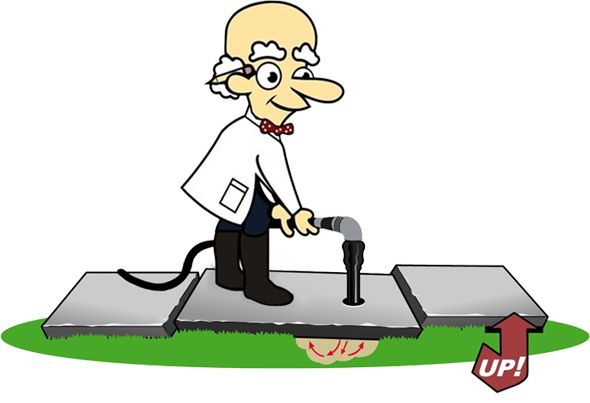
During mudjacking, carefully positioned holes are drilled through the concrete. A cement-based grout is pumped beneath the slab to fill empty spaces and gradually raise the concrete. The access holes are then patched.
Lifting addresses the position and support of the slab. It does not erase every existing crack, restore severely deteriorated concrete or repair extensive surface spalling.
Replacement may be more practical when the floor is badly broken, crumbling or divided into many unstable pieces. That is why an on-site evaluation is important before choosing a repair method.
You can find answers about suitable surfaces, project conditions and the lifting process in our concrete leveling frequently asked questions.
Do Not Wait for a Small Dip to Become a Major Hazard
A slightly uneven garage floor may not seem urgent, but settlement rarely improves by itself. As the height difference increases, the floor can become harder to use, drainage may worsen, and cracks can become more pronounced.
Concrete Chiropractor has more than 25 years of experience raising and leveling concrete in New Jersey and Eastern Pennsylvania. We use professional mudjacking equipment and cement-based grout to restore suitable garage floors without unnecessary demolition and replacement.
Schedule a Garage-Floor Evaluation
Have you noticed widening cracks, pooling water, wall gaps, or a sinking section inside your garage?
Contact Concrete Chiropractor for a professional evaluation. We will inspect the floor, identify the sections that have settled, and explain whether garage floor concrete repair is the right solution for your property.

- Can You Fix a Settled Patio Without Replacing It? Repair in Ambler, PA - August 31, 2026
- How We Restore Sunken Garage Floors in South Plainfield, NJ - August 31, 2026
- Top 5 Concrete Floor Problems in Garages and Solutions - August 31, 2026