

IN THIS ARTICLE
You Don’t Always Have to Replace a Cracked Pool Deck in South Jersey. This is what you should do
A cracked pool deck can make any backyard feel unsafe, worn down, and expensive to fix. Many South Jersey homeowners assume that once concrete around a pool cracks or settles, full replacement is the only option.
That is not always true.
In many cases, a cracked or uneven pool deck can be repaired, lifted, and stabilized without tearing out the entire slab. The key is understanding what caused the cracking, how severe the damage is, and whether the concrete is still structurally sound enough to repair.
Why Pool Decks Crack in South Jersey
Pool decks in South Jersey deal with a combination of moisture, seasonal temperature swings, freeze-thaw cycles, and shifting soil conditions. Over time, these factors can weaken the ground beneath the concrete and cause the slab to move.
Common causes of cracked pool decks include:
- soil erosion beneath the concrete
- water draining toward the pool deck
- voids forming under the slab
- freeze-thaw expansion during winter
- poor original compaction
- settled or unsupported concrete
- tree roots or nearby landscape pressure
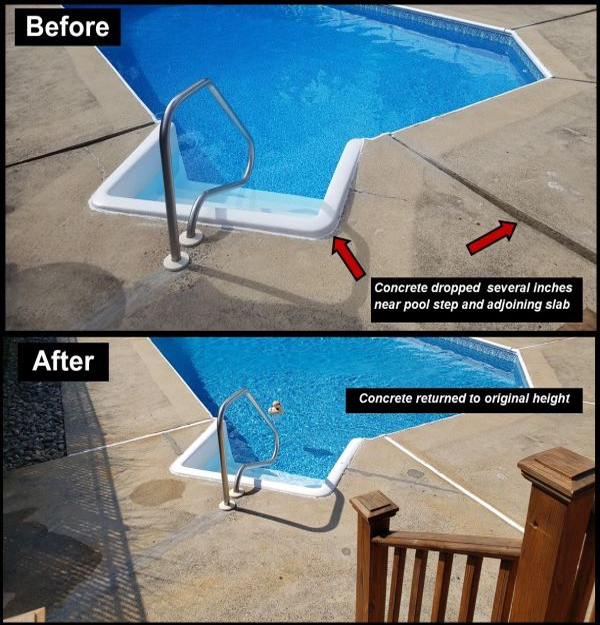
When the soil beneath a pool deck can no longer support the slab evenly, the concrete may begin to sink, crack, tilt, or separate from surrounding sections.
In many cases, professional pool deck leveling and repair can correct the settlement before the damage becomes severe enough to require full replacement.
Cosmetic Cracks vs. Structural Pool Deck Damage
Not every crack means your pool deck needs to be replaced. Some cracks are mostly cosmetic, while others point to deeper settlement or structural support problems beneath the slab.
Cosmetic cracks are usually smaller surface cracks that do not involve major slab movement. These may be caused by age, minor shrinkage, or surface wear.
Structural cracks are more serious. These often appear when the slab has lost support underneath or when one section of concrete has dropped lower than another.
Signs of more serious pool deck damage include:
- uneven concrete slabs
- trip hazards around the pool
- wide or spreading cracks
- sunken sections of concrete
- standing water near the pool deck
- hollow areas beneath the slab
- separation near coping or joints
If the concrete has settled but is still mostly intact, repair may still be possible.
When Can a Cracked Pool Deck Be Repaired?
A cracked pool deck can often be repaired when the slab is still structurally sound but has settled because of soil movement or erosion underneath.
Repair may be a good option when:
- the concrete has dropped but has not completely broken apart
- cracks are related to settlement rather than total slab failure
- the surface is still usable after leveling
- the main problem is voids beneath the slab
- the pool deck has trip hazards that can be lifted
- replacement would be unnecessary or excessive
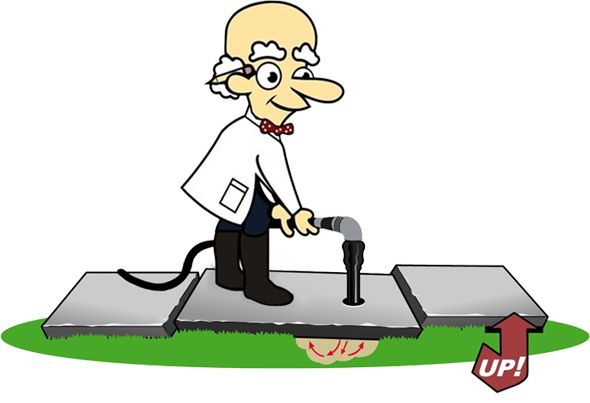
This is where mudjacking and concrete leveling can be a strong solution. Mudjacking helps fill voids beneath the slab, lift settled concrete, and restore support under the pool deck.
When Is Pool Deck Replacement Necessary?
Pool deck replacement may be necessary when the concrete is too damaged to repair safely. A good contractor should be honest about this. Not every slab is worth saving.
Replacement may be the better option if your pool deck has:
- severe crumbling or surface deterioration
- multiple broken slab sections
- deep structural cracking throughout the deck
- major heaving from roots or soil pressure
- poorly installed concrete that cannot be stabilized
- large areas that have failed beyond repair
But uneven concrete alone does not automatically mean replacement is required. Many settled slabs can still be repaired if the concrete is not severely broken.
Why Repairing a Pool Deck Is Often More Affordable Than Replacement
Replacing a pool deck is usually more expensive because it involves demolition, removal, disposal, new concrete installation, finishing, and cleanup. It can also create more disruption around the pool area.
Concrete leveling is often less invasive because it works with the existing slab instead of removing it completely.
Repairing the existing pool deck may help homeowners avoid:
- full concrete demolition
- heavy equipment around the pool
- longer project timelines
- higher labor costs
- unnecessary replacement of usable concrete
If cost is your biggest concern, read our full guide on pool deck repair cost in NJ to compare repair, mudjacking, and replacement considerations.
Why Cracked Pool Decks Get Worse Over Time
Small cracks and uneven slabs rarely fix themselves. Once water begins entering beneath the pool deck, the supporting soil can continue washing away.
As the voids beneath the slab get larger, the concrete loses more support and the damage can spread.
Ignoring a cracked pool deck can lead to:
- wider cracks
- larger trip hazards
- more slab settlement
- pool coping damage
- drainage problems
- more expensive future repairs
For more details on early warning signs, see our guide on how to prevent expensive pool deck repairs in NJ.
South Jersey Pool Deck Problems Are Often Drainage Related
Many cracked pool decks in South Jersey are connected to water movement. When rainwater drains toward the pool deck instead of away from it, the soil beneath the concrete can weaken over time.
This is especially common in areas with older concrete, poor grading, or open joints that allow water to move beneath the slab.
Once water gets under the concrete, it can create hidden voids and cause the pool deck to settle unevenly.
Homeowners dealing with settled concrete may benefit from professional concrete lifting before the damage spreads further.
Can Mudjacking Fix a Cracked Pool Deck?
Mudjacking can often help repair a cracked pool deck when the cracking is caused by settlement, voids, or lack of support beneath the slab.
The process is designed to lift settled concrete and stabilize the area underneath. This can improve the appearance, safety, and usability of the pool deck without full replacement.
Mudjacking may be appropriate when:
- one section of the pool deck has dropped
- the slab is still mostly intact
- there are voids beneath the concrete
- water erosion has weakened the base
- the goal is to reduce trip hazards
If the slab is badly shattered or deteriorated, replacement may still be necessary. But if the main problem is settlement, mudjacking is often worth considering first.
Professional Cracked Pool Deck Repair in South Jersey
You do not always have to replace a cracked pool deck. If the concrete is still structurally repairable, leveling and stabilization may restore the slab and help prevent the damage from getting worse.
At Concrete Chiropractor, we provide pool deck repair, mudjacking, slab stabilization, and concrete leveling services throughout South Jersey, New Jersey, and nearby Eastern Pennsylvania communities.
If your pool deck is cracked, sinking, uneven, or creating trip hazards, a professional evaluation can help determine whether repair or replacement is the better option.

- Can You Fix a Settled Patio Without Replacing It? Repair in Ambler, PA - August 31, 2026
- How We Restore Sunken Garage Floors in South Plainfield, New Jerse - August 31, 2026
- Top 5 Concrete Floor Problems in Garages and Solutions - August 31, 2026




Get Social