

IN THIS ARTICLE
Important Steps to Take for a Long-Lasting Concrete Driveway Repair
Your concrete driveway is one of the hardest-working surfaces around your home. It supports your vehicles, handles daily traffic, and stays exposed to rain, snow, and changing temperatures throughout the year.
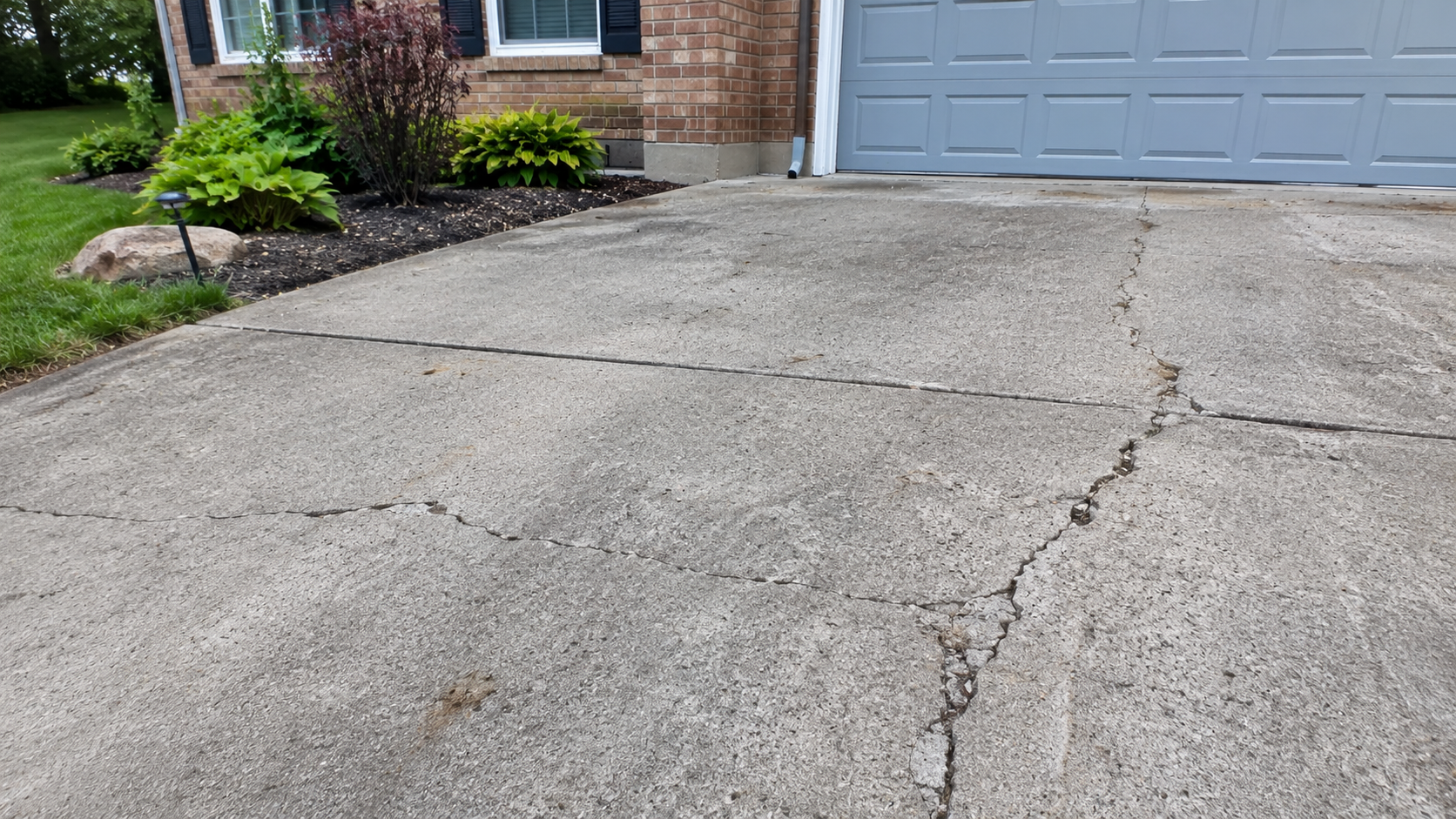
Over time, you might notice cracks, uneven sections, sinking slabs, or puddles that never seem to drain properly.
The good news? You don’t always need to tear out your driveway and start over.
A lasting concrete driveway repair starts with understanding what’s causing the damage and choosing the right solution. Filling a crack might improve its appearance, but it won’t solve a problem caused by settling soil underneath.
At Concrete Chiropractor, we’ve been helping homeowners restore uneven and settled concrete since 2000. In this guide, we’ll walk you through the essential steps to repairing your driveway, explain what you can handle yourself, and help you recognize when professional concrete leveling makes more sense.
Inspect Your Concrete Driveway and Identify the Cause of Damage
Before buying repair materials or calling a contractor, take a closer look at your driveway.
Not every crack means your driveway is failing. Similarly, a sunken section doesn’t automatically mean the concrete needs replacing.
The important thing is to understand what’s happening beneath and around the surface.
Look for Common Driveway Problems
Walk along your driveway and check for the following:
- Hairline cracks: Small surface cracks that may develop as concrete shrinks or responds to temperature changes.
- Widening cracks: Openings that may indicate ongoing movement, settlement, or damage.
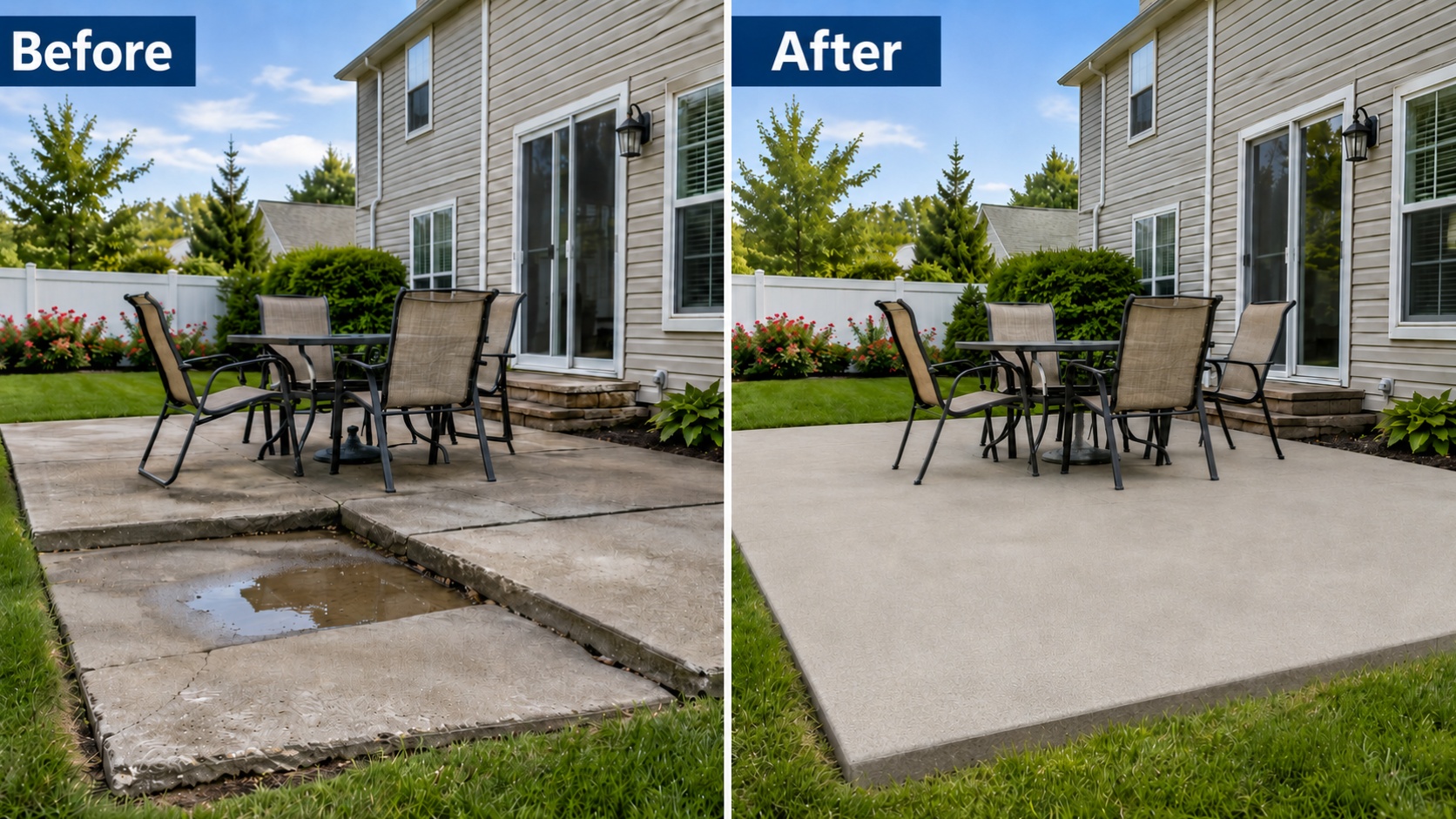
- Uneven slabs: Sections of concrete that no longer sit at the same height.
- Sunken areas: Low spots where the concrete has dropped below its original position.
- Pooling water: Puddles that remain after rainfall, especially near your garage or foundation.
- Surface deterioration: Flaking, scaling, crumbling edges, or exposed aggregate.
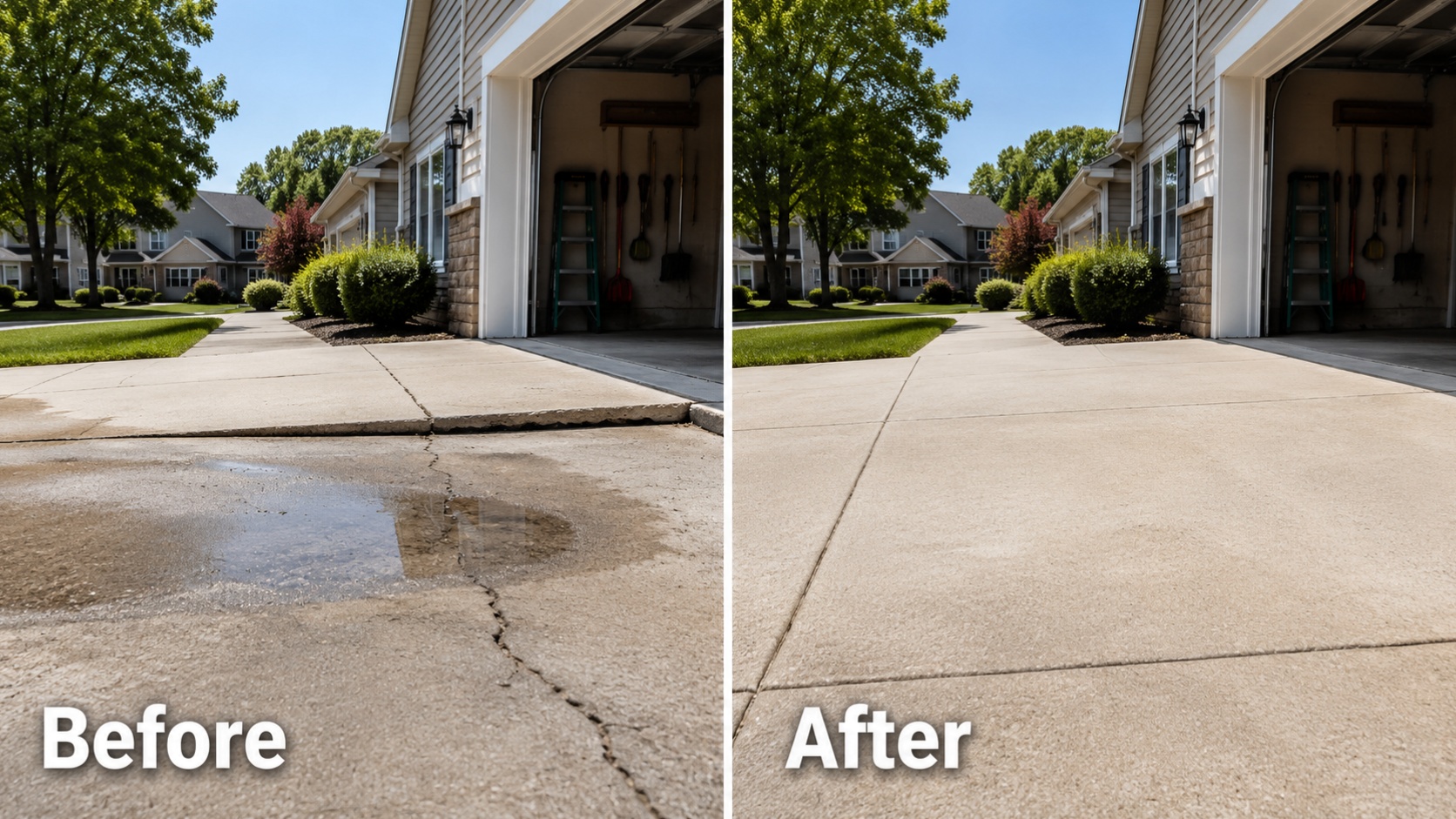
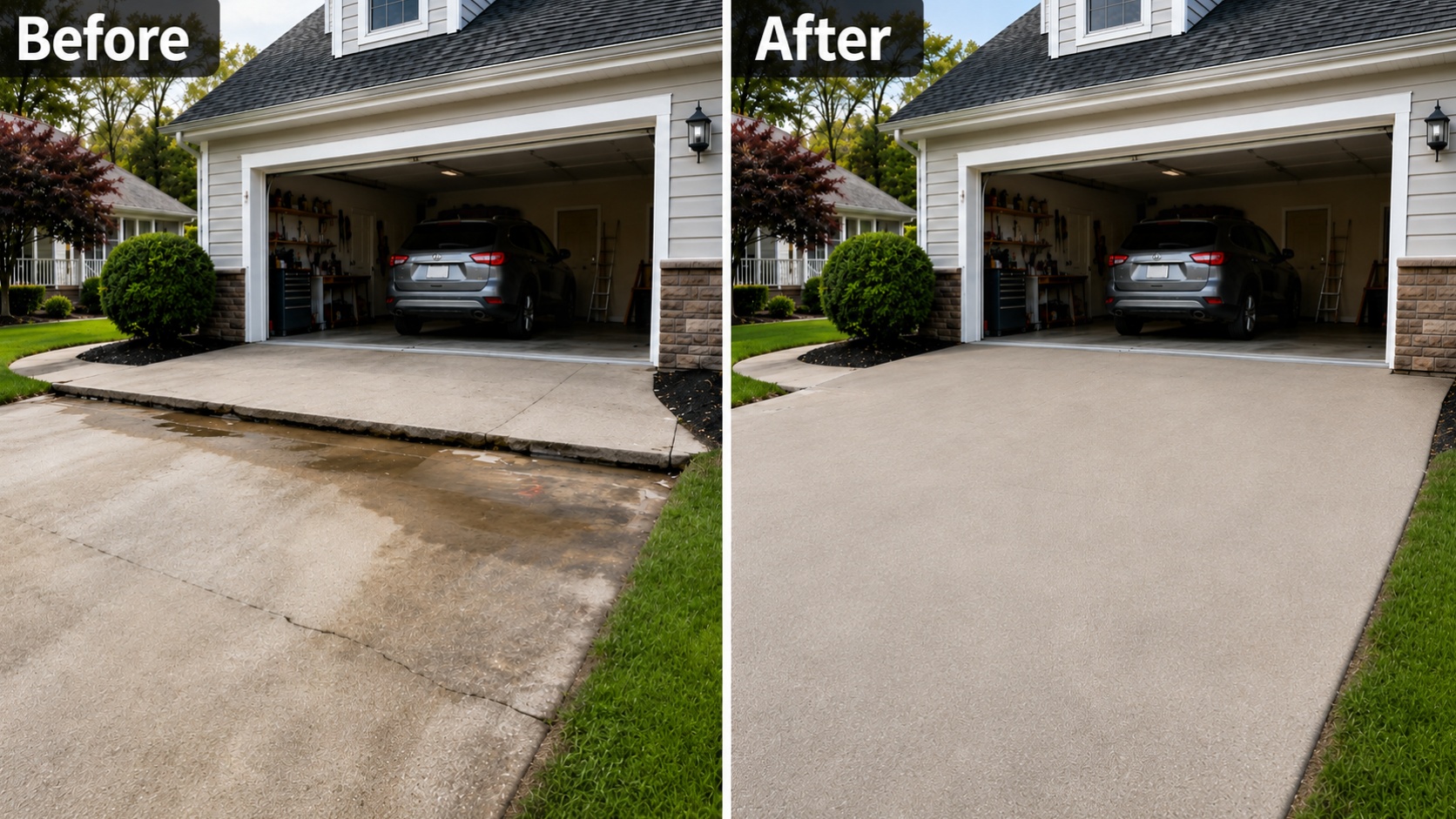
Pay particular attention to the driveway apron, where your driveway meets the garage or street.
These areas often experience repeated vehicle loads, and any noticeable settlement can create an uncomfortable bump or drainage problem.
Understand Why Concrete Driveways Deteriorate
Several conditions can contribute to driveway damage.
Poor soil compaction during construction can allow the ground beneath your driveway to settle gradually. Water runoff may also wash away supporting soil, creating empty spaces under the slab.
In colder climates, repeated freezing and thawing can make existing cracks worse. Heavy vehicle loads and aging concrete may contribute to additional deterioration.
Here’s something we always encourage homeowners to remember: Repairing the visible damage without addressing its cause may only provide a temporary improvement.
For example, if your driveway has dropped because the soil underneath has settled, filling the resulting crack won’t raise the concrete.
If you’re unsure whether the movement is serious, our article on 5 signs your concrete driveway needs slab lifting in NJ explains the warning signs worth watching.
Choose the Right Concrete Driveway Repair Method
Once you understand the damage, the next step is deciding how to fix it.
Different driveway problems require different repairs. The goal isn’t necessarily to choose the cheapest immediate fix, but to choose one that addresses the actual problem.
Minor Crack Filling and Sealing
Small, stable cracks can often be repaired using a suitable concrete crack filler or flexible sealant.
A typical repair involves removing debris, cleaning the opening, applying the appropriate product, and allowing it to cure according to the manufacturer’s instructions.
This can help limit water entry and reduce further surface deterioration.
However, crack filling works best when the surrounding concrete remains stable. It cannot correct uneven slabs or restore missing support beneath the driveway.
If your driveway mainly has minor cracks, we have a separate step-by-step guide to concrete driveway crack repair that covers the DIY process in greater detail.
Concrete Patching and Resurfacing
When the surface has small chips, shallow holes, or cosmetic damage, patching may be appropriate.
Resurfacing can also improve the appearance of a worn driveway when the underlying concrete is sound and properly prepared.
However, applying a fresh surface layer over unstable or sinking concrete doesn’t solve the underlying problem.
If the driveway continues moving, cracks may reappear through the repaired surface.
Concrete Driveway Leveling With Mudjacking
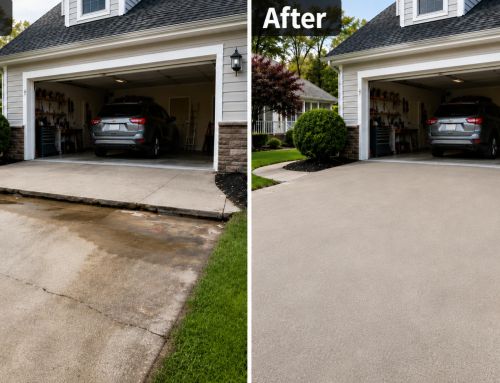
If your driveway has sunken or become uneven but the slab is otherwise in good condition, concrete leveling may be the better option.
This is one of the main services we provide at Concrete Chiropractor.
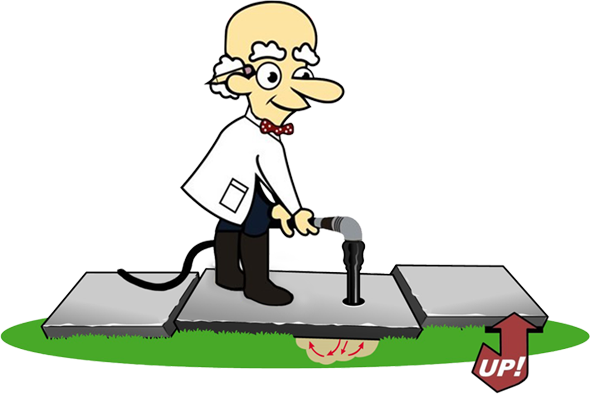
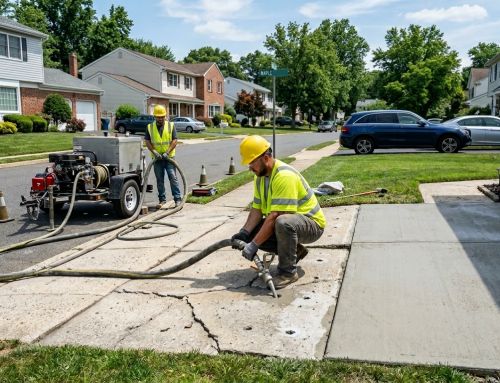
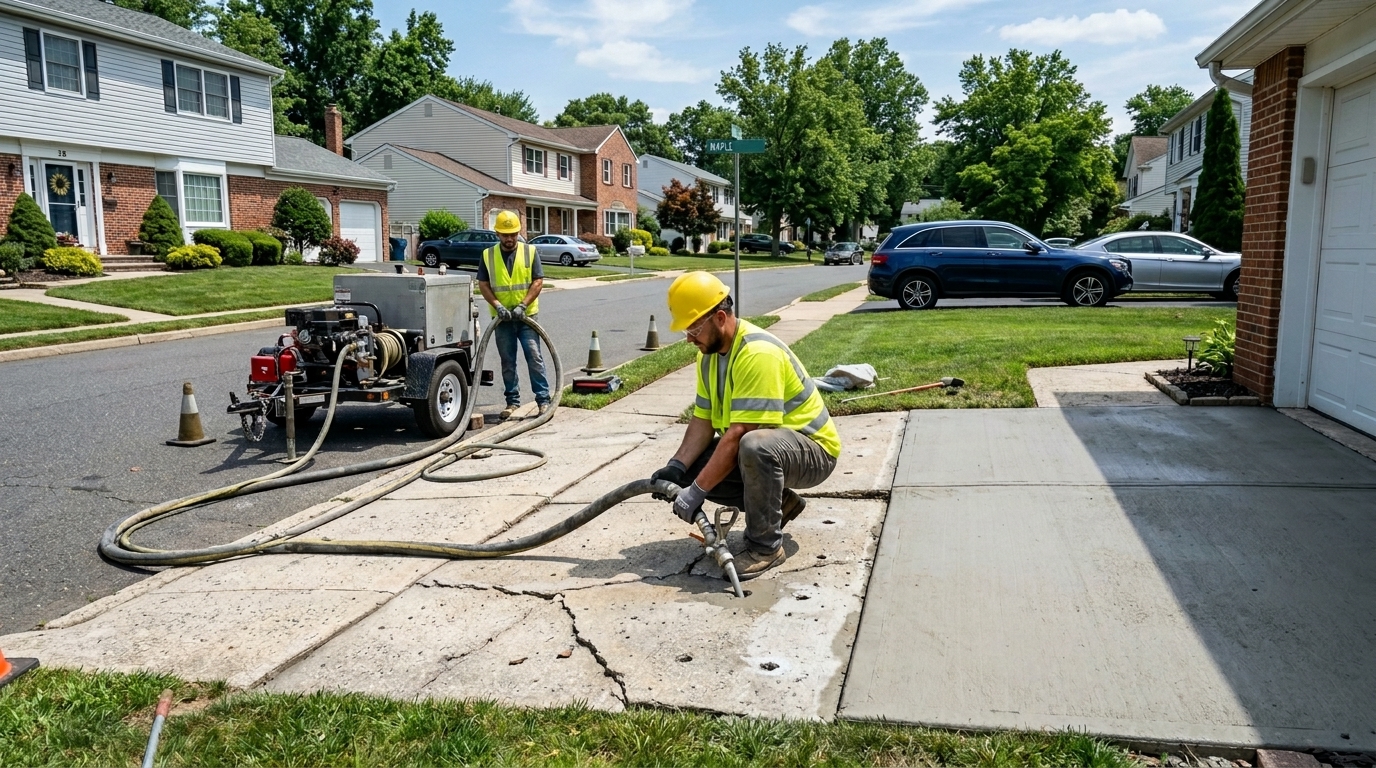
Our mudjacking process involves drilling carefully positioned holes into the settled concrete and injecting a cement-based grout underneath.
The grout fills accessible voids and lifts the slab toward its intended elevation. We then patch the injection holes.
The goal is to restore a more even surface while preserving the existing concrete.
Mudjacking can be particularly useful for:
- Sunken driveway sections near garage entrances.
- Uneven joints between otherwise sound slabs.
- Driveway aprons that have settled.
- Low sections creating drainage problems due to settlement.
Not every driveway is suitable for lifting. Severely cracked, crumbling, or structurally compromised concrete may need a different solution.
You can learn more about our concrete driveway leveling and repair service and how we assess settled slabs.
When Concrete Replacement Is Necessary
Sometimes repairing the existing concrete simply isn’t the most practical choice.
Replacement may be appropriate when a driveway has extensive deterioration, widespread structural cracking, major slab breakup, or damage that prevents reliable lifting.
In those situations, the existing concrete may need to be removed and the supporting ground properly prepared before new concrete is poured.
We believe homeowners should understand their options before committing to a major replacement project.
If a structurally sound slab can be preserved through leveling, unnecessary demolition may be avoided.
Follow the Essential Steps for a Long-Lasting Driveway Repair
Choosing the right method is important, but proper preparation and installation make just as much difference.
Here’s the general process we recommend for achieving a more dependable result.
Step 1: Address Drainage and Soil Problems
Check where rainwater goes after it reaches your driveway.
Are downspouts discharging directly beside the concrete? Is water collecting near the garage? Does runoff appear to be washing soil away from the driveway edges?
These issues deserve attention because continuing erosion can undermine an otherwise successful repair.
Where necessary, correct drainage problems before or alongside repairing the concrete.
Step 2: Prepare the Damaged Surface
For surface repairs, remove dirt, vegetation, loose concrete, and failed repair materials.
Cleaning allows the new product to make proper contact with the existing concrete.
The correct preparation depends on the repair material. Some products require a dry surface, while others specify particular moisture conditions or bonding agents.
Always follow the manufacturer’s instructions.
For larger repairs involving equipment, drilling, or slab movement, professional preparation is usually appropriate.
Step 3: Complete the Appropriate Repair
At this stage, the method depends on the condition of your driveway.
Stable cracks may be sealed, minor surface defects patched, and suitable sunken slabs raised.
For a settled driveway, our concrete leveling process focuses on lifting the existing slab and filling accessible spaces beneath it using cement-based grout.
We assess the slab’s condition and position before determining the appropriate lifting points.
This helps us work toward restoring useful elevation and alignment without removing concrete unnecessarily.
Step 4: Allow Proper Curing Before Use
One of the easiest mistakes to make is using a repaired driveway before the repair material is ready.
Curing and return-to-service times depend on the product, weather, repair depth, and method used.
Some repair materials allow relatively quick use, while others require longer before they can support vehicle traffic.
For mudjacking, follow the contractor’s instructions about when you can safely drive over the repaired sections.
Rushing this step can affect the quality of the repair.
Step 5: Inspect the Finished Work
Once the repair is complete, check that the original problem has been properly addressed.
Look at the repaired joints, slab alignment, surface condition, and drainage.
A smooth-looking repair isn’t necessarily a successful repair if water continues collecting around the same location or the slab remains unsupported.
The best result is one that restores the driveway’s usability while addressing the conditions that caused the damage.
Concrete Driveway Repair in New Jersey and Eastern Pennsylvania: What Homeowners Should Know
Driveway conditions vary from property to property, but homeowners across New Jersey and Eastern Pennsylvania face some common challenges.
Our region experiences cold winters, wet weather, changing temperatures, and seasonal ground movement. These conditions can make existing driveway problems more noticeable.
For example, a homeowner in Freehold or Holmdel might notice that the concrete apron in front of the garage has settled, creating a bump whenever a car enters.
In East Brunswick or Bridgewater, poor drainage around a driveway could gradually contribute to soil erosion and unsupported concrete.
Homeowners in Morristown, South Plainfield, or Fair Lawn may notice uneven slab joints after years of weather exposure and regular vehicle traffic.
Similar issues occur in communities throughout Eastern Pennsylvania.
Not every driveway problem comes from the same cause, though. That’s why we look at the actual condition of the concrete rather than assuming every crack or low spot requires the same repair.
Why Early Repairs Matter in Our Climate
When water enters cracks or collects beneath poorly supported slabs, seasonal freezing and thawing can worsen existing damage.
A relatively small settlement problem may eventually become more difficult to repair if the concrete continues shifting or breaking.
Early evaluation gives you a better opportunity to preserve a usable driveway.
For homeowners dealing with multiple uneven concrete surfaces, our guide to raising sunken driveways and sidewalks in Monmouth County offers additional insight into recognizing settlement problems.
At Concrete Chiropractor, we serve homeowners throughout New Jersey and nearby parts of Eastern Pennsylvania.
Our approach is straightforward: evaluate the problem, explain whether the slab is suitable for lifting, and recommend a practical repair.
How to Maintain Your Concrete Driveway After Repair
Even a properly repaired driveway needs occasional attention.
Maintenance won’t prevent every crack or soil movement, but it can help protect your concrete and make developing problems easier to spot.
Here are a few habits worth following.
Keep Your Driveway Clean
Remove leaves, dirt, and debris, especially around joints and cracks.
Clean oil or chemical spills promptly using concrete-compatible cleaning products.
Avoid overly aggressive pressure washing that could damage already weakened surfaces.
Manage Water Runoff
Keep gutters and downspouts working properly, and direct water away from vulnerable areas around the driveway.
If you notice recurring puddles or erosion along the edges, investigate the cause before the condition worsens.
Seal Vulnerable Joints and Cracks
Properly selected flexible sealants can help reduce water entry into joints and stable cracks.
The key is choosing a product suitable for exterior concrete and applying it according to the manufacturer’s instructions.
Our guide to caulking concrete cracks explains how sealing can help protect concrete surfaces.
Avoid Unnecessary Heavy Loads
Residential driveways aren’t all designed to carry heavy commercial vehicles or concentrated loads.
Avoid placing excessive weight on vulnerable edges or damaged sections, particularly where the supporting soil may already be compromised.
Watch for New Settlement
Make a habit of checking your driveway after winter and periods of heavy rainfall.
Look for changing slab heights, widening joints, new low spots, or water flowing in the wrong direction.
If a previously level driveway starts sinking again, address the cause promptly rather than repeatedly patching the surface.
Get Professional Help When Your Driveway Starts Sinking
A lasting concrete driveway repair should solve more than the problem you can see.
While minor cracks and surface blemishes may be suitable for DIY maintenance, sinking slabs require closer attention.
At Concrete Chiropractor, we specialize in restoring suitable settled concrete through mudjacking, helping homeowners avoid unnecessary driveway replacement.
Whether your driveway has dropped near the garage, developed uneven joints, or started collecting water because of settlement, we can evaluate the condition and explain your repair options.
Don’t wait for a small settlement problem to become a bigger inconvenience.
Contact Concrete Chiropractor today to request a free estimate for concrete driveway leveling and repair in New Jersey or Eastern Pennsylvania.

- Essential Steps for a Lasting Concrete Driveway Repair - November 5, 2026
- How to Properly Maintain Your Concrete Patio - November 5, 2026
- Best Time of Year to Pour Concrete in Freehold, NJ - November 5, 2026
Get Social