
IN THIS ARTICLE
Learn How to Properly Maintain Your Concrete Patio
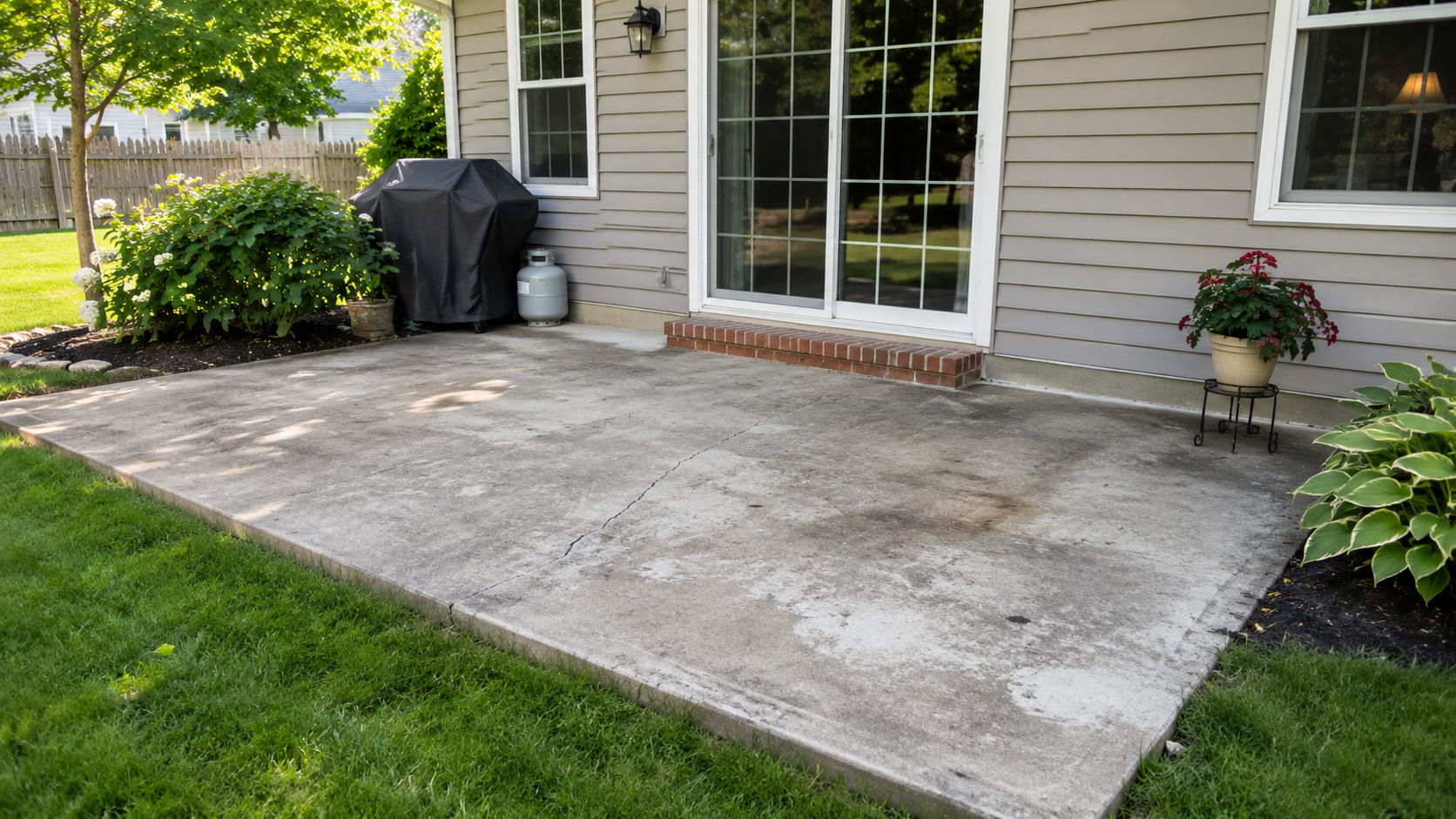
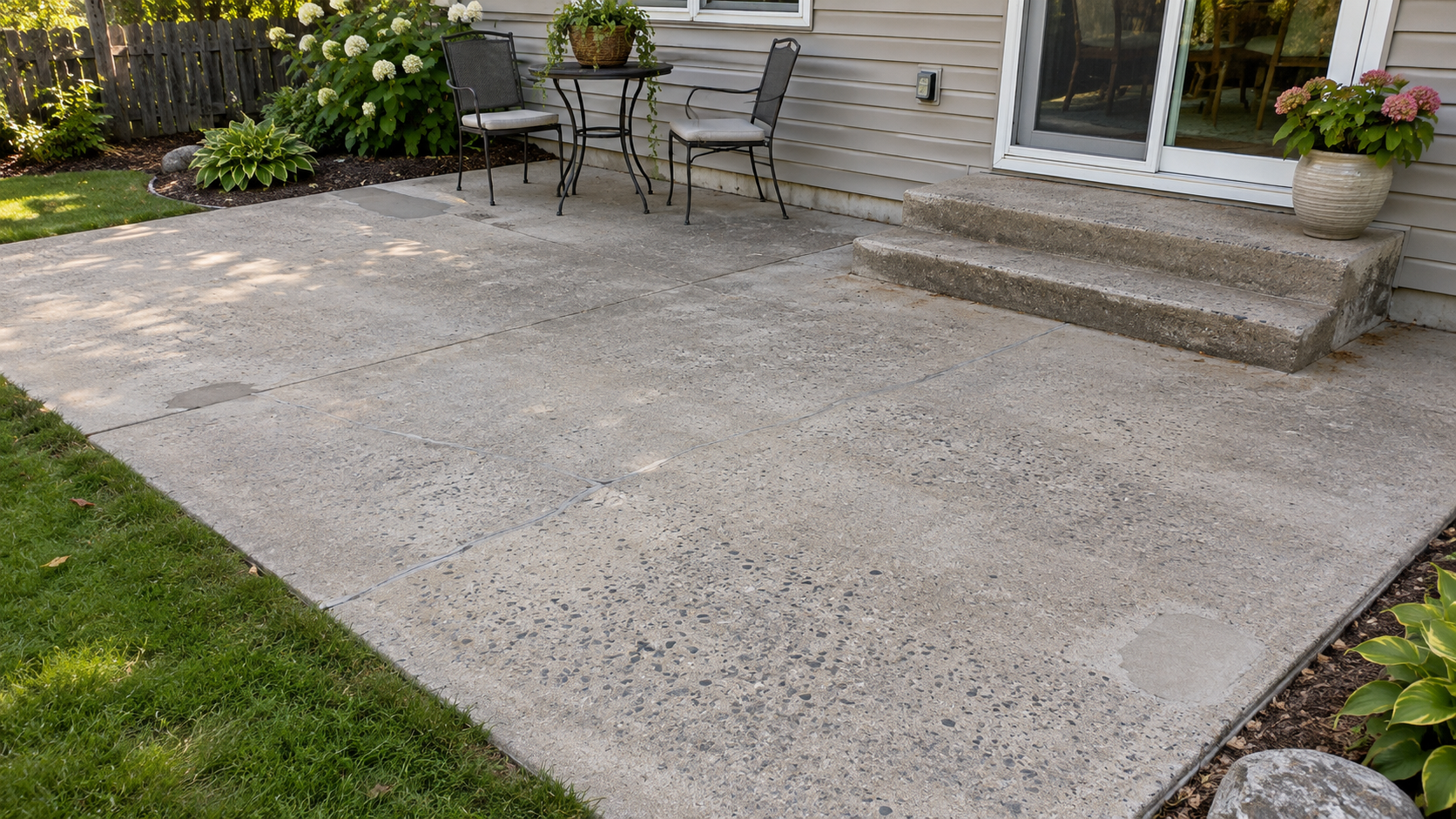
Your patio is where you relax after a long day, enjoy family barbecues, or spend time outdoors with friends. But just because concrete is durable doesn’t mean you can ignore it.
Over time, dirt, moisture, changing temperatures, and poor drainage can affect your patio’s appearance and condition. Small cracks may develop, the surface may start looking worn, or one section may gradually sink.
Fortunately, maintaining your concrete patio doesn’t have to be difficult or expensive.
The best way to maintain a concrete patio is to clean it regularly, manage water runoff, protect it from unnecessary damage, and address cracks or settlement before they become bigger problems.
At Concrete Chiropractor, we help homeowners throughout New Jersey and Eastern Pennsylvania restore settled concrete using traditional mudjacking. We know how much difference proper maintenance can make, especially when you recognize problems early.
Here’s how to keep your concrete patio clean, safe, and functional for years to come.
Essential Concrete Patio Maintenance Tips Every Homeowner Should Follow
You don’t need expensive equipment or professional help for every maintenance task. Most routine patio care involves simple habits you can manage yourself.
Clean Your Concrete Patio Regularly
Dirt, fallen leaves, food spills, and outdoor debris can leave stains on your concrete if they’re allowed to sit for too long.
We recommend sweeping your patio regularly and giving it a thorough cleaning once or twice a year, depending on how frequently you use it.
Here’s a simple cleaning method:
- Remove patio furniture, flowerpots, and other objects.
- Sweep away leaves, loose dirt, and debris.
- Wet the surface with a garden hose.
- Use mild soap and water to loosen ordinary dirt.
- Scrub gently with a soft- or medium-bristle brush.
- Rinse thoroughly with clean water.
For stubborn stains, avoid aggressive scrubbing that could damage the surface. A pressure washer may help with some cleaning tasks, but excessive pressure can damage weakened concrete.
Our tip: Clean food spills, grease, and other stains promptly. The longer they remain on porous concrete, the harder they can be to remove.
Keep Water Away From Your Patio and Foundation
Water management is one of the most important parts of maintaining a concrete patio.
When rainwater repeatedly collects around concrete, it can contribute to soil erosion, undermine the supporting ground, and worsen settlement problems.
Check that:
- Your downspouts aren’t discharging directly beside vulnerable patio edges.
- Rainwater drains away from your house.
- Soil isn’t washing away beneath exposed slab edges.
- Patio drains remain clear of leaves and debris.
- Water isn’t pooling around your patio door or foundation.
After heavy rainfall, take a few minutes to observe where the water goes.
If puddles begin forming in places that previously drained properly, your patio may have changed elevation.
You can learn more about settlement-related problems in our guide to concrete patio repair.
Inspect Your Patio for Cracks and Uneven Sections
Small cracks can develop as concrete ages or responds to temperature changes.
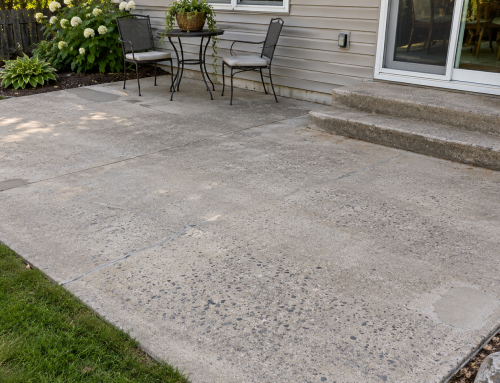
Not every hairline crack indicates a serious problem. However, widening cracks, misaligned joints, or noticeable height differences between patio slabs deserve attention.
Walk around your patio occasionally and check for:
- Cracks getting wider over time.
- One section sitting lower than another.
- Gaps appearing beneath exposed concrete edges.
- Patio furniture becoming unstable on an uneven surface.
- Concrete gradually pulling away from adjoining steps.
If you notice these changes, take photos and monitor whether the problem is getting worse.
Cracks accompanied by settlement may indicate that the supporting ground beneath your patio has changed.
Protect Your Patio From Heavy Objects and Surface Damage
Outdoor furniture, grills, and large flowerpots are normal parts of patio living. However, dragging heavy objects across the surface can scratch or chip the concrete.
Use protective pads beneath furniture legs and lift heavy objects instead of dragging them.
Move large planters occasionally to clear trapped debris and check for moisture-related staining.
Avoid placing unusually heavy objects near damaged edges or sections that appear unsupported.
These simple precautions help protect your patio from unnecessary wear.
Maintain the Soil Around Your Patio
Your concrete patio depends on the ground beneath it for support.
If soil washes away from the edges or settles unevenly, portions of the slab may eventually lose support.
Keep an eye on surrounding landscaping, particularly after heavy rain.
Look for exposed gaps beneath the concrete, erosion channels, or areas where the soil level has dropped.
If a downspout or landscaping feature directs water toward the patio, consider correcting the runoff.
Remember that adding soil around an exposed edge won’t necessarily restore support beneath an already sunken slab.
If the concrete has settled, professional leveling may be necessary.
Seasonal Concrete Patio Maintenance in New Jersey and Eastern Pennsylvania
Homeowners across New Jersey and Eastern Pennsylvania experience changing weather throughout the year.
From freezing winter temperatures to humid summers and periods of heavy rainfall, these conditions make seasonal patio maintenance especially important.
Whether you live in Freehold, Holmdel, East Brunswick, Bridgewater, Morristown, South Plainfield, or Fair Lawn, following a simple seasonal routine can help you identify problems early.
Spring: Inspect Your Patio After Winter
Spring is an excellent time to inspect your patio for damage that became noticeable during the colder months.
As temperatures rise, look for cracks, uneven slabs, loose debris, and areas where water collects.
Homeowners around Freehold, Holmdel, and other Monmouth County communities should pay attention to patio edges where runoff may have washed soil away.
If your patio remains level and drains properly, a thorough cleaning may be all it needs.
Summer: Keep the Surface Clean and Manage Rainwater
Summer usually means more time spent outdoors.
In places like East Brunswick and South Plainfield, backyard patios are often used for grilling, entertaining, and relaxing.
Sweep regularly, clean spills promptly, and keep surrounding landscaping maintained.
After summer thunderstorms, observe how rainwater flows across your patio.
If water begins collecting in new low spots, investigate whether part of the concrete has settled.
Fall: Clear Debris and Prepare for Winter
Before temperatures drop, remove fallen leaves, dirt, and debris.
This is particularly useful for homeowners around Morristown, Bridgewater, and Fair Lawn, where mature trees can leave patios covered with leaves during autumn.
Clear nearby drainage outlets and check for cracks or uneven sections.
If you notice settlement, consider having it evaluated before freezing weather makes the affected area more difficult to use safely.
Winter: Remove Snow Carefully
Winter maintenance requires extra attention.
Use a plastic-edged shovel when practical to avoid scraping or chipping vulnerable concrete surfaces.
Avoid excessive use of deicing salts, particularly on new or deteriorated concrete. Certain deicing products can contribute to surface damage under freezing and thawing conditions.
For additional traction, consider clean sand and sweep it away when conditions improve.
These precautions are equally relevant for homeowners in Eastern Pennsylvania communities such as Newtown, Doylestown, and Ambler.
Remember: You can’t prevent every weather-related problem, but regular cleaning, proper drainage, and early identification of settlement can help protect your patio.
When Patio Maintenance Isn’t Enough: Know When to Call Concrete Chiropractor
Routine cleaning and seasonal inspections can help preserve your patio, but they cannot solve every problem.
Sometimes, what appears to be ordinary wear is actually a sign that the supporting soil beneath your concrete has shifted or washed away.
Watch for Signs of Patio Settlement
Your patio may need professional attention if:
- One slab sits noticeably lower than another.
- The patio starts sloping toward your house.
- Water repeatedly collects in a sunken area.
- A gap develops between the patio and adjoining steps.
- Patio furniture tilts because the concrete is uneven.
- Cracks appear alongside visible slab movement.
These problems can become more serious when water continues entering gaps beneath the concrete.
For a closer look at these warning signs, read our article on 5 signs your concrete patio in NJ needs lifting.
Can You Repair a Sunken Concrete Patio Without Replacing It?
In many cases, yes.
If your concrete remains structurally sound but has settled unevenly, mudjacking may offer a practical alternative to replacement.
At Concrete Chiropractor, we specialize in raising suitable sunken slabs using cement-based grout.
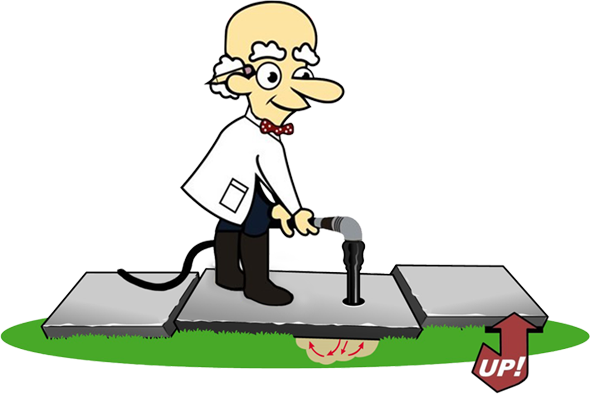
Our process involves three main steps:
- Drilling access holes: We drill carefully positioned holes into the settled concrete.
- Lifting the slab: We inject cement-based grout underneath to fill accessible voids and raise the concrete toward its intended elevation.
- Patching the holes: Once the lifting is complete, we patch the access holes.
This allows us to preserve existing concrete instead of removing and replacing it unnecessarily.
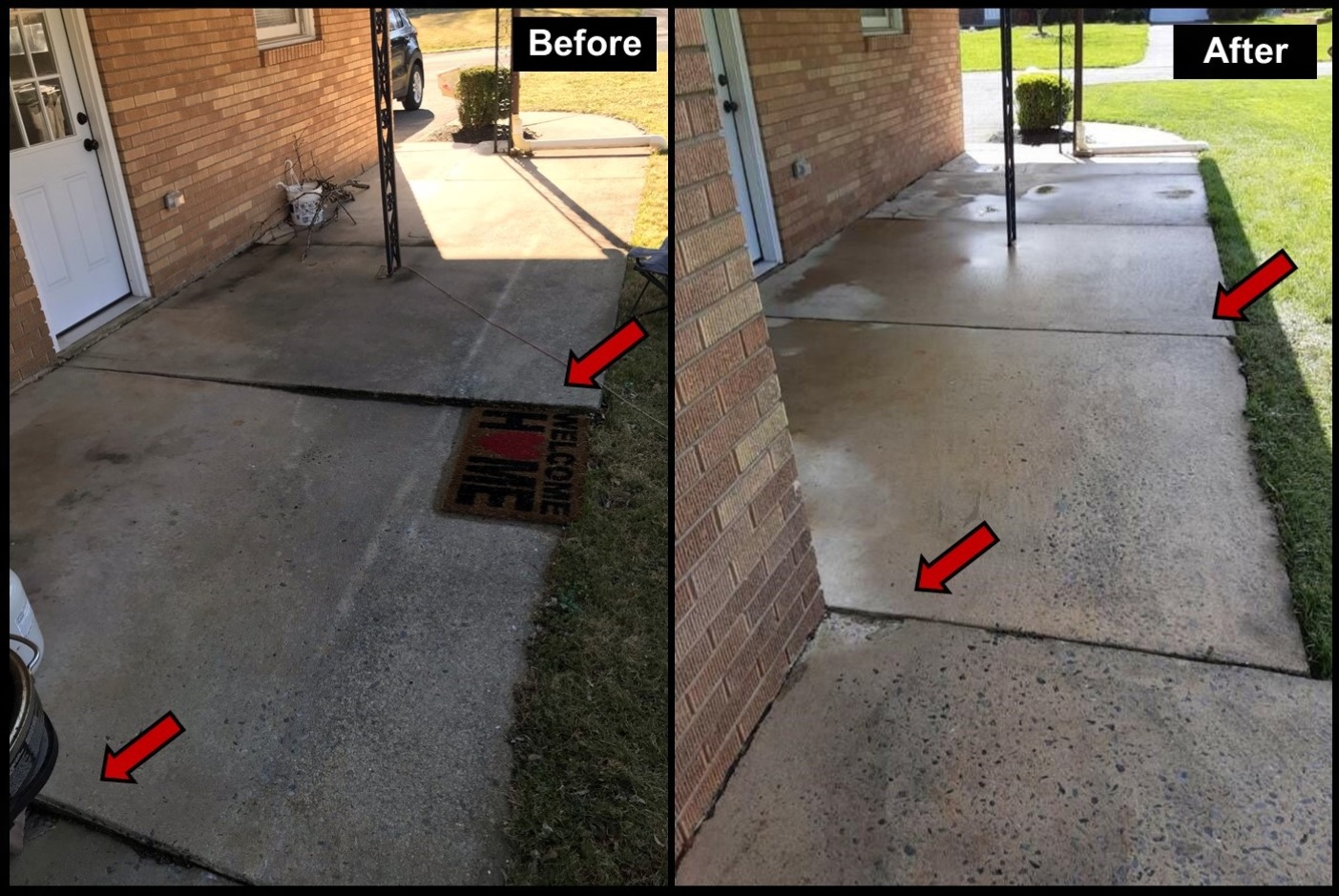
You can see an example in our Ringoes, NJ, patio leveling project, where we helped a homeowner restore an uneven patio.
Of course, not every patio is suitable for lifting. Severely broken or crumbling slabs may require replacement, while ongoing erosion or drainage problems may need separate corrections.
Let Us Help You Keep Your Patio Safe and Level
Maintaining your concrete patio doesn’t have to be complicated.
Regular cleaning, proper drainage, seasonal inspections, and protecting the surrounding soil can help keep your outdoor space in good condition.
However, if your patio has started sinking or developing uneven sections, ordinary maintenance won’t restore its original position.
At Concrete Chiropractor, we help homeowners throughout New Jersey and Eastern Pennsylvania restore suitable settled patios using traditional mudjacking.
Whether you’re dealing with an uneven backyard patio in Freehold, a sinking slab in Bridgewater, or settlement around your outdoor space in Eastern Pennsylvania, we can help determine whether your existing concrete can be saved.
Before you spend money tearing out your patio, find out whether it can be lifted.
Contact Concrete Chiropractor for a free concrete patio leveling estimate and take the next step toward a safer, more comfortable outdoor space.

- Essential Steps for a Lasting Concrete Driveway Repair - November 5, 2026
- How to Properly Maintain Your Concrete Patio - November 5, 2026
- Best Time of Year to Pour Concrete in Freehold, NJ - November 5, 2026




Get Social