
IN THIS ARTICLE
Clear Signs Your Concrete Patio Needs Professional Repair
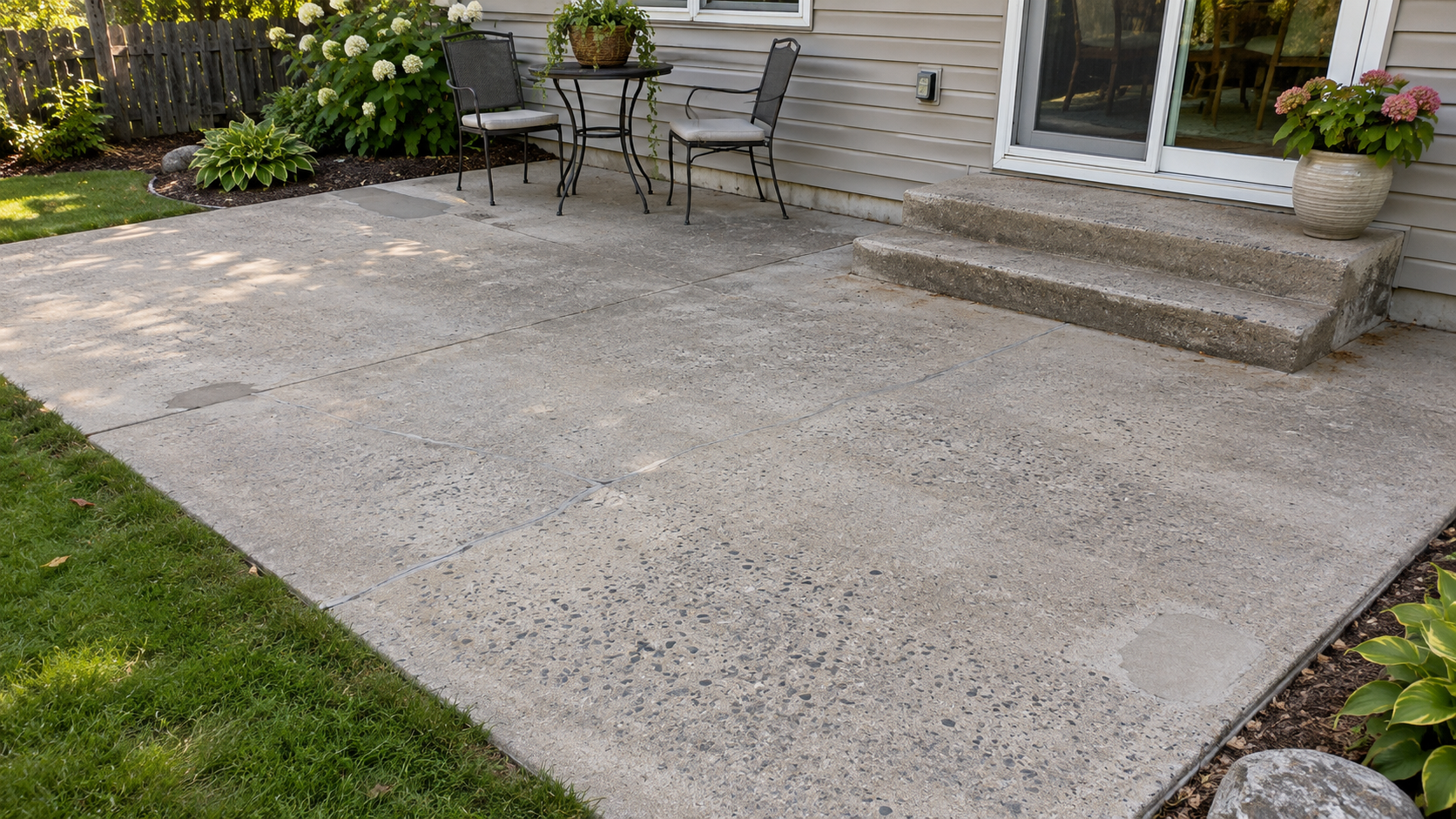
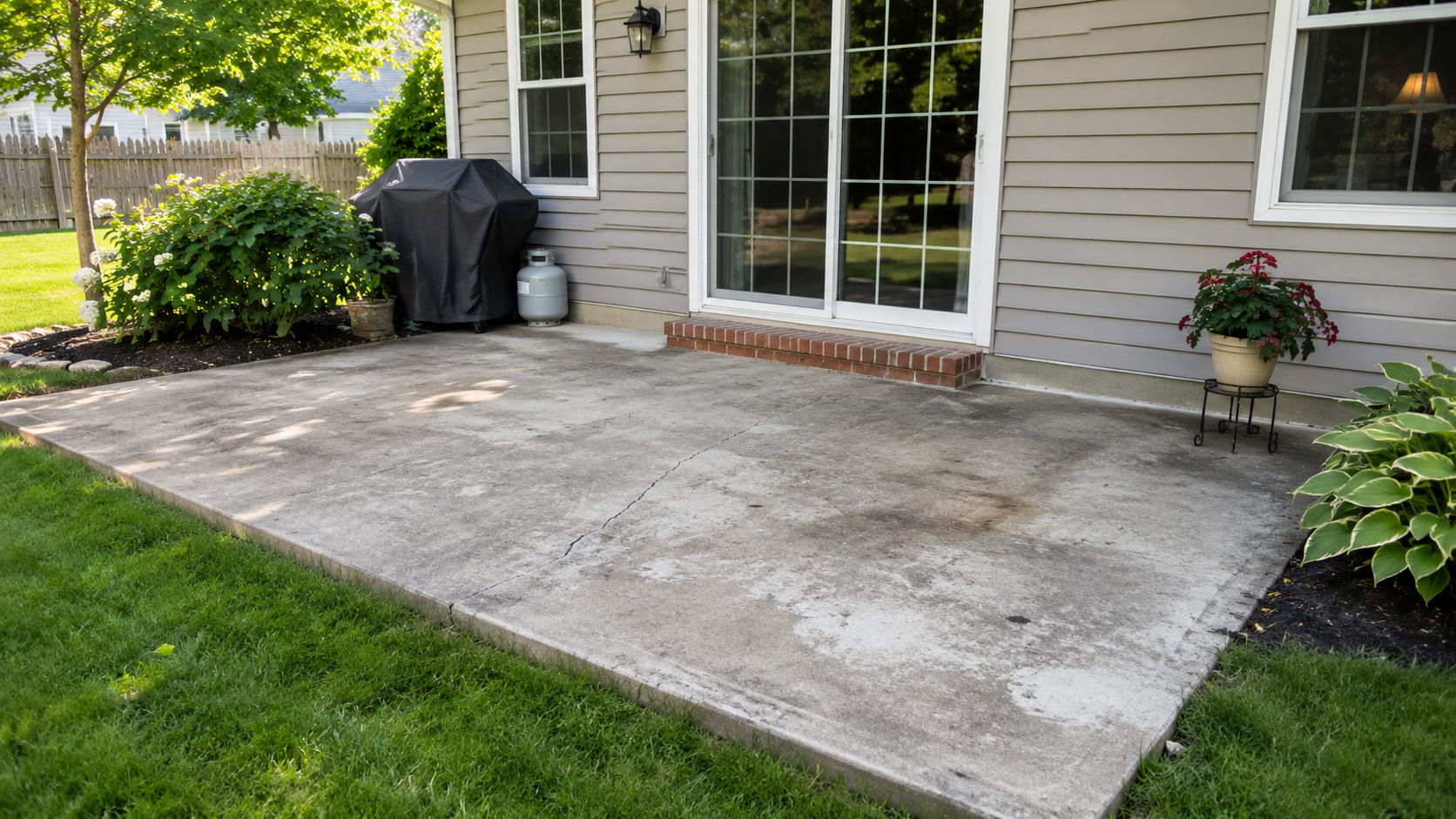
Your patio should be a comfortable place to relax, enjoy a family barbecue, or spend time outdoors. But when cracks start spreading, the surface begins crumbling, or water collects near your house, your patio may be telling you something is wrong.
Some patio problems are minor and can be handled with simple maintenance. Others may indicate deteriorating concrete, poor drainage, or soil movement beneath the slab.
The challenge is knowing the difference before you spend money on a repair that doesn’t solve the actual problem.
At Concrete Chiropractor, we help homeowners throughout New Jersey and Eastern Pennsylvania restore suitable settled concrete patios using mudjacking. We’ve been specializing in concrete raising and leveling since 2000, and one thing we’ve learned is that not every damaged patio needs to be replaced.
Here are five signs your concrete patio needs expert repair, what might be causing them, and the practical steps you can take to protect your outdoor space.
5 Warning Signs Your Concrete Patio Needs Professional Repair
1. Cracks Are Getting Wider or Appearing in Multiple Areas
A small hairline crack isn’t always a serious problem. Concrete naturally expands and contracts with temperature changes, and minor shrinkage cracks may develop as it cures.
However, cracks deserve more attention when they continue widening, spread across multiple sections, or appear alongside noticeable movement.
You should look out for:
- Cracks that gradually become wider or deeper.
- Several cracks connecting across the patio.
- One side of a crack sitting higher than the other.
- Cracks reopening after previous repairs.
- Concrete breaking apart along existing cracks.
These conditions may indicate that the concrete is experiencing more than ordinary surface wear.
For example, when the supporting soil settles unevenly, parts of the patio can shift at different rates. That movement places stress on the concrete and may cause cracking.
What should you do?
Small, stable cracks may be suitable for sealing. But if your patio is also sinking or developing uneven sections, filling the cracks won’t address the underlying movement.
A professional evaluation can help determine whether the slab needs leveling, a separate concrete repair, or replacement.
2. Your Patio Surface Is Flaking, Chipping, or Crumbling
Does your patio have rough patches where the top layer of concrete is peeling away? Perhaps small pieces break off whenever you sweep or clean the surface.
This deterioration is commonly called concrete scaling or spalling.
It can develop when moisture enters the concrete and freezes, when unsuitable deicing products are used, or when concrete wasn’t properly placed, finished, or cured.
New Jersey homeowners may notice surface deterioration after several winters, particularly where patios are exposed to repeated freezing and thawing.
Early warning signs include:
- Thin layers peeling away from the surface.
- Small pits or holes forming in the concrete.
- Loose, crumbling material around the edges.
- Aggregate becoming increasingly exposed.
- Previously patched sections breaking apart.
Minor surface damage doesn’t automatically mean the entire patio is failing.
However, widespread deterioration can affect the concrete’s durability and make certain repairs less practical.
What should you do?
Localized surface damage may be repairable with suitable patching or resurfacing materials.
But when large areas are crumbling or the slab has extensive structural damage, replacement may be the more dependable solution.
Our guide to concrete repair vs. replacement explains how to decide whether keeping the existing concrete makes financial and practical sense.
At Concrete Chiropractor, our mudjacking service is intended for suitable settled slabs, not severely deteriorated concrete that can no longer support a reliable lift.
3. Your Patio Feels Uneven or Unstable Underfoot
Have you noticed that your patio furniture no longer sits properly?
Maybe your table rocks, a chair tilts toward one side, or you feel a raised edge when walking from one slab to another.
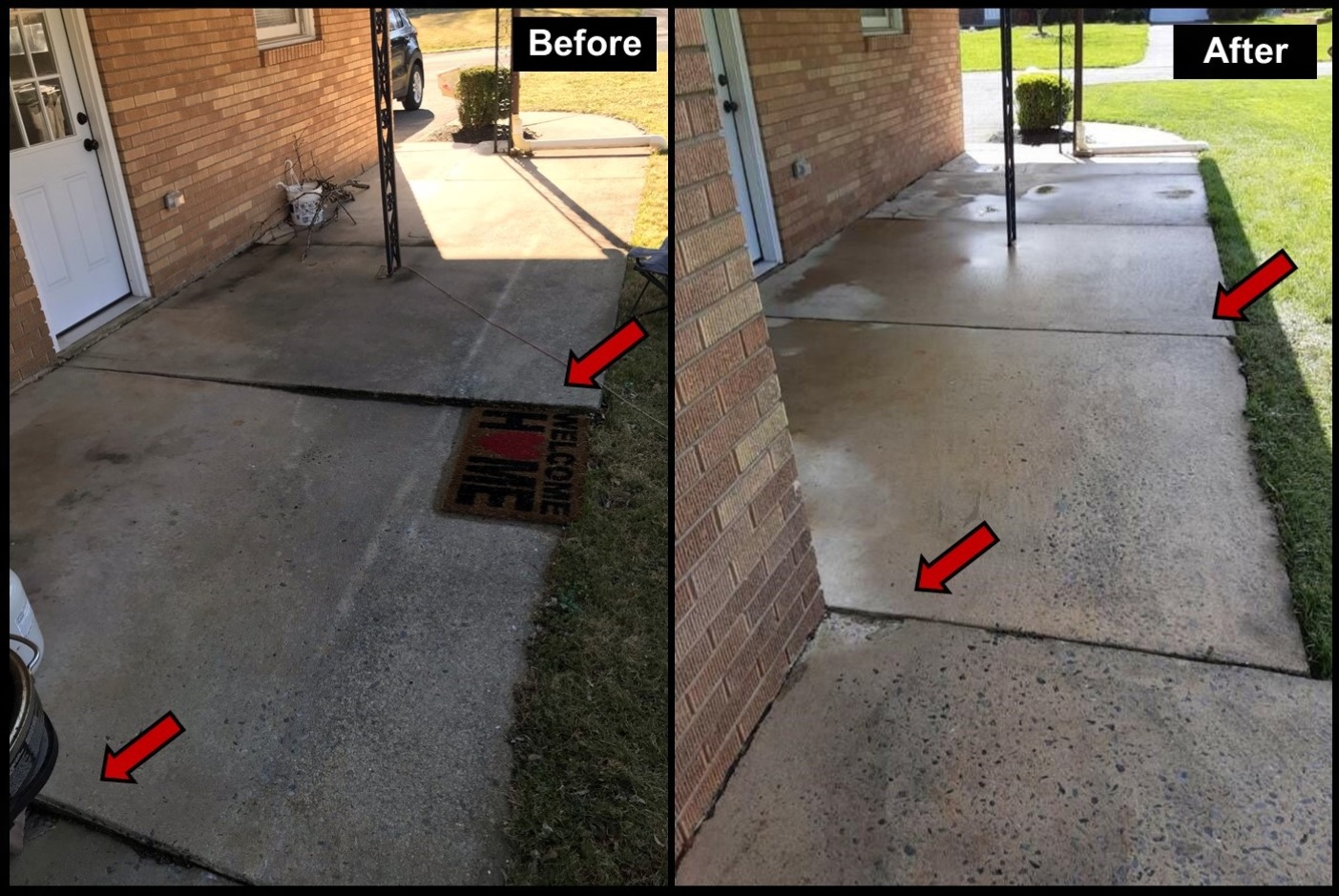
These changes can indicate that part of your patio has settled.
Concrete patios rely on the soil beneath them for support. When the original soil wasn’t compacted properly or water washes supporting material away, a slab can gradually sink.
You might notice a difference in height between neighboring slabs, an uneven transition near your patio door, or a corner sitting lower than the surrounding surface.
Besides making the patio uncomfortable to use, these changes can create trip hazards, particularly around steps and frequently used walkways.
What should you do?
If the concrete remains structurally sound, professional lifting may be an alternative to tearing it out.
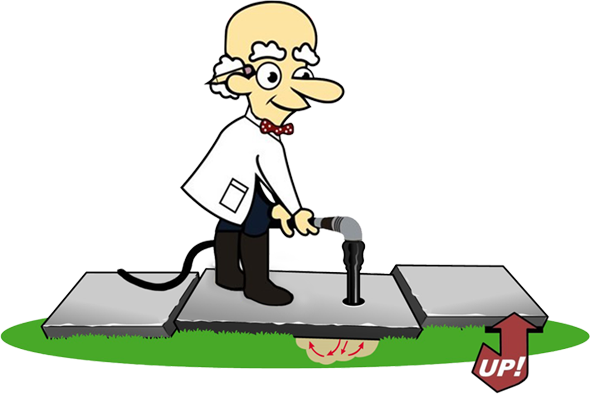
At Concrete Chiropractor, we use traditional mudjacking to raise suitable settled slabs. We inject cement-based grout beneath the concrete to fill accessible voids and lift the slab toward its intended position.
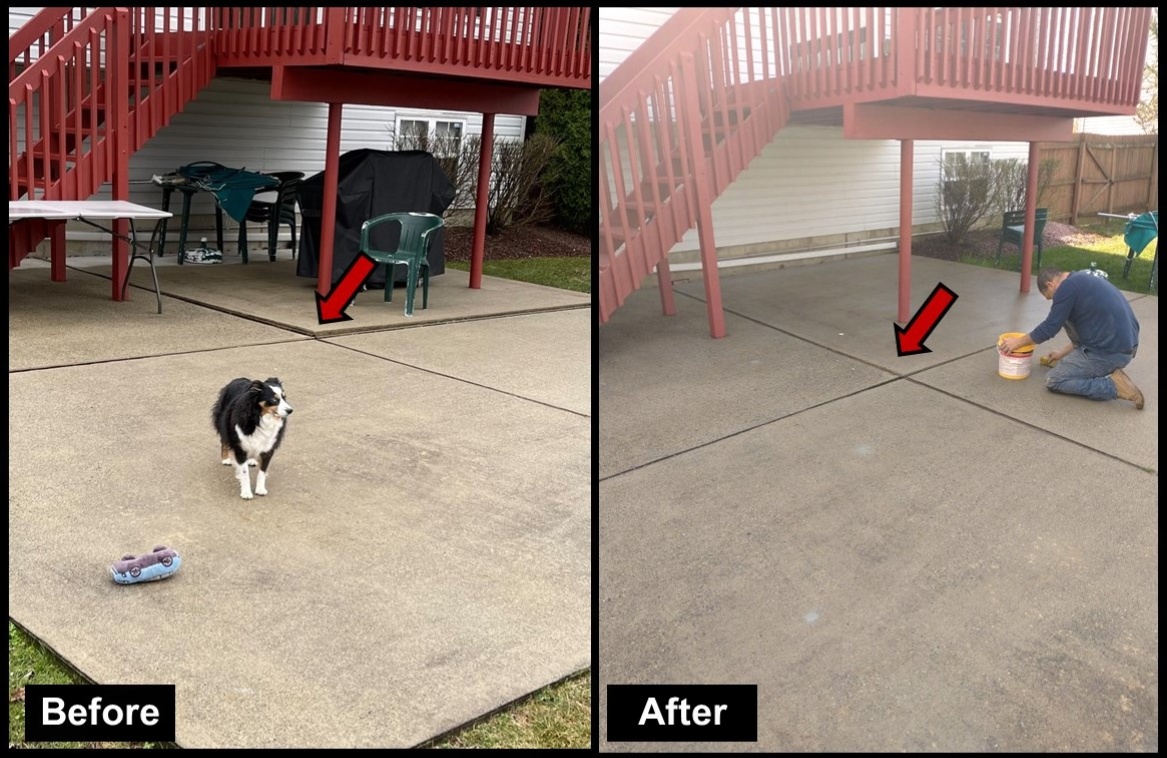
You can see how this works in our Ringoes, NJ, sunken patio repair project, where we restored an uneven patio without replacing the existing concrete.
4. Water Keeps Pooling on Your Patio or Flowing Toward Your House
A concrete patio should have an appropriate slope that directs rainwater away from your home.
If water consistently collects in the same places after rainfall, your patio may have a drainage problem.
Sometimes, the original installation didn’t provide adequate slope. In other situations, the patio gradually settles and changes the direction water flows.
Pay attention when:
- Puddles remain in low areas after rain.
- Water collects against your foundation wall.
- Rainwater flows toward your sliding patio door.
- Soil washes away around the patio edges.
- Water enters widening joints or gaps.
These conditions aren’t just inconvenient.
Continued moisture exposure can contribute to concrete deterioration, while uncontrolled runoff may wash away supporting soil. Water collecting against a house can also increase the risk of moisture-related building problems.
What should you do?
First, check whether downspouts, blocked drains, or surrounding landscaping are contributing to the problem.
If a sunken patio section has changed the surface slope, professional concrete leveling may help restore drainage away from the house.
However, not every drainage problem can be solved by raising concrete. Some properties also need grading or drainage corrections.
If settlement is responsible, our concrete patio leveling and repair service can help you explore whether lifting the existing slab is practical.
5. Previous Patio Repairs Keep Failing
Have you filled the same crack more than once, only to see it reopen?
Perhaps you’ve patched a damaged section, but the surrounding concrete continues shifting. Or you’ve applied a surface repair that starts separating from the original slab.
When repairs repeatedly fail, it’s worth investigating why.
The problem may be related to unsuitable repair materials, improper preparation, ongoing moisture exposure, or continued settlement beneath the concrete.
For example, patching a crack caused by slab movement doesn’t restore the supporting soil.
Similarly, resurfacing an unstable patio may improve its appearance temporarily without correcting the movement that caused the original damage.
What should you do?
Before investing in another repair, identify the reason the previous work failed.
If your patio has settled but remains in good condition, mudjacking may help correct the underlying elevation problem.
If the concrete itself is severely deteriorated, a different repair method or replacement may be necessary.
The goal should be a repair that addresses the cause, not just another temporary improvement.
When Should You Repair or Replace a Damaged Concrete Patio?
Not every damaged concrete patio requires the same solution.
The best approach depends on the condition of the slab, the extent of the damage, and what’s happening beneath it.
| Patio condition | Possible repair approach |
| Small, stable surface cracks | Appropriate concrete crack sealing |
| Minor localized chips | Concrete patching |
| Superficial wear on sound concrete | Resurfacing |
| Uneven or sunken but intact slabs | Professional mudjacking |
| Poor drainage caused by settlement | Concrete leveling and drainage correction |
| Extensive cracking and severe crumbling | Evaluation for replacement |
One important distinction is that concrete leveling corrects settlement-related elevation problems, while patching and resurfacing address surface damage.
A patio may need more than one type of repair, depending on its condition.
At Concrete Chiropractor, we focus on preserving suitable existing concrete through mudjacking rather than recommending unnecessary replacement.
If you’re dealing with a sunken patio, you can also read our article on repairing a settled patio without replacing it in Ambler, PA to understand how this approach helps homeowners avoid demolition.
Concrete Patio Repair in New Jersey and Eastern Pennsylvania
Homeowners throughout New Jersey and Eastern Pennsylvania experience patio problems related to changing temperatures, rainfall, drainage, and shifting ground conditions.
However, the cause of damage can vary even between neighboring properties.
A patio on a sloping lot may experience different drainage challenges than one built on level ground. Similarly, recently disturbed soil around a newer home may settle differently from soil that has supported concrete for decades.
That’s why a good concrete repair decision starts with evaluating the actual condition of your patio.
Patio Repair in Freehold, Holmdel, and Monmouth County
In residential communities around Freehold, Holmdel, Manalapan, and Marlboro, patios often connect directly to backyards, walkways, and outdoor entertaining areas.
When a patio settles, the change may become noticeable near a sliding door, outdoor kitchen, or walkway leading into the yard.
Homeowners in these areas should pay particular attention to drainage around the house and uneven transitions between adjoining surfaces.
Patio Repair in East Brunswick, Bridgewater, and Morristown
In East Brunswick and surrounding Middlesex County communities, drainage around established residential properties can become an important consideration when evaluating a damaged patio.
Bridgewater homes near the Watchung Mountains and Washington Valley may have sloped lots where controlling rainwater runoff deserves extra attention.
Around Morristown and Morris County, seasonal freezing and thawing can worsen existing cracks and contribute to surface deterioration.
These are examples of conditions to consider, not evidence that every patio in these communities has the same problem.
Patio Repair in South Plainfield, Fair Lawn, and Eastern Pennsylvania
Homeowners in South Plainfield and Fair Lawn may also encounter aging patios, deteriorating joints, and settlement around outdoor concrete surfaces.
Across Eastern Pennsylvania, including communities in Bucks and Montgomery counties such as Doylestown, Newtown, and Ambler, similar problems can develop when supporting soil settles or drainage conditions change.
Whether you live near downtown Morristown, the Freehold area, or the residential neighborhoods around Ambler, the key is understanding whether your concrete is damaged, unsupported, or both.
At Concrete Chiropractor, we serve homeowners across New Jersey and parts of Eastern Pennsylvania, helping restore suitable sunken patios, driveways, sidewalks, and other concrete surfaces.
How Concrete Chiropractor Helps Restore Damaged Patios
When your patio begins sinking, it’s understandable to assume you’ll need to remove the old concrete and pour a new slab.
Fortunately, that isn’t always necessary.
If the existing concrete remains structurally sound, our mudjacking process may provide a practical alternative.
Here’s how our concrete patio leveling process works:
- Evaluate the patio: We review the condition of the concrete and determine whether the slab is suitable for lifting.
- Drill access holes: We create strategically positioned holes in the settled concrete.
- Inject cement-based grout: The material fills accessible voids beneath the slab and gradually raises it toward the desired elevation.
- Patch the holes: Once the lifting is complete, we fill the injection holes and provide guidance on returning the patio to use.
Because we’re working with your existing concrete, this process can reduce demolition, waste, and disruption to nearby landscaping.
However, mudjacking is not a cure for every patio problem. Severely fractured or deteriorated slabs may require replacement, and ongoing water erosion must be addressed to reduce the risk of further settlement.
Get Your Concrete Patio Evaluated Before the Damage Gets Worse
Your patio should be a safe, comfortable place to enjoy your home, not a source of recurring repairs and drainage problems.
If you’ve noticed uneven slabs, widening cracks, pooling water, or signs of ongoing settlement, it’s worth finding out what’s causing the damage.
At Concrete Chiropractor, we’ve helped homeowners throughout New Jersey and Eastern Pennsylvania restore suitable settled concrete since 2000.
We specialize in traditional mudjacking and can help determine whether your existing patio can be lifted rather than replaced.
Don’t spend money replacing a concrete patio that may only need professional leveling.
Contact Concrete Chiropractor for a free concrete patio leveling estimate and find out whether we can help restore your outdoor space.

- Essential Steps for a Lasting Concrete Driveway Repair - November 5, 2026
- How to Properly Maintain Your Concrete Patio - November 5, 2026
- Best Time of Year to Pour Concrete in Freehold, NJ - November 5, 2026




Get Social